









29 June 2026 - 10:45am
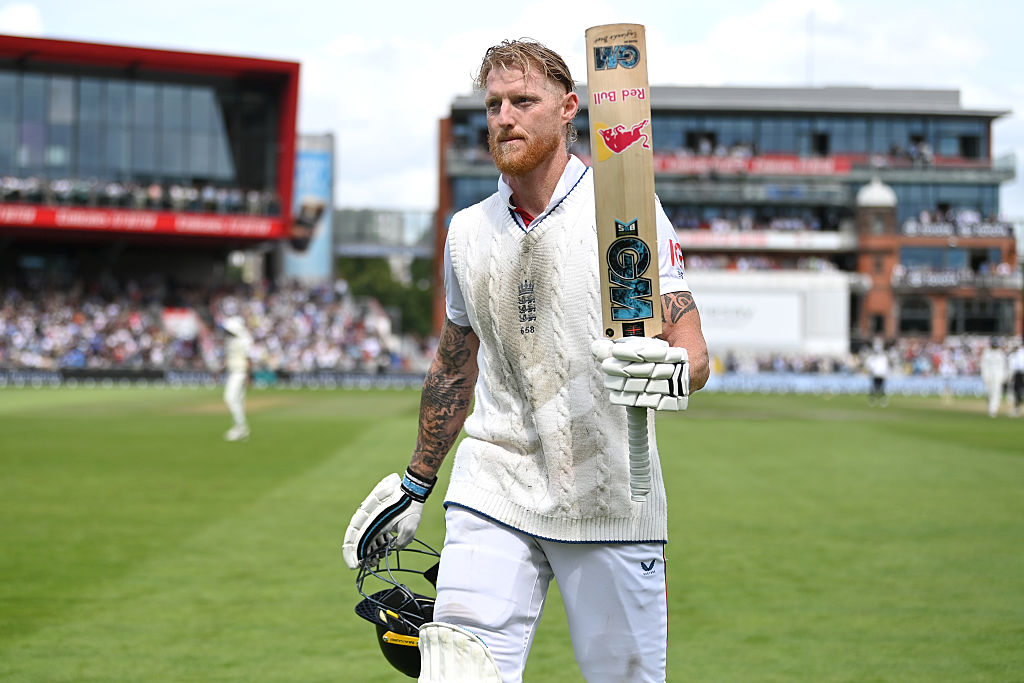
Of course he retired in the middle of an over. Of course he took a wicket with the next ball he bowled. And of course he ran off the field to open the batting and orchestrate what must surely be the last moments of Bazball, the aggressive and euphoric style of cricket he engendered and embodied. What else did you think Ben Stokes was going to do? How else was it ever going to end?
Yesterday, Stokes announced he would retire from international cricket at the end of the current test against New Zealand. He has been a cricketer red in hair and tooth and claw — a player of moments, like the best heroes are. Cricket is a game of statistics where numbers are used to confer greatness, but there is a concurrent tradition that sometimes, in rare cases, the numbers might convey nothing at all. Stokes’s career is one of those.
The talismanic all-rounder is a trope of English cricket. The search for the “new Botham” began while Lord Ian was still playing, and a line drawn through Beefy to Andrew Flintoff and onto Stokes would tell the story of the English game in the modern age. If Stokes is less famous than either of his predecessors, then it is because his career has played out entirely behind the paywall of subscription television. Flintoff’s heroic series of 2005 was the last to be broadcast terrestrially.
Stokes has all the fearlessness and the tendency to self-destruct that characterised Botham and Flintoff’s time centre-stage. That was certainly the tale of his early career, when he blew a T20 World Cup final in the last over after being hit for four consecutive sixes by Carlos Brathwaite of the West Indies. A year later he was involved in a fight outside a Bristol nightclub called — unforgettably — Mbargo, which led to a trial for affray and a missed Ashes tour.
The greatness that had glimmered during a maiden Test hundred in Perth and a double century in Cape Town finally arrived in 2019. He levelled a knife-edge World Cup final at Lord’s against New Zealand with an unbeaten knock of 84 and then, amid almost unbearable tension, batted once again in the Super Over — an additional six balls played by each team in the event of a draw. It was followed barely a month later by the impossible rescue act of the Ashes Test at Headingley, when he made a storybook 135 in a last-wicket partnership with the bespectacled spinner Jack Leach, who notched a famous one not out.
Here, at last, was our new Botham, except then came another crushing low: the death of his father Ged and the black dog of a depression he was unafraid to show to the world. Stokes took a mental health break to recover and made a moving documentary about his plight, one that revealed the withering psychological price of top-level cricket.
Botham and Flintoff crashed and burned as England captains, so there was a wariness in handing Stokes the captain’s armband in 2022, and yet the team was transformed almost overnight. In partnership with Brendon “Baz” McCullum, a former New Zealand captain turned coach, Stokes formulated a credo that soon became a cult, with the players inducted into the team both set free by the philosophy and protected from its consequences.
At first it was revelatory, a series of apparently impossible run chases played out on golden afternoons in a style of cricket coined “Bazball”. The term caught on but became, as Stokes and McCullum predicted, a yoke around their necks when it all went wrong.
Predictably, given the history of England teams in Australia, Down Under is where it all came undone. The Ashes series of last winter began as one of the most anticipated in history but went sharply downhill from there to a harrowing 4-1 defeat, a loss that drove a wedge between captain and coach.
In the current series with New Zealand, Stokes has experienced what so many older players do — the feeling that the well has suddenly run dry. A ludicrous and self-sabotaging “controversy” over a broken non-curfew further derailed him.
Heroes, we know, must be flawed, but Stokes’s flaws have been minimal compared to his deeds. If cricket has kept its head above water in the last two decades, it’s as much down to Stokes as any single player. His efforts certainly supersede those of the broader cricket administration prone to po-faced ineffectiveness in a contracting marketplace besieged from all sides by football and a new generation that barely watches live television at all.
So stand down, soldier. You have been loved by those who got to see you. The game is lesser for your leaving.
Jon Hotten is an author and journalist. His books include Muscle: A Writer’s Trip Through a Sport with No Boundaries, The Years of the Locust and the novel, My Life And The Beautiful Music. His most recent book, The Meaning of Cricket, was published in 2016.
 theoldbatsman