









9 June 2026 - 4:30pm
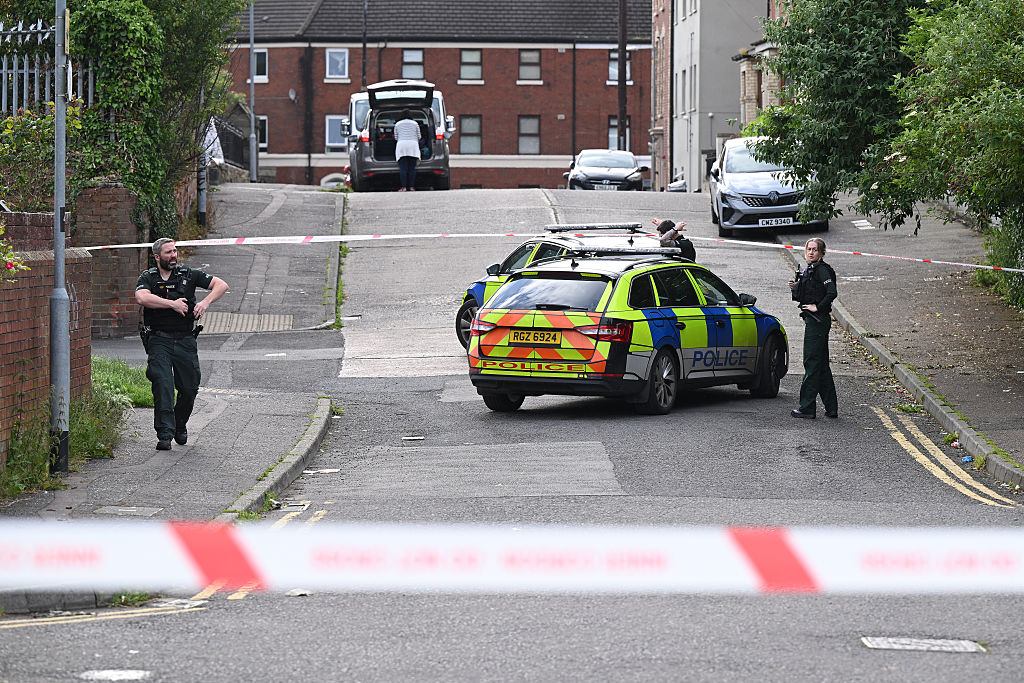
Late on Monday evening, a man in the Kinnaird Avenue area of North Belfast was the target of a brutal attempted murder. A circulating video of the event shows the attacker sitting atop his blood-soaked victim, apparently trying to behead the man. Several individuals attempted to wrestle the assailant off the victim, one using a hurling stick.
The Police Service of Northern Ireland (PSNI) revealed that the attacker is believed to be from Sudan, a correction from a previous statement claiming that he was Somali. Gavin Robinson MP, the Leader of the Democratic Unionist Party, stated in the House of Commons chamber that the suspect was living in Britain under a five-year visa, adding that the situation was still developing. Assistant Chief Constable Ryan Henderson confirmed that the individual was given leave to remain in Northern Ireland, having made his way there via Dublin.
By failing to swiftly release clear information after the attack, the PSNI is inadvertently fuelling further tension. At the time of writing, we do not know the attacker’s name, his motive, or why he was allowed to remain in Britain in the first place. For many, now, it does not matter.
Anti-immigration tensions have been high in Northern Ireland ever since the riots in Ballymena, which began exactly one year ago today and followed a series of sexual assaults on young girls, allegedly perpetrated by members of the Romanian Roma community. More recently, the appalling murder of Henry Nowak focused attention on the failures and biases of police officers. Last month, footage emerged of a large group of men in a public park near Belfast, dancing around a fire with ceremonial knives similar in style to those at the centre of discussion in the Nowak case. DUP MP Sammy Wilson raised the issue in the House of Commons, revealing: “No arrests were made, excuses were made for carrying the weapons, and the anger of the community is palpable.”
Such anger is understandable. Following numerous attacks on British people in recent years by people with no justifiable reason to be in the country, very little has been done by the Government to ensure that these tragedies aren’t repeated. For many, politicians preaching for calm and offering thoughts and prayers is seen simply as inaction.
Protests have been planned for this evening across Northern Ireland, with protesters unlikely to heed calls for peace from the authorities. The community groups and activists organising the rallies, far from warning attendees to be careful, have said that “anyone seen recording anything tonight, their phone will be taken off them.” There is a real risk of repeating the events of last summer, where buildings were burnt and police came under sustained attack over several days.
Anti-immigration rhetoric has become mainstream in recent years, and has in turn shifted the Overton window in Northern Ireland. The political consequences of continued inaction would extend beyond the immediate inevitable disorder on the streets. If legitimate public concerns are not translated at pace into meaningful policy change, rather than just empty sentiments, the political space left empty by mainstream parties will not remain empty for long.
Radical groups on both the nationalist and unionist ends of the spectrum are well placed to capitalise on Government failure, particularly Left-wing parties such as Sinn Féin which have held longstanding pro-immigration stances. In the wake of last night’s attack, the Irish Republican Socialist Party defended those who have been accused of being racist for sharing concerns around immigration, saying: “It is not unreasonable to suggest (as the IRSP do) that migration into Ireland generally and into working class communities in particular, must not occur in a fashion which is detrimental to the interests of the Irish working class itself.”
The Northern Irish public were warned that an incident like what occurred last night would happen unless concerns over immigration were acknowledged. No one listened. Citizens have had enough thoughts and prayers to last a lifetime. What they want, and need, is action.