









20 Nov 2026 - 2:00pm
When America’s National Book Award 2026 winners were announced this week, the fiction prize went to Paradiso 17 by Palestinian-Jewish author Hannah Lilith Assadi, while the non-fiction winner was Abdelrahman ElGendy’s memoir Huna. ElGendy is an Egyptian citizen who fled the United States in 2025 out of fear of being arrested by ICE after, he says, his name appeared on a Zionist doxxing site. In order to consider ElGendy, the prize committee waived its own rules, which state that non-citizens or residents are eligible only so long as they maintain a permanent residence in the United States. The author applied for a visa in order to attend the ceremony, but was denied.
This exception for ElGendy seems reasonable, yet the identities and subject material of the two winners suggest there has been no abatement of the Left-leaning political agenda that has taken over mainstream publishing and most of the elite literary establishment. This capture is arguably decreasing Americans’ interest in reading, as works are published or promoted based on politics rather than merit or reader enjoyment.
Prose from the opening paragraphs of the two winners’ books backs up the point. Here’s Assadi: “Like all our dead, Sufien still speaks. But because his language is now made of shadow, the day rarely admits him, so he finds his daughter Layla in the dream places, by night, where the stars stretch in their beds.” And here’s ElGendy: “In prison cells, I looked to Baba for a way out. I studied the breadth of his chest, soft enough for me to curl on at 4, dampen with tears at 10, and wound at 17.” The prose is interchangeable and melodramatic; both scenes feature a sacrosanct ancestor and a sleeping child; nothing grabs the reader.
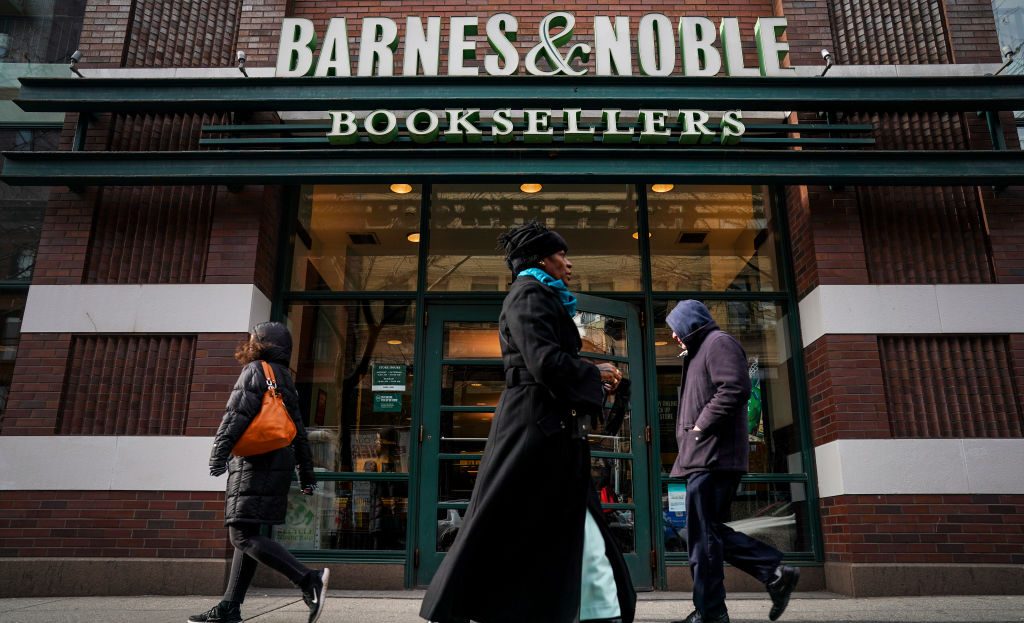
It was a welcome change, then, to visit a new Barnes & Noble bookstore in New York City’s East Village, opened on the same day as the awards took place, and find quality books to inspire readers — with not an “identity” table in sight. B&N has enjoyed one of the most surprising turnarounds during the era of the digital takeover, succeeding in large part by offering work of literary merit. And it’s working: 60 new B&N stores are opening in the US this year.
This has been a major change for the chain, which by the late 2010s was coasting on sales of children’s toys and decorative journals, and seemed poised to follow its former rival Borders into oblivion. In 2019, Elliott Investment Management bought B&N and installed CEO James Daunt, who presided over the turnaround of Waterstones in the UK. Daunt’s strategies included decentralising buying, so local stores could respond to the interests of their markets, and ending pay-to-play placements, which eroded the quality of the selections.
He also imported a feature from Daunt Books, a UK indie chain that he founded in 1990, and had stores begin curating work in themed sections. B&Ns in New York now often have a “New York Stories” section, along with breakouts devoted to novellas, small presses and pretty editions of classics. The new stores are cleaner and better-designed, and feel like the work of people who love books.
The new East Village store sets the tone for its particular microclimate of middle-aged hipsters and NYU students with “Award-Winning Fiction” and “A New Point of View” sections that are exciting, esoteric and readable. The former offers popular literary all-star titles such as The Sympathizer by Viet Thanh Nguyen and Middlesex by Jeffrey Eugenides; the latter section showcases authors for the cognoscenti, such as Amparo Dávila, Julio Cortazar, Orhan Pamuk, and Milan Kundera. There is also a surprising presence of great books that have received opprobrium from progressives, including Margaret Mitchell’s Gone With the Wind prominently displayed in the fiction section and Israeli historian Benny Morris’s 1948 among other non-fiction titles.
It was satisfying to visit a bookstore which isn’t populated by the niche sections that have homogenised the sector in the past decade. Tellingly, there was no table for National Book Award finalists, and Paradiso 17 wasn’t even in stock. If the publishing industry would only take a page from savvy retailers, perhaps it might bounce back too.
