









11 July 2026 - 8:00am
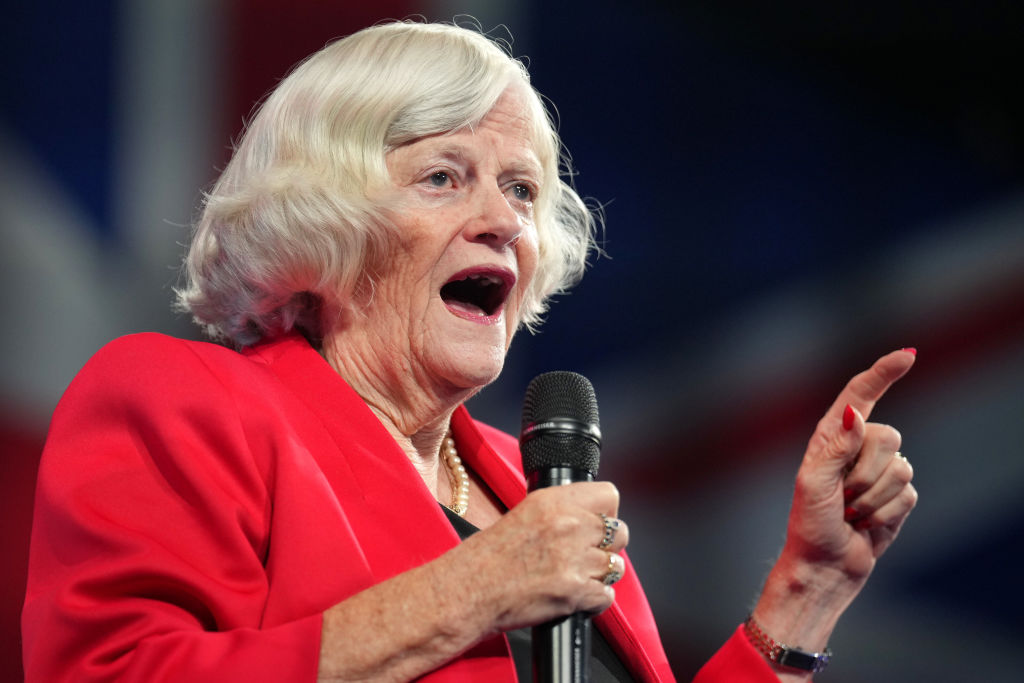
Ann Widdecombe was exceptional in many ways. She was a professional whizz before equal pay. She remained a staunch social conservative as her party became desperate to imitate New Labour. She eventually sealed her place in the hearts and minds of Middle England with her hapless hair-straightening on Celebrity Big Brother, and endearingly clumsy foxtrots on Strictly Come Dancing. It is heartbreaking that this fun and principled woman may have spent her final moments in physical and mental anguish.
While watching daytime television and scrolling social media can be depressing at the best of times, yesterday it was tainted further by the constant barrage of those lining up to complain about Widdecombe’s “divisive” or “controversial” views — even as it became clear a murder investigation had been launched into her death. While the TV station awaited a police statement on her suspected murder, Sky News veteran Adam Boulton saw fit to label Widdecombe as a “spinster” and “old maid”, even speculating on her virginity. LGBTQ campaigner Peter Tatchell, meanwhile, called her a “BIGOT” in a now-deleted tweet.
But anyone with firm moral principles — an idea seemingly alien to the current chattering classes — is bound to be deemed “divisive”. By their very nature, principles are in opposition to those which they are not. Individuals such as Widdecombe who are courageous enough to stick by their principles will inevitably inspire some level of disagreement because they are following their conscience, rather than simply what is fashionable or convenient at any given time.
Of course, plenty of commentators are not really using these words in the way they were once used — to actually mean a specific thing. That would be far too simple. For these types, terms such as “divisive” and “controversial” have become cowardly euphemisms for “Right-wing and therefore bad”. As a result they have no reservations about aiming it at Widdecombe, perhaps the most prominent socially conservative female Briton since Mary Whitehouse.
Many who took to the airwaves yesterday said little about one of Widdecombe’s most commendable political achievements: being one of the few Members of Parliament who emerged practically unblemished from the grubby expenses scandal. She received little thanks for this, and saw David Cameron’s failure to nominate her for a peerage when she left the Commons in 2010 as a “snub”.
Back in 1997, Widdecombe invited the wrath of many of her tweedy Tory colleagues when her concern for animal welfare led her to condemn fox hunting. She was also a longtime supporter of a sanctuary for donkeys across Israel, Egypt and the Palestinian Territories. What’s more, she was known to have spent years helping her nephew in his struggle with substance abuse. Many politicians would have used this difficult episode as an opportunity to boast publicly about their good deeds, but Widdecombe obviously did not think it appropriate.
No doubt this refreshing privacy was also guided by her firm inner faith, for which she garnered significant mainstream ire. Widdecombe experienced years of agnosticism before eventually embracing Christianity in her 30s. In 1993, she became a high-profile convert to Catholicism after the Church of England began ordaining female priests. She never stopped defending, in line with traditional Christian teaching, the dignity and value of life at all stages — which of course meant her opposition to abortion and euthanasia.
Widdecombe’s penchant for ignored causes naturally extended to her co-religionists, 388 million of whom are thought to be facing persecution across the world. Aid to the Church in Need, a charity that works to help oppressed Christians, yesterday revealed that Widdecombe was in talks with the BBC to develop a documentary on kidnapped girls from religious minorities in Pakistan who were forced to convert and marry their kidnappers.
While Widdecombe’s detractors seem keen to try and smear her legacy, flimsy accusations of bigotry and mocking of her iron-clad moral beliefs are often compliments in disguise. A fearless defender of free expression, she would certainly have encouraged us to take them in our stride. Indeed, we should all aspire to be as stubborn as her when it comes to the things that matter. Only a dull, uninspired commentariat would suggest otherwise.
