









February 1 2026 - 8:00am
This week, French Justice Minister Gérald Darmanin shocked the country’s political establishment by calling for a three-year moratorium on legal migration. A potential presidential hopeful for the 2027 election, Darmanin argued that a hard stop would allow France to set up a new quota system. His position, while unlikely to be adopted by his fellow ministers, will come as a surprise to many, with even the Rassemblement National (RN) no longer backing such an immediate hard stop.
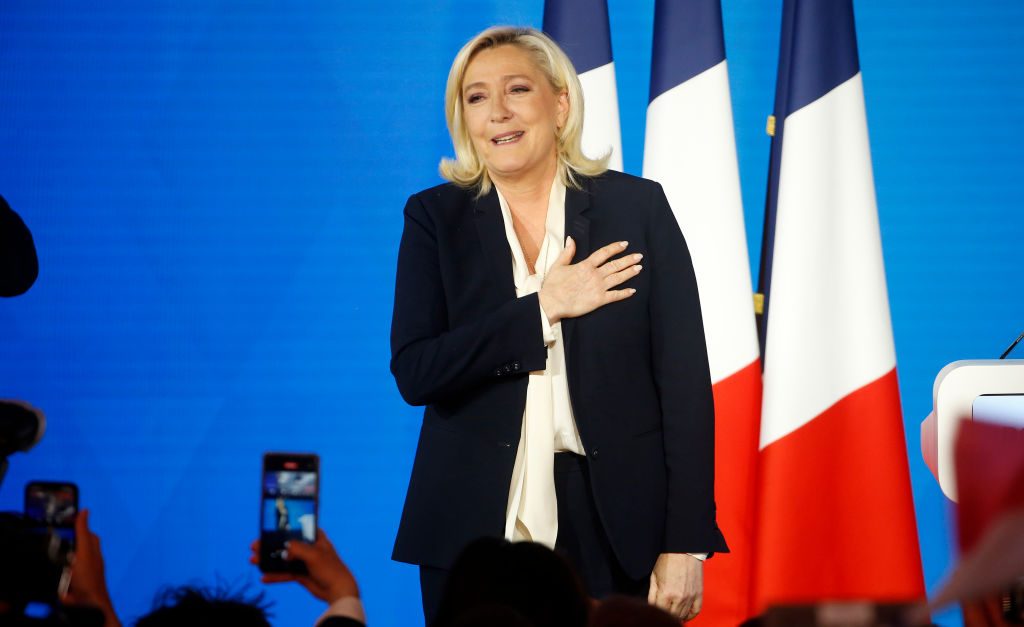
Darmanin, a former member of the center-right Les Républicains (LR) and aide to former president Nicolas Sarkozy, has previously tried to outflank Marine Le Pen on the Right. In a 2021 debate, he criticized the then-RN leader’s stance on identity and security issues, the bread and butter of the nationalist party. “I’m starting to think that Madame Le Pen, in her detoxification strategy, is almost becoming limp,” he said. “You need to take some vitamins. I don’t think you’re tough enough.” Le Pen had tried to make a distinction between Islam and Islamism, which Darmanin rejected.
But while opponents on the Left will be quick to denounce a perceived Lepenisation of France’s centrists, in reality it is public opinion itself that has shifted well to the Right. Some 70% of the population thinks that there are too many immigrants in France, including two-thirds of centrist voters. Almost six in 10 back Darmanin’s temporary immigration freeze. And the polling has been consistent for years now. In 2017, a Chatham House poll found that 61% of French respondents wanted to stop immigration from mainly Muslim countries, six points above the European average.
But while France’s public opinion is trending Right on immigration, the Rassemblement National is trying not to box itself in. It is still the most trusted party in France on immigration policy, with 46% of respondents in a poll this week backing it, well ahead of Les Républicains (30%) or all the major Left-wing parties combined (25%).
Le Pen herself is wary of running a one-issue campaign. In 2022 she focused on the cost-of-living crisis, a gambit that paid off when energy prices spiked and allowed her to brush off nationalist rival Éric Zemmour. Unlike her father, Le Pen makes an uneasy nativist, having herself defended illegal immigrants as a young lawyer.
Electorally, Jordan Bardella and Le Pen both think that individual elements of their immigration policy might scare off potential voters. In the 2024 snap election, when for a few weeks the party thought it had a shot at grabbing an absolute majority, it watered down some of its prickliest policies. The priority “emergency” of the party was once again the cost of living, ahead of security and immigration. They dropped the party’s long-established opposition to dual citizenship for non-Europeans, instead arguing that strategic public jobs should be reserved for French citizens only, before watering this down further when facing backlash.
This is not to say that the party is now to the Left of Emmanuel Macron on immigration. It continues to advocate for policies such as restricting the acquisition of birthright citizenship. But, ultimately, Le Pen and Bardella believe that the continued failures of the government to rein in massive legal and illegal immigration will favor them.
And the numbers are considerable. Legal entries to France have surged from 247,000 in 2017 to 376,000 in 2025, with the share of work visas dwindling to 13% (versus 24% for family immigration or 32% for asylum). Some 4.3 million foreigners in France now have residence permits, up from 3.1 million in 2017. And despite hardline LR senator Bruno Retailleau having served as Minister of the Interior from September 2024 to October 2025, the numbers have continued to rise in the last 12 months. The contrast between Retailleau’s intentions to “wage war on illegal migration” and his very real failure to do so only bolsters the RN’s case.
Given that context, Darmanin’s attempts to triangulate on nationalist grounds will struggle to break the RN’s electoral grip on identitarian issues. It does, however, clearly indicate where the political winds in France are blowing.
François Valentin is a political analyst and co-host of the Uncommon Decency podcast.
 Valen10Francois