




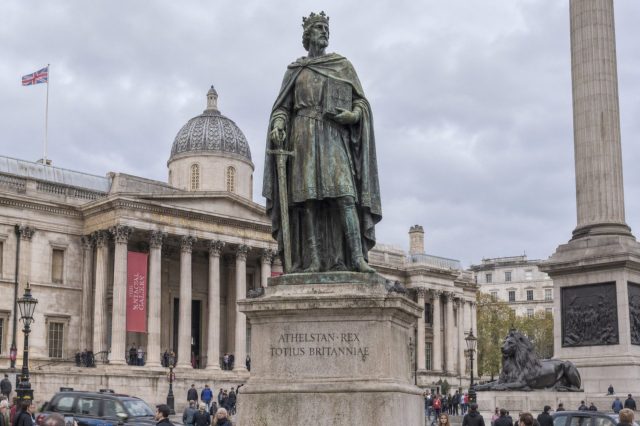
How Neil O’Brien MP envisaged an Athelstan statue for the Fourth Plinth. (X)





It is strange to see a tradition being invented in real time. The cult of King Æthelstan is more vigorous now than ever. It came into its own last year, in time for the 1100th anniversary of his coronation: on top of a festival in Malmesbury, the site of his burial and home to the charming Athelstan Museum, a South Western Railway train was named in his honour. But now we are gearing up for a much bigger occasion. In 2027 it will be 1100 years since Æthelstan “founded England”. There is talk of putting his statue on Trafalgar Square’s fourth plinth and proclaiming a bank holiday. True, this would cost the economy £2 billion. But we were going to get a bank holiday if we won the World Cup, and England’s 1100th birthday is surely a much worthier cause for celebration.
Æthelstan’s sway extends across the usual political faultlines. Tory MPs have taken up his cause, among them their Deputy Leader Alex Burghart, who has a PhD in Anglo-Saxon history. Across the aisle, the Culture Secretary, Lisa Nandy, has pledged her support. They find a trusty ally in Sir Ed Davey, who once called Æthelstan his historical hero (the site of Æthelstan’s coronation, Kingston upon Thames, is in his South London constituency). Andrew Rosindell of Reform UK has also been banging the Æthelstan drum. Perhaps this is just what we need in 2027: a celebration of Englishness and English history that we can all get behind.
Did anybody celebrate England’s 1000th birthday one hundred years ago? As far as I am aware, the date passed by unnoticed. The 1000th anniversary of the death of Æthelstan’s grandfather, Alfred the Great, was a major occasion, an outburst of Victorian razzmatazz. Meanwhile, when the 1000th anniversary of Æthelstan’s death rolled around four decades later, there was a single, laconic notice in the Times, hidden away under “Ecclesiastical News” — in 1940, a year after the actual millennium. And even if they could have used a nice pick-me-up, the English of 1940, they didn’t think to commemorate their founding father.
If Æthelstan is obscure today, this is because he always has been. If he is less obscure than he used to be, that’s thanks to a PR campaign. It all started with Michael Wood. Æthelstan was mightily fortunate that the documentarian who did the most to arouse interest in England’s Dark Age past happened to be a distinguished Æthelstan scholar. His biography of the king, continuing a doctoral thesis which he left unfinished in the Seventies, will be published in time for the Æthelstan “undecentennial”. It will join a growing collection of Æthelstan biographies, all proclaiming their subject as the “First King” or “Maker” of England. We have come a long way since Sir Frank Stenton complained that Æthelstan is the “greatest English statesman for whom no biography exists”.
And a further stroke of good luck for Æthelstan: he has the backing of one of Britain’s best-loved historians. When we stroll around Trafalgar Square admiring Æthelstan in lieu of the “Lady in Blue”, when we are luxuriating in our deckchairs with a mimosa in hand on Æthelstan Day 2027, we should spare a thought for Tom Holland. The Rest Is History presenter wrote a short biography of Æthelstan ten years ago, and has been evangelising for the king ever since. Æthelstan won a poll of the podcast’s listeners on England’s greatest monarch, and the fan-club calls itself the “Æthel-Stans”.
Æthelstan was a great man. As is Tom Holland. It brings me no pleasure to be the Æthelstan Grinch. But amidst this avalanche of Æthelstan-mania, it may be worth taking a more critical view.
We can, in the first instance, thank the Æthelstan cult for encouraging us to take pride in English history. Amidst present insecurities about English identity, it is good to stress that England is ancient, perhaps peculiarly ancient; whether or not we can date its founding precisely to the reign of Æthelstan, it stakes a good claim to being the oldest nation state in Europe (its only rival here is Denmark).
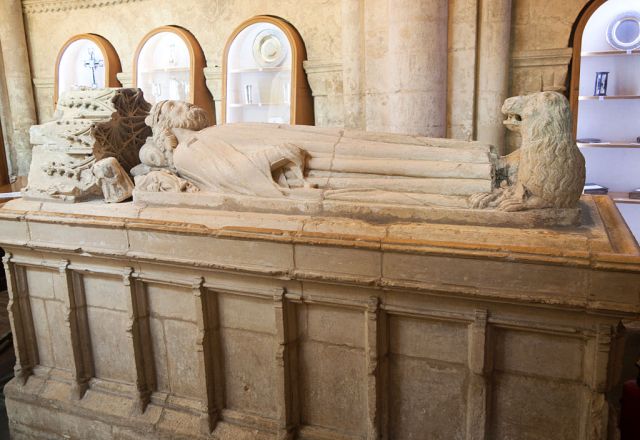
Still it will be odd to mark solemnly an occasion — Æthelstan’s conquest of York in 927 — about which we know almost nothing. The year 927 is important in English history, but it is not, as Æthelstan’s champions sometimes suggest, on the same plane as 1066, or, across the Atlantic, 1776. A brief account of that year’s events is given in the Anglo-Saxon Chronicle: “In this year appeared fiery lights in the northern quarter of the sky, and Sihtric died, and King Æthelstan succeeded to the kingdom of the Northumbrians, and he brought under his rule all the kings who were in this island.” Notice what is not said. We do not know whether Northumbria had to be taken by force. 1066 looms large in our imagination because it comes with an arresting narrative and a memorable cast of characters. With 927, we are much more in the dark.
If 927 was still a decisive moment in Our Island Story, it was not just for the English: as well as calling himself rex Anglorum, “king of the English”, Æthelstan began to call himself rex totius Britanniae, “king of all Britain”. It may not be entirely pedantic to point out that Æthelstan was never rex Angliae, “king of England”, even though this has become the customary subtitle to his biographies: references to Englaland and Anglia only started to crop up later in the Anglo-Saxon period. It seems that he was exalted most of all not for uniting the English people, but rather for subduing the other peoples of Britain — the Scots, the Cornish, the Welsh. This aspect of Æthelstan’s reign is intriguingly absent from the 21st-century encomia, perhaps so as not to antagonise Holyrood and the Senedd.
A contemporary poet did herald 927 as the year that “Saxonia” — England — was “perfecta”, made whole. But “Saxonia” did not remain “perfecta” for long. As soon as Æthelstan died in 939, Northumbria slipped away. The North was not finally reintegrated into the English kingdom, and pried from Viking hands, until 954. Even then, the English kingdom could be partitioned: between 957 and 959, it was divided along the Thames between Æthelstan’s nephews. Whatever Æthelstan’s “England” was, it was hardly a fixed and solid unit. If it was held together by the sheer force of Æthelstan’s personality, this might redound to his greatness as a man, but not to his abilities as a “maker” or a “founder” of a state.
Likewise, the Æthelstan of history is not the Æthelstan of the recent spate of broadsheet columns. Dominic Sandbrook, loyal to his podcast co-host and his “Æthel-stans”, writes that he was “free from the slightest hint of scandal”. This is not really true. We moderns may not be so unsettled by rumours that dogged him during his life, that he was the bastard son of a concubine. More disquieting is another rumour: that he had a hand in the death at sea of his brother Edwin. If Edwin had been scheming against him, then perhaps Sandbrook would say of him what he says of Richard III and the Princes in the Tower: he did it and he was right to do it.
A single allegation of fratricide would not be an insurmountable obstacle for the Æthelstan cult. Æthelstan’s main problem today is that nobody’s heard of him. Holland and others regard this as a great injustice. I think, however, the fact that there is no authentic tradition of Æthelstan-veneration, the fact that it has had to be recently confected, says something in its own right. Even at moments of intense enthusiasm for the Anglo-Saxon past, Æthelstan has never burrowed his way into the national psyche. In fact, it is doubtful that Æthelstan would, for most of English history, have scored very highly on the league table of pre-Conquest kings. Englishmen used to admire Æthelstan’s nephew Edgar for his support of monastic reform, his imperial aura, and for ruling the waves. As believing Christians they adored the martyr kings Edmund, Edward, and Oswald. They were devoted to Edward the Confessor, whose “Laws” represented all that was precious in England’s “ancient constitution”. And at the head of the pantheon — there could be no alternative — sat the founder of the University of Oxford, the deviser of the trial by jury, the “most perfect character in history”, Alfred the Great.
That isn’t to say that Æthelstan has been languishing in oblivion. For a long time, the townsmen of Barnstaple cherished a charter which they believed to have received from Æthelstan. When they sent representatives to parliament, they did so on Æthelstan’s authority. Likewise, the main site of Æthelstan veneration before its current flowering was an esoteric subculture: to this day, the Freemasons nurture a legend that the first English lodge was established under Æthelstan’s auspices. If I were more disposed towards conspiratorial thinking, I would suspect Tom Holland and his comrades of being part of a Masonic plot.
But what did the people of Barnstaple, or the Freemasons, really know of Æthelstan? It was all puff. Æthelstan was a peg, reputable and old, on which they could hang whatever claims they wanted. Æthelstan’s virtue is to lack character and specificity; no story attaches to him like Alfred and the cakes or Cnut and the waves. The Middle English verse romance Athelston, and several Elizabethan and Jacobean plays, purport to relate to King Æthelstan — but here he is merely a stand-in for a generic Anglo-Saxon monarch. When Sir Walter Scott named one of the characters of Ivanhoe Athelstane — the slow-witted scion of the Saxon royal line — he was hardly expecting his readers to know anything about his namesake.
Æthelstan plays a similar role today. At a time when history is politicised, his obscurity is an asset: it makes him innocuous. The fact that there are no prior cults of Æthelstan means that he carries little baggage. Alfred the Great might have made for a more awkward national hero, being indelibly marked by older exuberances of national feeling. With Æthelstan there is little danger of inspiring any real feelings.
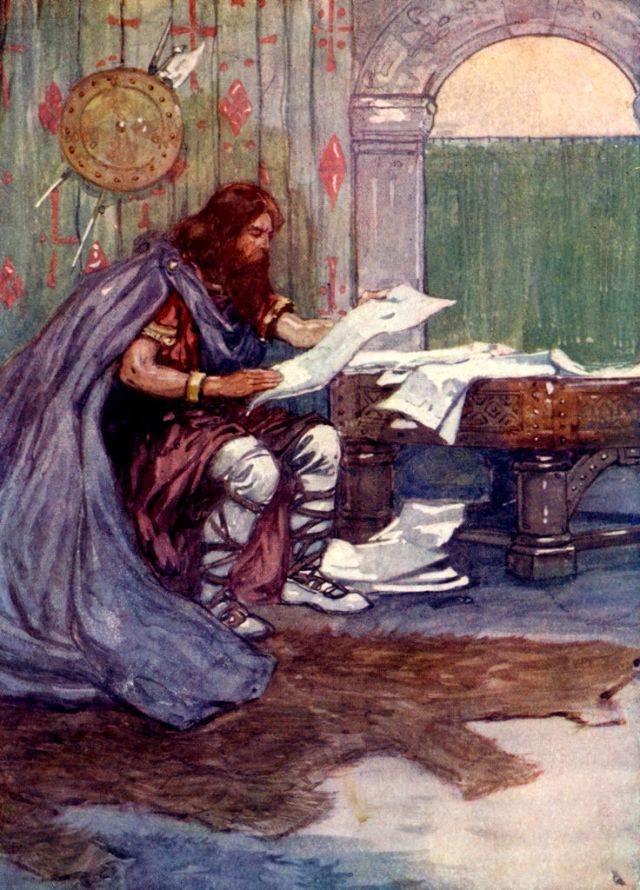
For Æthelstan is a void. His personality can only be guessed at. This is why Alfred went down in history and Æthelstan did not. Anybody who has spent some time with Asser, Alfred’s companion and biographer, comes away feeling almost as though knowing the king personally. More than that: we can in a sense commune with Alfred, thanks to the remarkable fact, as the historian Patrick Wormald once put it, that “Alfred is the only secular Western ruler between Marcus Aurelius and Alfonso the Wise of Castile whom we actually catch in the act of reading and writing about his job”.
With Alfred there is glamour and romance; there is a pure Hollywood story that sets English hearts beating. He starts as the runt of the litter, and then inherits the kingdom in its darkest hour. There is a gut-wrenching “All Is Lost” moment, when in 878 the Vikings’ victory seems to be at hand, and Alfred is reduced to the swamps of Somerset. (Enter the cakes.) And then — by the grace of God — he emerges triumphant at Edington, a David-and-Goliath victory far more stirring than Æthelstan’s spot of colonial policing at Brunanburh. Then, if his martial accomplishments weren’t enough, Alfred spends the remainder of his reign reading and writing, encouraging his countrymen to do the same. To cap it off, he is beset throughout his life by peculiar illnesses. No wonder historians have sometimes thought the story too good to be true.
There is much in Æthelstan’s reign to busy the legal historian or the numismatist, but there is nothing to inflame the passions. A children’s history book from 1849, Aunt Anne’s History of England on Christian Principles, remarked that “there were many Saxon kings after Alfred but… there is not much to interest you in their reigns”. Aunt Anne was right. Charles Dickens, in his Child’s History, praised Æthelstan only for having “remembered the glory of his grandfather, the great Alfred”. The English have remembered Alfred’s glory for over a millennium, such that it is part of the fabric of English identity. Here is a tradition that doesn’t need inventing.
