




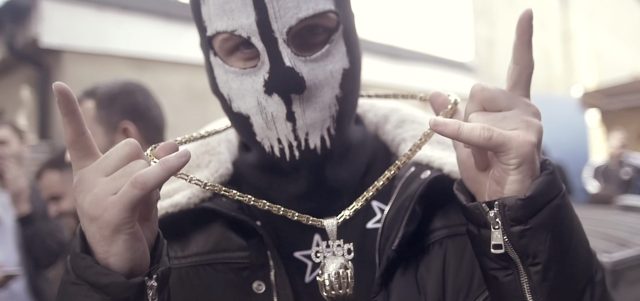
A shot from a Hellbanianz music video. (HELLBANIANZ/YouTube)





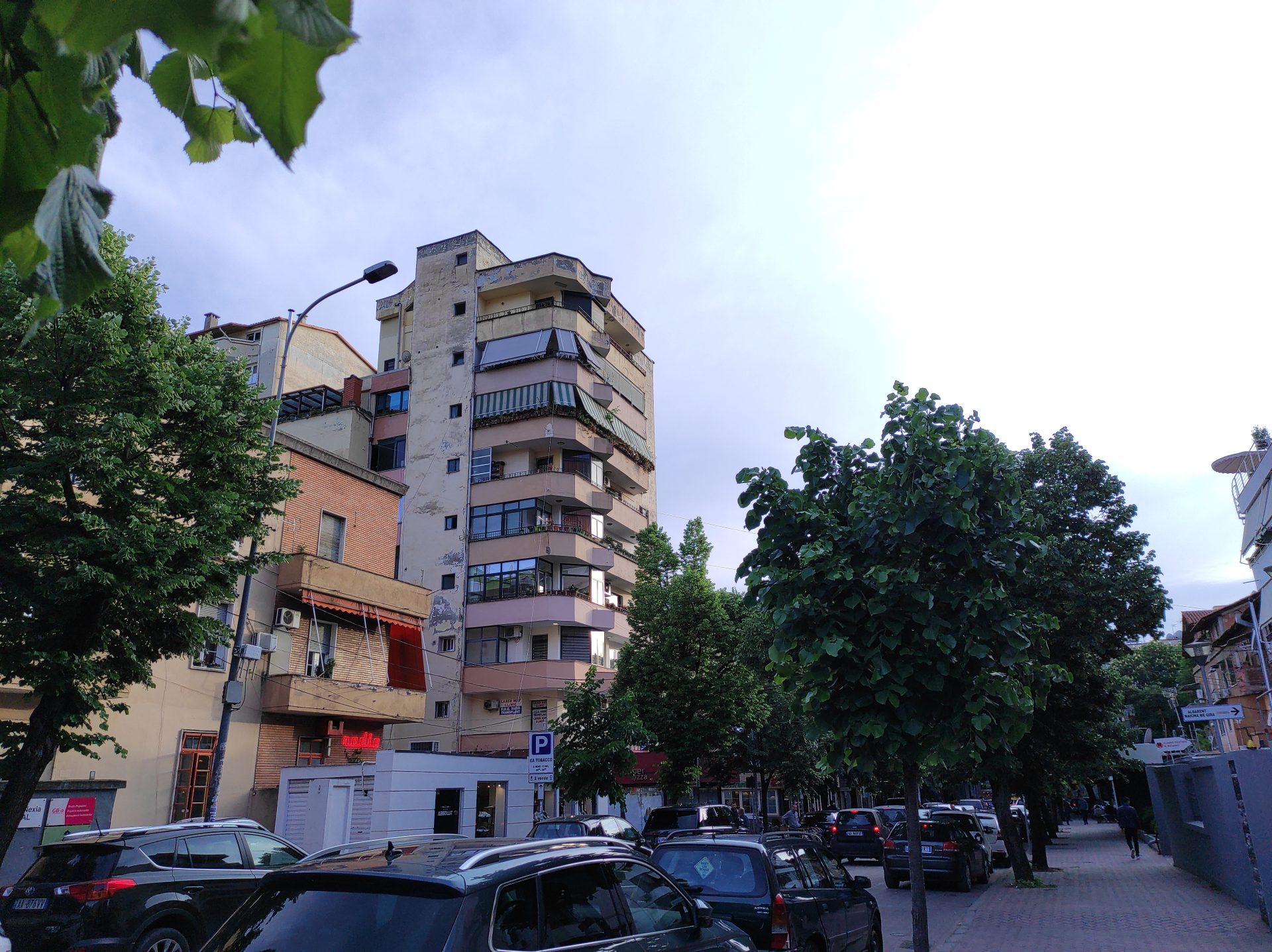
Albania is one of Europe’s poorest countries — but you wouldn’t know that if you visited Blloku. Rolls Royces and Bentleys, €250,000 a piece, rock up outside the bars and cafés of this trendy Tirana neighbourhood. But it’s the drivers, not their growling, blinged-up chariots, that are most noteworthy. For when these tattoo-covered Albanians step out of their cars, they can often be heard barking orders into their iPhones in North London or Mancunian accents.
To those who understand how Europe’s underground economy works, these English lilts make sense. Albanian gangs are all over Britain’s £11 billion cocaine market, from large-scale import to street supply. Earlier this year two Albanians were jailed after arranging for over 500 kilograms of cocaine, with an estimated street value of $40 million, to be smuggled into Manchester airport from Mexico In the last few weeks alone, Albanian dealers have been locked up for running street-cocaine sales as far afield as Ipswich and Aberystwyth. In September, meanwhile, an Albanian was jailed after being caught driving down the M20 in Kent with £2 million of cocaine in Lidl bags. It’s a trade that comes with serious health warnings for users: last week the Office of National Statistics (ONS) revealed cocaine has become the leading cause of drug deaths in England and Wales, with fatal overdoses involving the drug quadrupling in a decade. What’s more, Albanians also dominate Britain’s cannabis racket, which fuels a £2.5 billion domestic weed industry.
This narcotic revolution happened remarkably quickly. Ten years ago, police and journalists were only just starting to warn about the growing influence of Albanian gangs in Britain’s cocaine underworld. Albanian mobsters were rumoured to be the main suppliers to the Groucho Club, Soho’s infamous celebrity hangout; so much cocaine was snorted there that the upstairs snooker room was sometimes called the “Peruvian Procurement Department”. A few streets away, at the Cirque Le Soir nightclub, an Albanian dealer was said to have sold coke in the presence of Frank “Sheriff of Soho” Partridge, the corrupt Met officer in charge of licensing West End nightlife until his arrest in 2015.
Yet the question remains: how did the Albanians pull it off, especially in a country famed both for its tough native gangs, and for long-established foreign groups like the North London Turks and the Kinahans from Dublin?
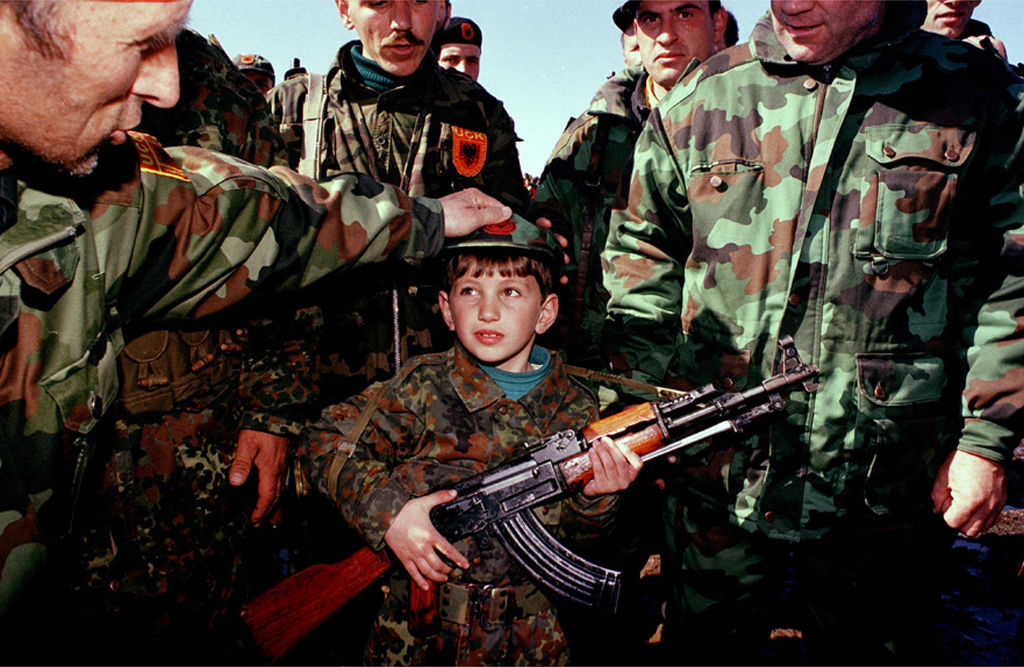
The answer begins with the fall of Albania’s Marxist-Leninist regime in 1992. After decades of socialism, Enver Hoxha’s former subjects stumbled into an unfamiliar capitalist world. “Organised crime was not a concept people in Albania knew much about before the collapse of the Communist regime,” says Fatjona Mejdini, director of the South Eastern Europe unit at the Global Initiative Against Transnational Organised Crime (GI-TOC). “Overnight they faced a capitalist system they didn’t understand. So some turned to organised crime as a way to survive.” By 1997, meanwhile, Albania’s already-fragile economy was brought to its knees after the collapse of one of the biggest pyramid investment schemes in history, when around two thirds of citizens lost their life savings. Add the 1999 Kosovo war to the mix and tens of thousands of ethnic Albanians soon headed west in search of prosperity.
For some, crime was an appealing career path, with Albanian gangsters becoming well-known pimps and sex traffickers in the seedier corners of European capitals. By the late Nineties, Albanian and Kosovan thugs, having a deserved reputation for violence, snatched Soho’s £40 million vice trade from Maltese and East End gangs. By 2001, a Home office briefing found they owned 70% of the neighbourhood’s saunas and massage parlours.
Sex was shadowed by drugs. Following the end of communism, huge weed farms appeared across Albania, with exports undercutting suppliers from the Netherlands and Morocco. The cannabis was first smuggled by road over the southern border into Greece, and then by boat to Italy, just 45 miles away across the Strait of Otranto. The Italian mafias, naturally taking their cut, were only too keen to help the Albanians move their product around Europe. As Mejdini puts it, cannabis was “the currency that Albanian traffickers used to connect with other criminal organisations in Europe and gain experience in organised crime”.
It’s here that Britain re-enters the story. As far back as the Nineties, native gangsters had begun swapping armed robbery for narcotics, with criminals like Curtis “Cocky” Warren importing quality coke directly from Colombia to Liverpool, and the Adams family and their Clerkenwell Crime Syndicate building a thoroughgoing cocaine criminal empire. They were joined by foreign groups too: Kurdish and Pakistani heroin smugglers, and Jamaican Yardies who imported cocaine before turning it into crack.
Riding high on their conquest of Soho’s sex trade, by the mid-2010s Albanians were wading into Britain’s drug world too. They picked a good moment. Around 2015, after all, a kilo of weed sold for £6,000, roughly three times today’s price. Even better, word on the street was that the police had taken their eye off cannabis farms — which, thanks to budget cuts, turned out to be true.
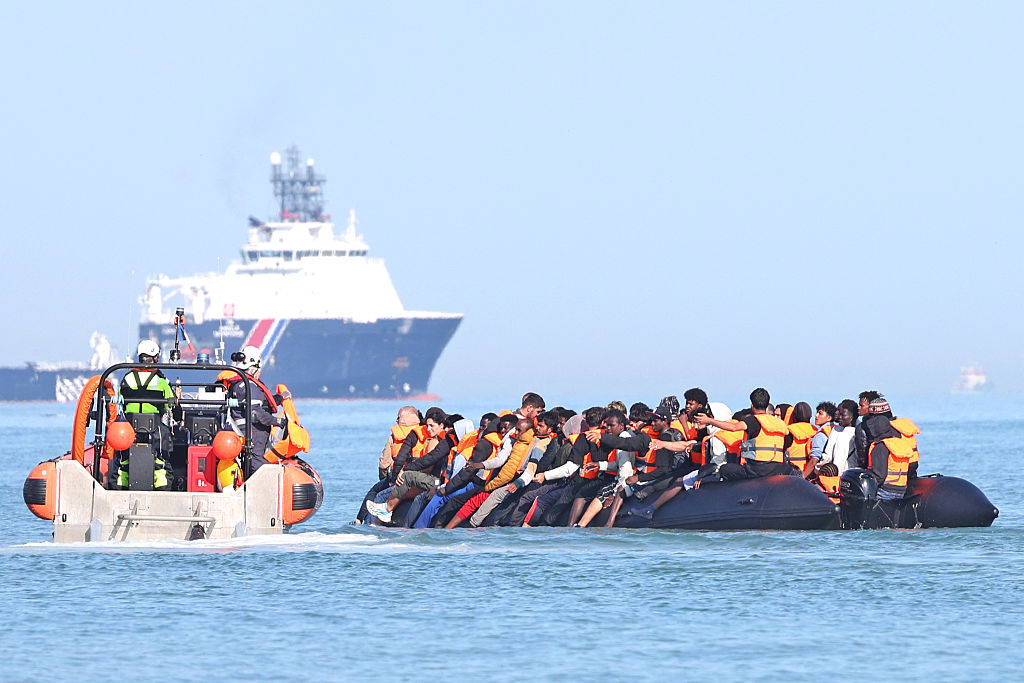
Armed with cultivation know-how — and, thanks to lax immigration controls, a pool of trafficked labour from back home — Albanian criminals duly set up cannabis farms across Britain. That last phrase evokes a bucolic air, but don’t let it fool you. Even today, exploited “plant waterers” are stuck in grimy and claustrophobic conditions across Britain, facing beatings or even death as armed gangs raid each other’s farms to steal valuable crops. Not that this puts prospective workers off. As Ada Braho, of the Bakhita Centre for Research on Slavery, Exploitation and Abuse explains, the prospect of earning good money in British cannabis farms is “openly discussed” by young Albanians.
“It’s pretty normalised,” Braho says. “It’s become like a joke that people are waiting to get on the next boat to get a job in a cannabis house. But they are being duped about the level of risk they are being exposed to.” Braho adds that young men embarking on precarious migration journeys are often backed by their parents as part of what she calls “household decisions” — with the proceeds of crime supporting whole families.
As some Albanian gangs in Britain got entangled in weed farms, better-connected criminals stepped into the high-stakes world of cocaine. Artur and Klevis Hoxhosmani are an excellent example. Hailing from Burrel, a poor town in Albania’s rugged north, Artur claimed asylum in Britain in 1999, when he was just 16. His younger brother Klevis joined him in Bournemouth, on Britain’s south coast, some years later. By 2013, Klevis owned the Crystal Hand Carwash in the Dorset seaside town, and later a coffee shop. As for Artur, he acquired another car wash, as well as a pair of garages.
From these humdrum beginnings, Albanian prosecutors say the brothers became a powerful cocaine trafficking cell. How? Because they had the proverbial golden ticket: direct connections to a rapidly growing network of Albanian cocaine gangs across Latin America and Europe. More than that, the Albanians developed what one expert has called a “sustainable partnership” with the ‘Ndrangheta — the most powerful Italian mafia centred around Calabria, the poor, rocky region in the toe of the peninsula’s boot. Among other things, ‘Ndrangheta bosses helped Albanian cells embed themselves along key points in the world’s cocaine-shipping network, from ports in Ecuador to transit countries like Sierra Leone and The Gambia. These cosmopolitan links have proved useful in other ways. Unlike most white English gangs — whose members are decidedly monolingual — the average Albanian trafficker might speak four or five languages.
Partnering with Albanian criminals in Antwerp and Rotterdam, the Hoxhosmanis first smuggled in tonnes of cocaine from across the Atlantic, bribing customs officers and port officials to ensure things went smoothly. From there, they moved the coke by lorry to France, and then into the UK via the Channel Tunnel, where the brothers picked it up and distributed it to British wholesale suppliers. Police intercepted messages between the gang, which prosecutors say linked them to five tonnes of cocaine seizures over just eight months, and to powerful associates based in the money-laundering hub of Dubai.
These successes catapulted the Hoxhosmanis into glamorous circles; when they were arrested in Albania last summer, Klevis was in a much-publicised relationship with Kejda Ajazi, daughter of a former Albanian government minister. The brothers also hung out in places like Monaco, and owned a string of villas on Albania’s booming coast, as well as a yacht in Dubai. They now await trial charged with conspiracy to traffic £335 million worth of cocaine from Latin America to Britain and the EU.
That word “cells” is important here. There is no single “Albanian mafia” in Britain. Instead, Mejdini explains that its coke-trafficking gangs largely consist of small, ultra-loyal kinship groups, almost always formed of brothers or in-laws. A second layer of the cell is usually made up of “associates”, who hail from the same small rural towns as core members. That gives Albanian crime cells a strong glue of shared community and trust — with dire consequences for family back home if anyone proves treacherous. For obvious reasons, that helps prevent police infiltration, especially when newcomers require vetting and references.
It’s also true that Albanian gangs in Britain are careful not to ruffle too many feathers. Despite their brutal reputation, outfits like the Hoxhosmanis didn’t displace existing outfits, nor do they now dominate their industry by force. Rather, they eased into Britain’s criminal ecosystem using a mix of know-how, efficiency and fair business practices: ironic given the bewildering scale of corruption in Albania itself. “Albanian groups have a reputation for reliability and delivery,” says Frank Stewart, threat lead for Western Balkans organised crime at the National Crime Agency (NCA). “In general, they are good at working with others and have established a reputation for delivering what they say they will on time and according to the agreement made.”
Gangland shootings linked to Albanians are rare in the UK. In fact, despite having the least to prove, white British crime groups remain the most aggressive around. Tony Saggers, an international crime consultant and former head of drugs at the NCA, says there’s a reason Albanian gangs figure less in Liverpool than other cities — its cocaine trade is too violent. Trigger-happy gunfights clash with the “violence is bad for business” credo followed by Albanian cocaine gangs and indeed their mentors the ‘Ndrangheta. On the rare occasions that killings do happen, they tend to be carried out when targets are back home in Albania. After a 50-kilo shipment of cocaine went missing in England in 2018, bosses waited to ambush the suspected thieves in Albania, gunning them down when they were driving home from a family dinner.
As older Albanian criminals retreat into the semi-legitimate world, investing cocaine money into nightclubs and restaurants, a new generation of dealers is now stepping up. These younger criminals, many of whom were born in the UK, could pose a greater threat than their elders. More familiar with Britain’s modern underworld, Mejdini notes that they’re better at evading the law, not least around using sophisticated money-laundering schemes to hide their criminal assets.
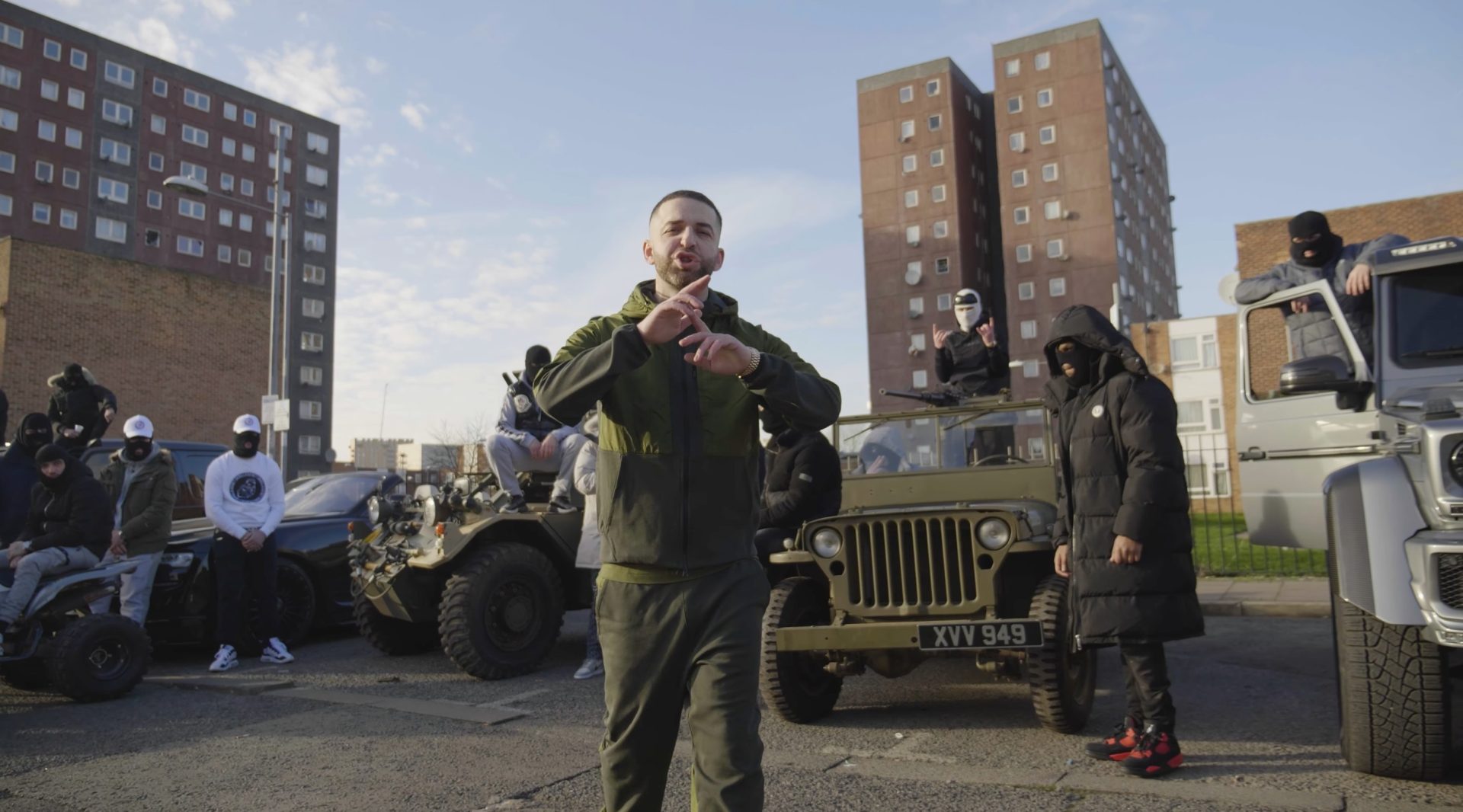
Some local Albanian gangsters are able to throw their weight around in their communities, with unsubstantiated rumours of “protection rackets” in the North London suburb of Southgate. A lot of fuss has been made about the “Hellbanianz”, an Instagram-friendly East London Albanian street drug gang with a penchant for well-produced rap videos. Now, though, its leaders are either in jail or back in Albania, and there’s little evidence, from either police investigations or criminologists, that their success in the drug trade translated to real power on the streets of Britain.
The same can’t be said for Albania itself. Ongoing street riots in the country were sparked by the $120-million sale of protected coastal land by Artur Shehu, an Albanian businessman and suspected cocaine trafficker, to Jared Kushner. Donald Trump’s son-in-law hopes to turn the wildlife sanctuary, home to flamingos, turtles and seals, into a massive luxury hotel complex. Certainly, Albania is now so deep in laundered coke cash that the resulting property boom has screwed the country’s economy. House prices have risen to unaffordable levels, and, as drug money has strengthened the local currency, exports are becoming more expensive, weakening sectors like garment manufacturing and agriculture.
Stemming illegal migration may well help combat Britain’s Albanian gangs. But Mejdini suggests the Government’s efforts could be more targeted, for instance working with the Albanian authorities to identify known criminals. Britain might also cultivate closer links with the UK’s law-abiding Albanian diaspora, improving routes into education, employment and legitimate business, thereby reducing the appeal of crime. For now, though, with those Rolls Royces and Bentleys acting as shining adverts for the bounties of Britain, the road from Blloku to Bournemouth remains wide open.
