




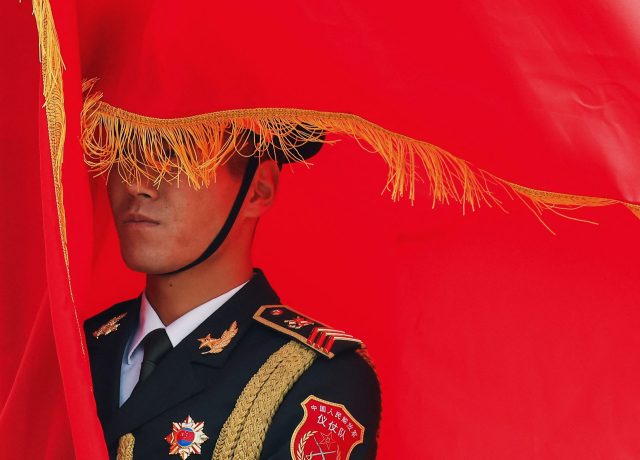
‘The Chinese regime’s playbook is psychological warfare’. (Maxim Shemetov/Getty)





A few months ago, Simon Cheng was strolling among the bankers, lawyers and tech workers who crowd the shopping malls of Canary Wharf. Amid the throng, he noticed a man who seemed to be watching him. “So I went up to this guy,” Cheng tells me, “and he acted strange, pulling up his hood and a mask but still standing there. It looked even more suspicious.” He asked the man what he was doing and instead of replying, the guy tried to grab his phone — then ran away when Cheng shouted for help.
For most people, this might be an unsettling incident. But Cheng is a pro-democracy activist with a bounty of a million Hong Kong dollars (almost £100,000) on his head for his capture. He fled to Britain after Beijing cracked down on the mass protests that rocked Hong Kong seven years ago, then co-founded a group supporting his fellow exiles and human rights in the territory. And this former British consulate worker knows all too well what he might face in a Chinese jail: he was arrested at the border after returning from a work trip to Shenzhen in 2019. Over the 15 days of detention that followed, he says he was shackled, blindfolded, beaten and held in solitary confinement, before being forced to sign a false confession.
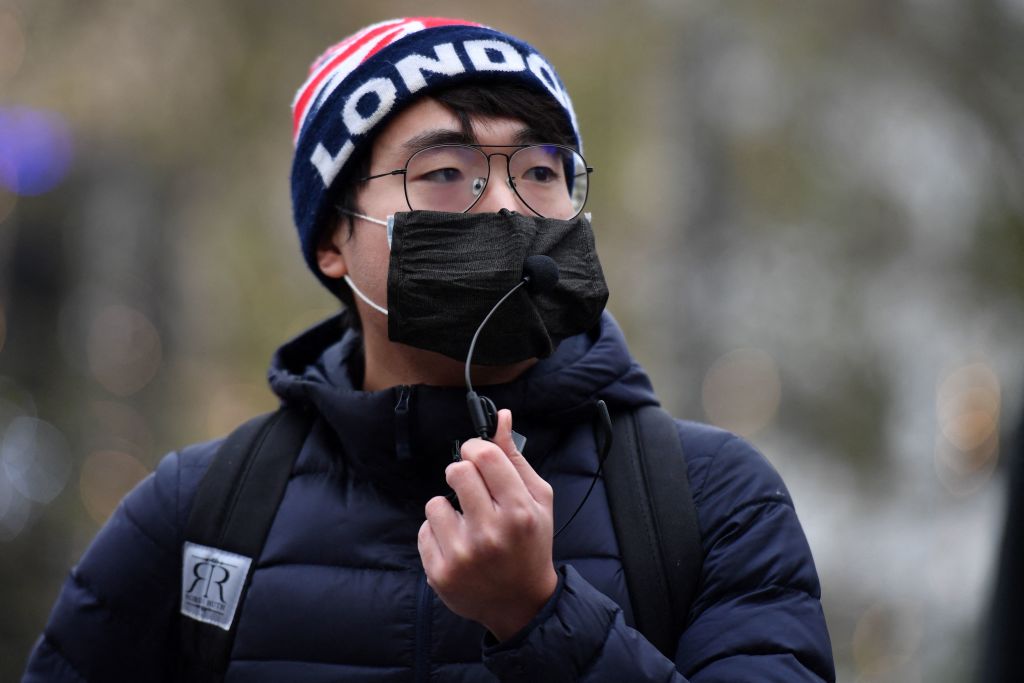
After his confrontation at Canary Wharf, Cheng tipped off British counter-terrorism police, but still does not know his assailant’s identity. But he does, like many of the 170,000 Hong Kongers who came here after the clampdown — especially prominent figures with prices on their heads — know all about a campaign of state-sanctioned harassment, intimidation and surveillance intended to silence dissidents and stifle criticism of China’s dictatorship in the former British colony. These shadowy activities were confirmed earlier this year with the conviction of two spies, after a long court case exposed the targeting of pro-democracy activists and ties to Beijing.
Peter Wai, who used his job as a Border Force officer at Heathrow airport to access official databases, was jailed for 10 years, and his handler Bill Yuen, a former Hong Kong police officer working as a manager at the Hong Kong Economic and Trade Office in London, given an eight-year sentence for assisting a foreign intelligence service. They were arrested — along with a former Royal Marine who later took his own life — after trying to force entry to an exile’s flat in West Yorkshire. After police lacked the resources to translate evidence from some 200 seized electronic devices, however, seven more arrested individuals were able to flee the country.
China’s pressure on activists — which the judge in the Wai case said “contributed to fear, insecurity and distress to those targeted” — extends to their families. Cheng has seen footage of his father, who fled the horrors of Mao’s Cultural Revolution by swimming to Hong Kong, humiliatingly led off by police for questioning over his activities, along with his mother and two sisters. The father of another exiled campaigner was locked up earlier this year for supposed financial offences under the draconian National Security Law, imposed by Beijing to crack down on pro-democracy protests via secret trials, wire-tapping and potential life imprisonment. Little wonder Amnesty International labelled the law “a disturbing escalation”.
Many of those involved in Hong Kong’s 2019 protests were teenagers — as I saw when I spent three weeks amid the tear gas and baton charges. “What alternative do we have?” one young protester asked me then, fully aware that their efforts were probably doomed. Now China’s tentacles reach deep into Britain too. “I know a lot of activists whose family are being pressurised,” one exile tells me. “They participate in a protest here and next day their parents get a phone call from the national security department, threatening them to ask their sons or daughters to stop going to protests. Then people say it is too risky to participate.”
This is transnational repression, exercised on our soil by the same brutal regime that broke the 1997 “one country, two systems” handover deal with the UK — designed to preserve Hong Kong’s unique status for half a century. While Beijing jails freedom fighters who stayed, including Jimmy Lai and Joshua Wong, it spies on and harasses other leading pro-democracy campaigners who escaped abroad and continue the struggle. And not just in Britain: earlier this year, American authorities accused China’s Ministry of Public Security of operating a secret police station in New York to track regime opponents, after convicting two secret agents. British sources also tell me that a former Hong Kong police officer, who escaped after the Yorkshire spy arrests, is tied to surveillance of a leading candidate running for mayor in Taipei, which reportedly includes installing secret miniature cameras by his house.
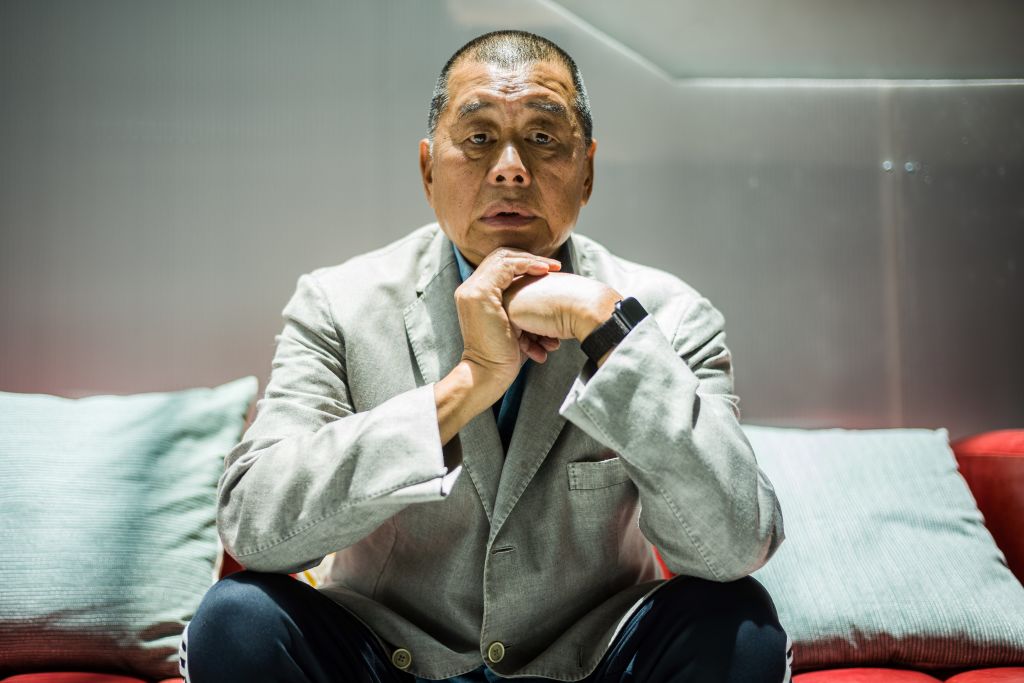
Finn Lau was one of the targets of those Chinese intelligence operations in Britain. Another leading pro-democracy activist with a million dollar bounty on his head, the chartered surveyor was beaten in London in June 2020, an attack he suspects was linked to Beijing. Two years ago — amid summer riots across the country — his name and recent addresses were shared on far-Right social media channels alongside calls for targeting of Hong Kong refugees. Investigations by The Guardian pointed towards Chinese state-linked influence operations, though an embassy spokesman insisted “so-called ‘transnational repression’ by China is pure fabrication”.
Now Lau moves house annually. “Every day is stressful,” he tells me. “I keep looking around whenever I am leaving or going home. I’ve even got in the habit to stand against the wall because I never feel safe in the middle of a crowd in a public event. Although I’ve normalised this highly stressful situation, I’m constantly alert. I change my living habits, prepare [for] any kind of situation where I may get attacked or face an emergency. The risk of attack or kidnap escalated with the bounty. The UK should be a place with freedom of speech, but even here on British soil we must face this kind of fear.”
Lau has also suffered three incidents of “financial coercion”: blocking by banks and payment firms. In the latest case, three of his Wise business and personal bank accounts were frozen, locking him out for a month until four British MPs took up his plight, saying they feared “illegitimate foreign state pressure” might have been the cause. “Chinese agents are working to undermine Hong Kongers in the UK,” says Tom Tugendhat, the Conservative foreign affairs spokesman who helped Lau free the accounts. “We’ve seen many assaults on their liberty and on our sovereignty as Chinese citizens are bullied and blackmailed into assisting the Communist Party.”
Carmen Lau (no relation), a former Hong Kong councillor with the same million-dollar bounty on her head, revealed that her Wise account had been frozen too and that she has been “debanked” also by a pair of international banks with strong Chinese links. “It is easier to frame us and smear us under money laundering or corruption claims,” she says. “I think the Chinese state has flagged our information across the world.”
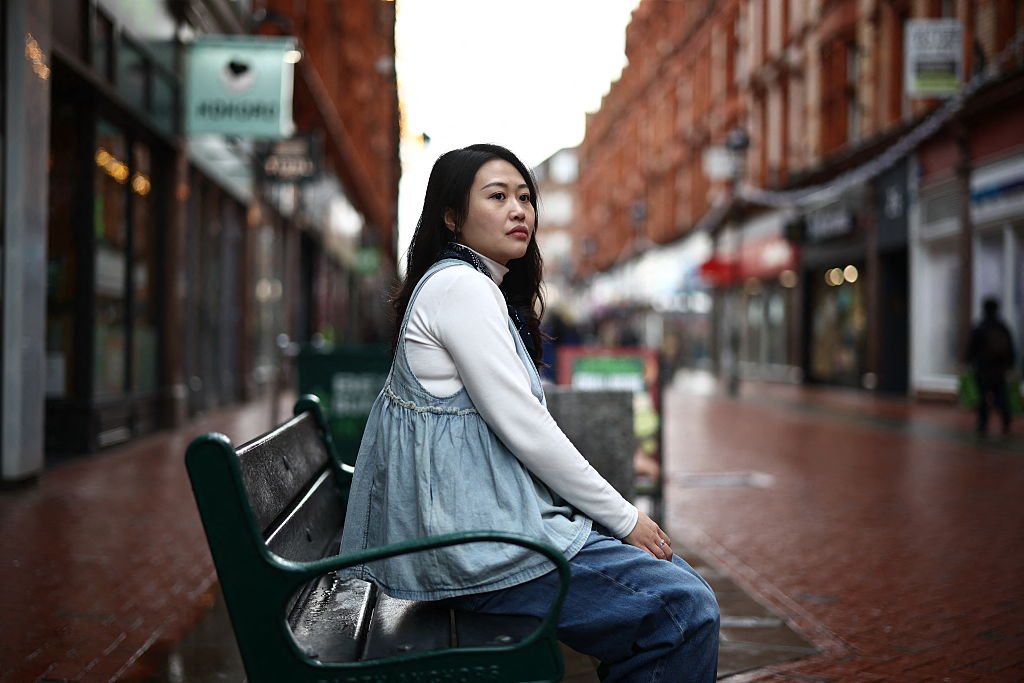
Lau has faced other underhand tactics too. Early last year — after she campaigned against the plan to let Beijing build a giant new embassy opposite the Tower of London — her neighbours in Maidenhead were sent letters from China. These included her picture, name and address, as well as details of the bounty. Then last November, another letter was sent to the neighbours alleging she was a prostitute and including fake pornographic images of her. “It was very unpleasant,” Lau says. “Of course it is the Chinese regime and their proxies.”
Like other leading Hong Kong pro-democracy activists, Lau suspects she is routinely followed and faces a barrage of online abuse, hacking and phishing attempts. She moved home three times last year; uses false names when ordering food online; and saw her relationship with a partner collapse due to the pressure. “The Chinese regime’s playbook is psychological warfare — they are clever enough not to shed any blood on democratic soil but they play mental tricks to eventually have the same effect.”
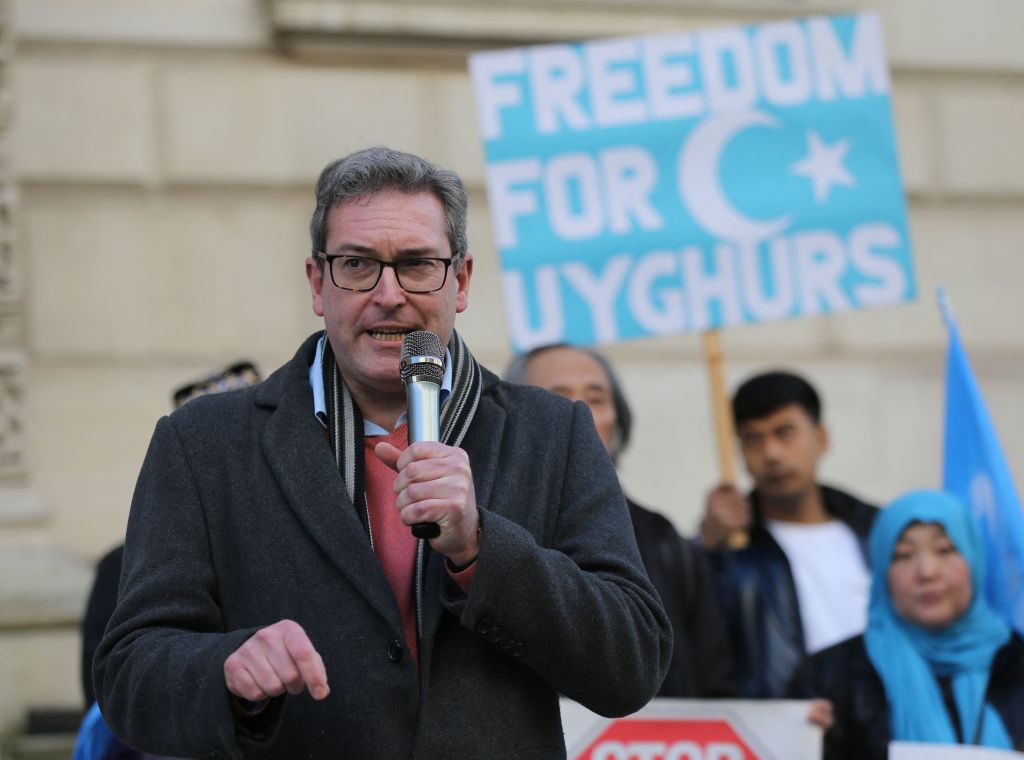
Beijing also tries to terrorise Tibetans and Uyghurs into silence. A report last year by the Joint Committee on Human Rights in Parliament concluded that China, Iran and Russia were the three most “flagrant” perpetrators of transnational repression in Britain. The investigation also raised concerns about use of unofficial Chinese police stations to monitor and pressure members of the diaspora — which alongside the new London mega-embassy “could serve as a base for further surveillance and intimidation activities”.
Even Britons are targeted — including Benedict Rogers, the author, campaigner, and co-founder of Hong Kong Watch, who has been accused by police in the territory of jeopardising China’s security and warned he faces jail. His neighbours in his South London suburb have been sent anonymous letters claiming Rogers is dangerous. He has received dozens of threatening notes, including a warning that his safety couldn’t be guaranteed if continued his activities. His elderly mother in Dorset was sent a letter urging her to silence her son. Fake emails have been sent in his name to MPs, journalists and other activists.
There is also the shadow of surveillance: a few months ago, after leaving home for his daily swim, Rogers spotted a Chinese woman — whom he had noticed three days earlier staring intently in his direction — taking photographs of him. “She was very close — just a few metres away,” he tells me. “I deduce the purpose was to threaten and intimidate and send the message that they know where I live. She did not say anything but it was quite deliberate.”
The youngest activist with a bounty on her head is Chloe Cheung, who was just 19 when targeted by Hong Kong police on Christmas Eve two years ago. “I just wanted to take a gap year after school but I’ve ended up with a bounty,” she said at the time. Like others, she tells me she has endured surveillance, sexist abuse, doxxing, strange incidents. “When you walk around the street you have to look often over your shoulder. I look at shop window reflections to make sure no-one is following. I can’t expect British police to give me a security guard 24 hours a day, so the only solution is to be very paranoid and suspicious to protect yourself.”
Cheung explains how the pressure has affected her relationships and social life, with friends forced to block her on social media for their own safety. “I’ve lost most of my friends because of the bounty,” she tells me. “It’s really frustrating because I can’t make any friends from Hong Kong who aren’t in political circles. It’s hard to meet local people in the UK as well since they don’t understand the bounty. They think I’m a wanted criminal unless I explain the story from the beginning — and some still want to avoid any trouble or politics. And if someone suddenly tries to make friends with me or approaches me unexpectedly, my first thought is no longer trust but suspicion.”
The Nvidia scandal — briefly bringing down one of the world’s leading technology titans — has heightened tensions over the extent and reach of Beijing’s intelligence network under President Xi. So given the intensity of Chinese repression, and the reach of its security services, Cheung does not blame people for cutting off contact. Yet she admits this makes it harder to settle in her new home. “A lot of us are quite lonely,” she says. “That’s their intention — they want to separate us.”
Ian Birrell is an award-winning foreign reporter and columnist. He is also the founder, with Damon Albarn, of Africa Express.
 ianbirrell