





Badenoch claims to be British, not English. (Oli Scarff/Getty)





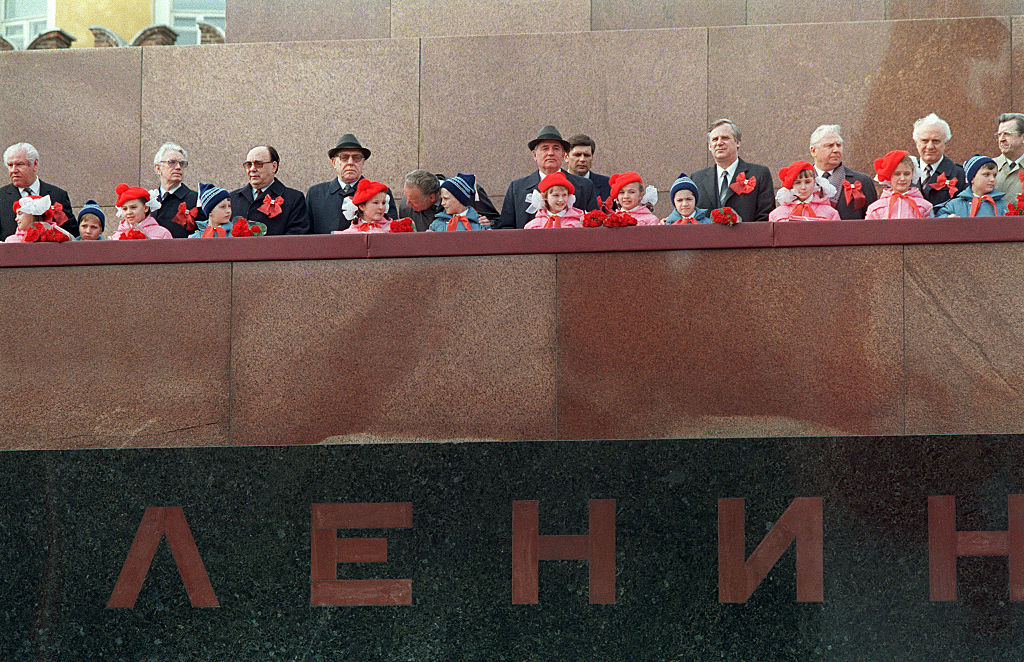
There was a marked late-Soviet quality to the conference speeches made by Britain’s political leaders, as they addressed the dwindling ranks of party faithful and lobby nomenklatura. Presenting himself as “an outsider from the Westminster club”, come to shake up the tired regime at the centre with the folksy wisdom of the Northwest, Andy Burnham is not quite that former First Secretary of Sverdlovsk Oblast, Boris Yeltsin, whose reputation rested on a solid record of provincial housebuilding and regional transportation networks. But the Prime Minister is a recognisable type of late-stage provincial apparatchik nevertheless. In vowing that despite the fact that “everyone can see the position Britain is in, everyone knows things are not working as they should”, he will not be “the last Prime Minister of the United Kingdom”, Burnham does not invite confidence in the nation’s constitutional stability.
But neither does Kemi Badenoch, whose most striking conference speech contributions lay in casting Reform as a party of dangerous ethnonationalists, and observing, correctly enough, that “there are separatists running not just Scotland, but Wales and Northern Ireland”. That both Burnham and Badenoch feel it necessary to cast themselves as the most fervent defenders of the Union does not bode well for its future.
Indeed, Badenoch’s claim that “our Prime Minister clumsily opened the door to a second Scottish referendum, while his leader in Scotland actively supports one” glosses over the broader likelihood that the transformation of British politics into a multiparty contest — especially when coupled with Burnham’s promise, or threat, of electoral reform — will force a reliance on such unstable and unwieldy coalitions. If Britain’s malaise is unique in its specifics, it is also merely our version of similar dynamics across the Western world. British politics is now increasingly European in its composition, even if its electoral system is not geared to recognising this fact. Rather than producing strong executive governments, the effects of first-past-the-post voting in a country with multiparty politics have been to consolidate permanent political crisis, further destabilising the Westminster system, and weakening the central state. Looking at our closest comparable European neighbours, France, Germany and Spain, we are offered a selection of possible British political futures, none of them particularly appetising.

In France, the ongoing riots seem certain to strengthen the National Rally’s chances of victory in next year’s election. Yet they are also merely an amuse bouche before the rioting and mass protests that an NR victory would bring. The cordon sanitaire of the centre parties has now apparently shifted from blocking cooperation with RN to isolating the Left-populist La France Insoumise, a rather more full-throated version of the brand of politics driving Polanski’s version of the Green Party, from power. The political centre is perhaps stronger in Britain than in France: as it stands, there seems little likelihood of Reform winning an outright electoral victory on the scale the polls predict for Le Pen’s party.
In Germany, meanwhile, the centre-right CDU’s historic electoral collapse at the hands of the AfD has found the party reaching a historical nadir of around 20% national support: a figure comparable to that which the Conservatives currently achieve as part of what her outriders insist on calling, with little supporting evidence, the “Kemi bounce”. In Germany, the objective electoral logic is for a consolidated Right-wing coalition government. But given the taboos around the radical Right most fervently held by Germany’s political class — and gifted, by Germany’s historical experience, to the rest of the Western world — the more likely outcome is either the CDU’s total collapse or the absorption of its surviving rump into yet another unwieldy and unstable coalition, there merely to keep the AfD from power. It is not fanciful to see such an ungainly political chimera assembling itself in Westminster, too, in a Great British Brandmauer against Reform which may well block the party from power for another electoral cycle, but will accelerate the cynicism and disaffection increasingly felt by Britain’s voters for their political system.
But perhaps the closest near-future analogy is to be found with Spain, where the governing Left party, propped up by peripheral separatists, has been forced to call an early election following its loss of support over widespread corruption and a wilful mismanagement of migration represented as a principled moral stance. If the Ceuta incursion showed how impatient other European leaders now are with Madrid’s attitude to migration, it is the Spanish electorate who are set to deliver the final blow.
Judging by the polls, the most likely outcome is some form of coalition government between the centre-right Partido Popular (PP) and the radical-Right Vox: a nationwide extension of the ruling coalition in devolved Andalucia, once a stronghold of Left-wing political organisation, but whose governance has been carved up between Vox and the PP since 2018. As it stands, Britain’s party of government commands a similar level of popular support as Spain’s governing PSOE, though neither party of the Right approaches that of the PP. No party in Britain approaches the popularity of either the National Rally or the AfD.The CDU’s polling nadir, a historic disaster for them, is vaunted as a triumph of Badenoch’s leadership by her lobby outriders, when the same level of support is achieved by the Conservative Party. The options available to the European centre-right thus vary according to circumstances: in France, where it is subordinate to the National Rally, some form of tacit coalition; in Spain, where the PP is dominant but not strong enough for majority government, an overt coalition with Vox; and in Germany, where both continuing the firewall against the AfD and coalition with it invites electoral disaster, merely further collapse.

Let us apply the lessons of European multiparty politics to Britain’s new multi-party system. If the most obvious barrier to a Reform government is a coalition of Labour and the broader liberal and Leftist centre, then the most obvious prospect of a Right-wing government lies in an electoral coalition between Reform and the Conservatives. That this does not seem possible seems to derive more from the personal antipathies between the rather histrionic personalities involved (as shown by Badenoch’s conference speech contempt for the “drama queens” who abandoned her party for Reform) than it does from any real questions of political principle. In terms of immigration and border security — the central issue destabilising British politics, and indeed the rest of Europe — there is very little to distinguish between the policies of the two major parties of the Right. Zia Yusuf’s rhetoric may be more intemperate, but both Reform and the Tories now stand on the principle that the asylum system, in its current iteration as a costly and wildly unpopular form of welfarism for the entire world, is dead. Unpalatable though it may be to either party, or to either party’s voter base, the electoral mathematics of turning this from rhetoric into law currently lies in coalition. It is odd, then, that Badenoch devoted such energy in her speech, so rapturously received by her loyal commentariat, to erecting a new moral firewall against cooperation with Reform on the basis of the contentious and seemingly wilfully misunderstood topic of ethnicity — which has now become, to no-one’s benefit, a staple topic of British political discourse.
Unlike Question Time panellists or lobby journalists who performatively claim not to understand the meaning of ethnicity, we at least know that Badenoch does, because she has made explicit reference to her own Yoruba ethnicity, and its distinction from her (as of last year renounced) Nigerian national identity. “I find it interesting that everybody defines me as being Nigerian,” she explained to The Spectator. “I identify less with the country than with the specific ethnicity [Yoruba]. That’s what I really am. I have nothing in common with the people from the north of the country, the Boko Haram where the Islamism is, those were our ethnic enemies and yet you end up being lumped in with those people.” The Hausa and Fulani of northern Nigeria may well be Badenoch’s “ethnic enemies” simply because she has inherited an ethnic identity, which she asserts has given her a “very strong identity about who you are, where you come from, traditions and so on”, and from which she derives both moral and political meaning. The national identity she inherited — Nigerian — was essentially an artificial construct of the British state, and being less meaningful, has since been abandoned. The principles at operation here are the same, in essence, as those in the ongoing debate over Englishness, and perhaps listening to her explain them so frankly might clarify more immediate questions for her fanbase in the lobby.
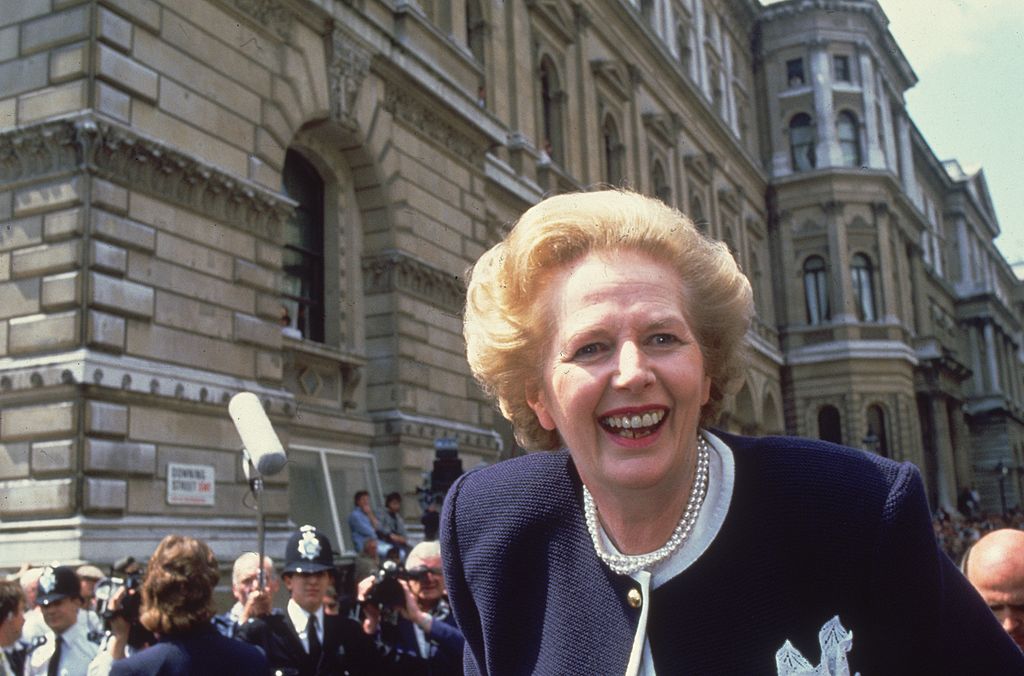
Indeed, the principles in operation are the same as in her conference-speech claim that the Green Party, by declaring that “Zionism is Racism”, is “seeking to erase Jewish identity”. Evidently Badenoch subscribes to the basic principles of Zionism, which are that the Jewish people are a people distinct from others in the world by virtue of ancestry; that they deserve their own state as a result; and that that home should be in their ancestral land of Israel. Is this racism in the Israeli case? Clearly, Badenoch does not believe so. Would, then, the same principles apply in the British or English case? Here, the answer is less clear. It is notable that, after rebuking Suella Braverman for waving away any claims to ethnic Englishness, Badenoch does not claim herself to be English, instead declaring herself proud to be black and British. Yet Badenoch’s British nationality, through being born in England, was via an avenue shut off by Thatcher’s British Nationality Act in 1981, the very year after her birth. Explaining her motivation, Thatcher told ITV’s World in Action in 1978 that “by the end of the century there would be four million people of the new Commonwealth or Pakistan here”, which “is an awful lot and I think it means that people are really rather afraid that this country might be rather swamped by people with a different culture”. Indeed, in such a situation, Thatcher claimed, “people are going to react and be rather hostile to people coming in”. Obviously Thatcher did not foresee that four million people would enter Britain just within the term of the last Conservative government, a turn of events characterised by Badenoch as a regrettable but understandable oversight, and whose unrepentant architects remain in frontline Tory politics.
Even given Thatcher’s own opinions, reading the Hansard debate on the 1981 bill, one is still struck by the forthright language on the matter: the past, even the near past, really was another country. The Right-wing Conservative MP John Stokes remarked, in terms Reform would shy from today, that “where immigration has occurred, the immigrant penetration is against the clear wishes of the indigenous population. The ordinary Englishman still clings obstinately to his Englishness and to the old, known ways. He knows only too well that if immigration continues at the present rate the indigenous population will in time be supplanted by aliens and British people will gradually disappear from these islands. It has already started to happen in certain areas.” Given the Conservative party’s present day Cargo Cult devotion to the Iron Lady — evident even down to the Thatcher-themed trinkets and gewgaws offered for sale at Conference — it is worth asking if Badenoch would consider her political role model, and the government she led, racist? Was Thatcher more or less racist than Braverman or Zia Yusuf? Was she, indeed, an ethnonationalist?
Thatcher did, after all, note that the recapture of the Falkland Islands was undertaken partly because the Islanders are “British in stock and tradition”, as well as owing allegiance to the Crown. This is a direct appeal to ethnic kinship, but is it now beyond the pale for Thatcher’s most slavish modern devotees? These are interesting questions, to which we should not expect any answers from the Westminster commentariat: expediency, as always in British politics, takes precedence over any coherent intellectual principle. Perhaps the more relevant observation is that, proud of their Britishness while seeking to close off such status to current arrivals, there is really little difference between Badenoch or Braverman or even Yusuf in terms of policy: they are all rather more liberal on the questions of race and identity than the governing Conservative Party of the Eighties. Indeed, it is tempting to wonder if a more strident British Unionism might not become the default stance of non-white minorities discomfited by the increasingly purist definitions of Englishness rising on the Right. This would, by definition, place the separatist parties of the Celtic Fringe, whose political success forces the English Question into sharper relief, as their political foes. In any case, the current intemperate rhetoric, politically tempting for both parties of the Right, shuts off the avenues for cooperation the electoral logic currently demands. The result is that rather than stable governance of any kind, Britain seems doomed to descend further into political turbulence and the erosion of state legitimacy.
Even the richest, most stable and well-governed country, luxuriating in a climate of benign international security, can ill afford its politics to be subsumed into such anxious, and increasingly poisonous questions of identity. For modern Britain, which can claim none of the above, the risks are markedly greater. On the Garvaghy Road and Drumcree in Portadown the other week, I was struck by how many riot police I spoke to had “mainland” accents: the erosion of the PSNI’s capacity to manage large-scale disorder, apparent in the race riots of past summers, has led to an increasing reliance on support from British police forces, even at a time that Britain itself faces, for the first time, the endemic risk of widespread disorder, as new groups of ski-masked men daily announce their paramilitary cosplay. England’s South Coast, perhaps not territory for which Burnham has an instinctive understanding, threatens to become his own Southport: but even his home territory of Manchester is now seeing the widespread vandalising of migrant HMOs, while Glasgow, scene of increasing anti-migrant mobilisation with apparent links to Ulster Loyalists, looks like an explosion waiting to happen. Can the British state manage simultaneous summer disorder in, say, Belfast, Glasgow and Gosport? It would seem doubtful in the extreme. Perhaps the best that can be said for the United Kingdom’s unity is that widespread political disaffection and the looming threat of violent disorder has now become a truly national concern.
That all of this is taking place in a climate of extreme international turbulence, with our political leaders urging the electorate to prepare itself for war while themselves doing nothing that would enable Britain to win one; where state capacity is weaker than it has ever been, the fruit of decades of misgovernance by both parties; and where the economy is so palpably weak — none of this restores faith in Westminster’s capacity to pull Britain out of this dangerous spiral. Britain’s already-existing multiparty politics, the unintended consequence of voter disaffection, has not been met among party leaders by the tolerance for coalition government necessary in such a system. Instead, they all chase the fleeting high of a majority government, which has swiftly turned to ashes for every one of our many prime ministers over the past decade.
But if their solutions are unconvincing, at least the sombre national mood was apparent in both Burnham and Badenoch’s speeches. It is, after all, the kind of political scenario a country would wish on its bitterest geopolitical enemy. Dwindling state capacity, eroding state legitimacy, rising ethnonationalism among the state’s core population and ascendent nationalist separatism on the peripheries: such is the shared diagnosis of the Prime Minister and his notional counterpart in opposition. Each party leader presents themself as the only solution to a period of long-term political instability: but the structural forces seem to suggest only further rancour and destabilisation. Conference season may have provided the Westminster lobby with its customary annual thrill, but for the country’s far less enthusiastic voters, it gave just another glimpse of late-Soviet Britain.
