




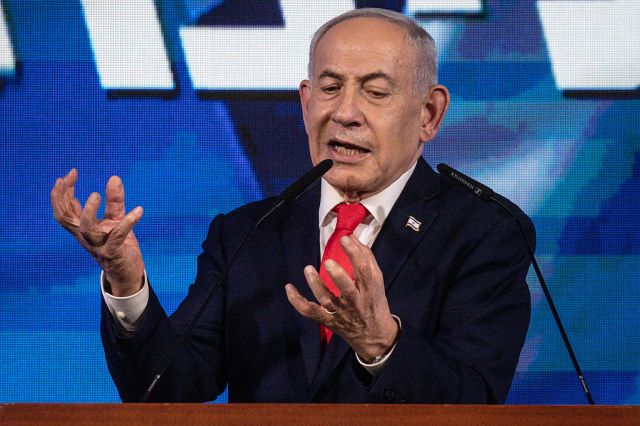
With the count neck-and-neck, Netanyahu’s future remains unclear. (Chris McGrath/Getty)





It is unsettling this morning to recall what Theodor Herzl, the Viennese founder of the Zionist movement, wrote in 1902 about a situation similar to the one in which Israel now finds itself. Drafted in hideous primary colours, Altneuland, or the Old New Land, is today an unread book. Few, therefore, know that central to its plot is a fraught election for a Jewish state’s soul. On one side is a certain Dr Rabbi Geyer, who wants to restrict Arabs from the right to vote. On the other are liberal Zionists. There is no doubt whose side Herzl is on. “I say to you therefore,” begs one of his didactic heroes, “that you must hold fast to the things that have made us great: to liberality, tolerance, love of mankind. Only then is Zion truly Zion!”
In the fantasy of Altneuland, the racist Dr Rabbi Geyer’s party is resoundingly “beaten in almost all the districts where it had presumed to set up candidates”. As of this morning, Prime Minister Netanyahu’s bloc is at 56 seats, with over 60% of the votes counted, while Gadi Eisenkot’s so-called Change Bloc is on 48 seats, a number expected to rise slightly as its heartlands come in. The remainder of the Knesset’s 120 seats look set to go to a pair of Arab parties.
Every Israeli has woken up knowing the existential question this projected hung Knesset, with Arab parties as kingmakers, is asking of them: what kind of democracy is Israel? But one thing is clear. This election was a referendum on Netanyahu himself, and he seems to have lost that poll. It looks like the Bibi bloc has collapsed from a 68-seat majority in the last Knesset, to a minority this morning. Early numbers suggest most Israeli voters have rejected him and his allies. We will have to wait until Thursday for final results, and these may well prove slightly different.
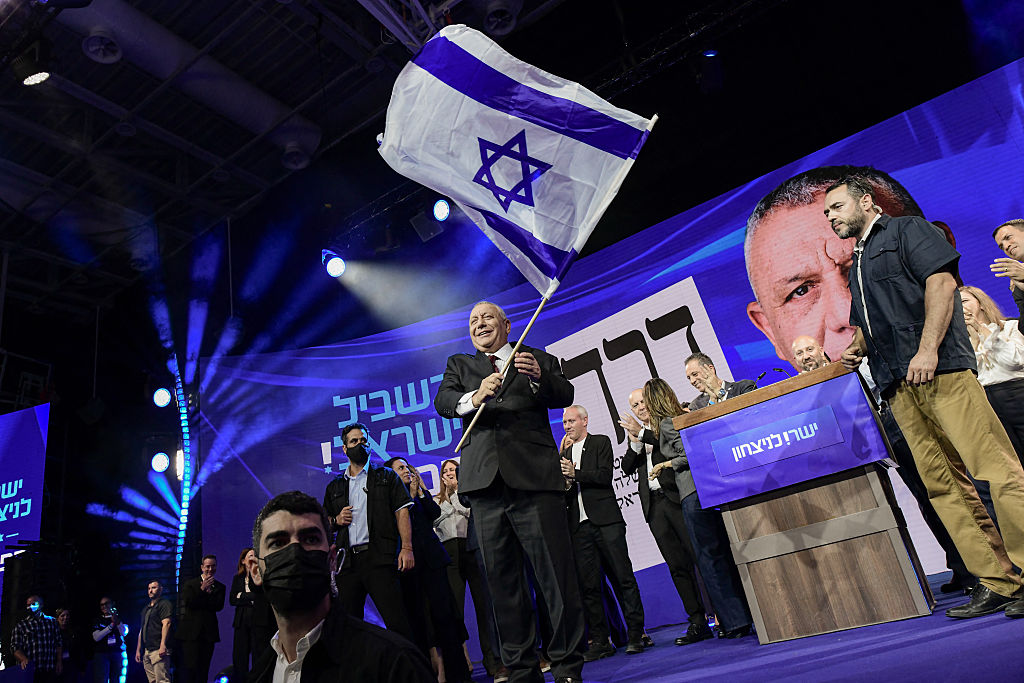
But either way, it is not clear this morning, despite probably losing his majority, if this removes Bibi from power. Because in the real contest here — the election to form a new government — the four-party opposition bloc itself failed to achieve a majority.
For generations, Israel has prided itself on being a multi-ethnic democracy within its 1967 borders. Around a fifth of Israeli citizens are Arabs, and their parties surged in this election. This result is a test of that. It looks like a majority of Jewish voters supported the Bibi bloc despite him likely losing his majority. That means that anti-Bibi parties will probably only have a majority in the Knesset if one combines the Change Bloc, made up of Jewish and Zionist parties, with the Arab parties. The issue is that many of the four-party leaders in the alliance have ruled working with the Arabs out.
The upshot? Unless these leaders break their promises to reflect the electoral maths, there are several ways for Bibi to survive. Should Israel truly have a hung Knesset, the country potentially faces a new election. This offers Netanyahu the opportunity to cling on in a caretaker government until then. This has happened before: in 2019 and 2020, Israel had three elections in under a year, and Bibi remained Prime Minister throughout.
The real politics begins now. For the Israeli opposition, this is not just the usual politics of tensely brokered backroom deals, but something much more fundamental. Can they truly embrace Israel’s promise of multi-ethnic democracy? The opposition has campaigned vociferously that Bibi is to blame for October 7, and remains a danger to Israel’s future. They now face a choice: form a minority government with one Arab party inside the coalition, and supported by another outside it to block Netanyahu, thus relying on Arab-Israeli politicians — or let Bibi’s rule continue by choosing to spurn them.

There is a precedent for collaboration. Before October 7, in the brief Naftali Bennett-led government of 2021-2, the Ra’am party, led by Mansour Abbas, was a member of the ruling coalition. Despite Ra’am being an Islamist-rooted party, albeit one that talks about coexistence with Jews, Netanyahu even flirted with including Abbas in a coalition of his own. But post October 7, with the Bibi bloc pointing to the fact that Ra’am has been evasive about whether or not Hamas is a terrorist organisation that needs to be “destroyed”, this is a more fraught task.
To better position himself for government, Abbas has made his number two on his party list a Jewish former Israeli police chief. But it seems unlikely the Change Bloc and Ra’am alone have enough to reach the 61 seats needed to form a majority in the Knesset. They may also need to rely on the votes of the Arab Joint List, a coalition of overtly Palestinian nationalist parties, and Hadash, the old Communist party. These would not want to join any Change coalition, but have explicitly said their votes would be available to ensure a minority government could dispatch Bibi.
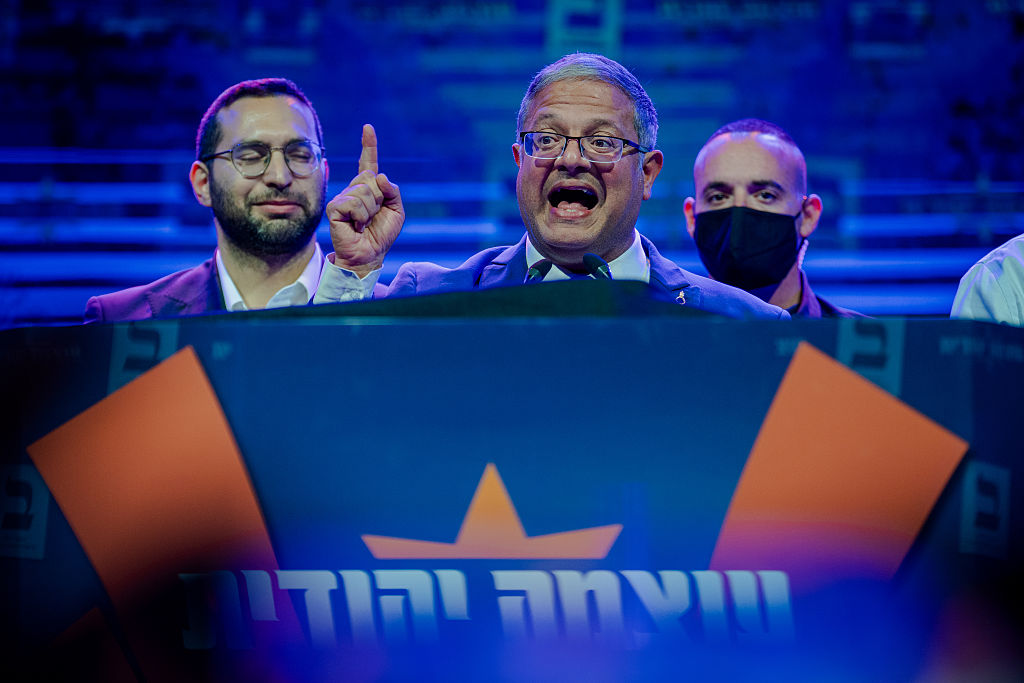
What Ra’am wants to see from any deal is urgent action on Arab-Israeli’s main priority: rampant organised crime, dramatically worsened during ultranationalist Itamar Ben-Gvir’s tenure as the minister who oversees the police. Abbas has put Yoav Segalovitch, the former police chief, as his number two precisely with the hope he could take over from Ben-Gvir as a bridge figure between the Jewish and the Arab public. Abbas has also signalled he would want action against racism, and a change in policy towards Israeli authorities being trigger-happy around demolishing illegally built Arab homes. Together with the Joint List, they also want investment in development for their communities and in their educational facilities.
On the Palestinian issue, looming over everything, Ra’am’s demands are relatively muted, with Abbas avoiding the topic. The moderation of their platform is testament to the Arab sector’s growing participation in Israeli society, with rising rates of integration from university attendance to involvement in the professions, especially healthcare. Both Arab parties as a result have a small Jewish activist base, committed to fostering what they see as an incipient multi-ethnic social partnership.
Overnight, in Israel, pro-opposition voices were calling on Eisenkot to act with absolute confidence and determination, as Netanyahu surely would, to bring this Jewish-Arab partnership about. This is because very few of those supporting the Change Bloc believe that they would fare better in new elections. A confluence of factors — high Arab turnout; disorganisation among the ultra-orthodox Haredi Jewish parties; the hyper-mobilisation of liberal Israelis, with a Knesset-seat-or-two’s worth flying back from abroad to vote — are all unlikely to repeat.
Eisenkot’s party, too, would certainly lose seats. This time around, he ran a list of former IDF generals who entered politics to oust Netanyahu. But they, in their soldiers’ naivete and unformed expectations about honour, have been found out as not truly political enough. In this, they resemble Benny Gantz, another former officer who nonetheless went from 35 seats to dropping out of this election for lack of even minimal support. His great error was to shore up a Bibi government, as if he were another reliable general, on the promise of a turn as premier that never arrived.
This, then, is the anti-Bibi coalition’s chance. Should the results stay roughly in line as predicted, what happens next will come down to character. Does Eisenkot have it in him? Or is he, like his critics say he sounds, a flat military man, used to giving orders and the army’s square world, up against one of the world’s most ferocious political animals?
For the moment, there seems a path forward for Eisenkot to install an Arab-supported minority government, open a long-promised Commission of Inquiry to expose Netanyahu’s failures on October 7, and then potentially seek to expand his coalition through defectors from the Right, or even build a unity government with a post-Bibi Likud. This would be fragile indeed, and may not last long, but it could be decisive in ending Netanyahu’s career as he faces both a corruption trial and his failings on October 7 without the shield of government at his disposal.
If it is unclear whether the opposition can grasp the nettle, Netanyahu’s strategy going forward is obvious. On the one hand, he will try to do everything possible to delegitimise Arab parties and Arab votes, while fostering an atmosphere of hate and incitement — all to discourage the opposition from embracing the Arab parties and the votes they can offer to push him out of power. His tactic, in particular, is likely to bully and frighten opposition Right-wingers like Naftali Bennett and Avigdor Lieberman out a Jewish-Arab partnership for change.
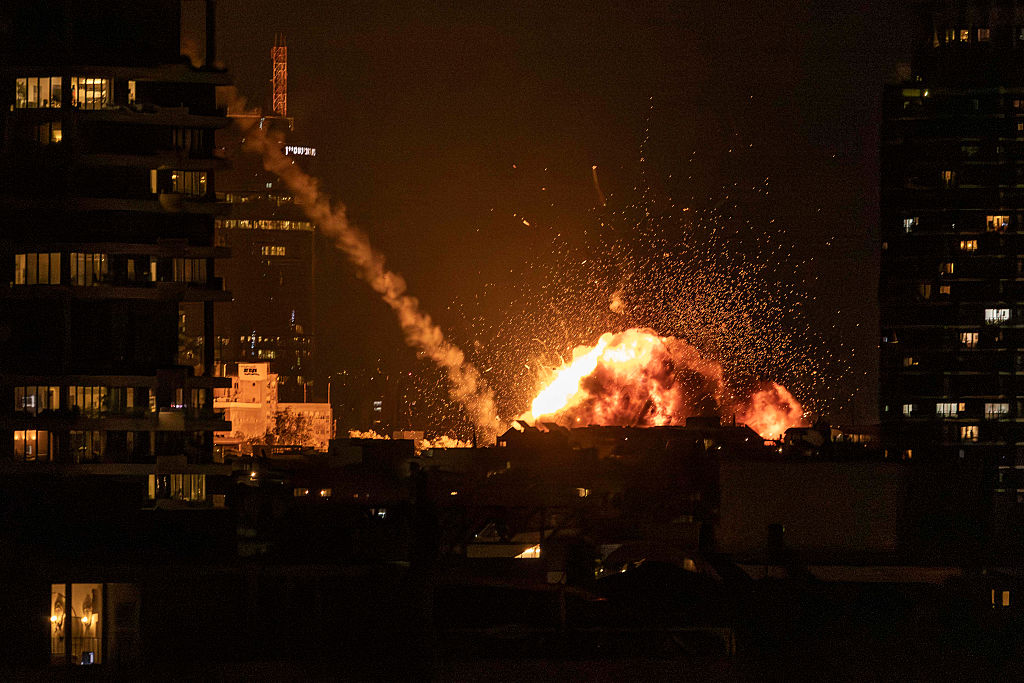
At the same time, Bibi will try what he has done before: “unite the Zionist majority” around him in a government where he remains prime minister. He will offer to drop the extremist religious Zionist parties led by Itamar Ben-Gvir and Bezalel Smotrich, detested by the opposition and sanctioned by many Western countries. Expect him to enlist Donald Trump in this effort, and claim it is necessary to restart the war on Iran. There is widespread fear among the opposition that Netanyahu, even as caretaker leader, will leap into a major new confrontation with Tehran to force the military-minded Eisenkot to line up behind him. This could scramble things politically, as IRGC rockets again start to fall.
The utmost priority for Bibi is to avoid losing power, which would entail a serious risk of jail time. This is why the Change politicians are so frightened by what he might pull on Iran: a wounded political animal is at his most dangerous. Netanyahu’s ultimate dream is to pressure enough opposition parties to agree to a unity rotation deal, where he is prime minister first — on the condition that his corruption trial is waived and he is parachuted into the presidency for his 79th birthday, in two years time, when the incumbent’s term is up. To get a deal across the line, he might rule out staying in office for longer. Netanyahu may well get there, along the way evading accountability for October 7 and everything else.
To stop him, the opposition will not only need to hope the final results stay roughly in line with what is currently predicted — but also to show unflinching conviction in itself and what Israeli democracy is supposed to be. “Perhaps you believe that that is to your immediate advantage,” prophesied Herzl through one of his liberal Zionist puppets as he defended Arab rights against the racism of Dr Rabbi Geyer. “But it is not. If you adopt that stupid, narrow-minded policy, the land will go to wrack and ruin.”
