




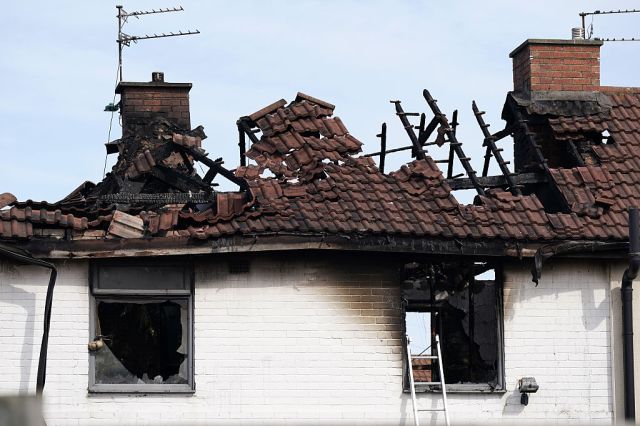
The charred remains of Natalie McDonald’s suburban home. (Ian Forsyth/Getty)





The first people I spoke to in Middlesbrough told me to fuck off. He was drinking lager and kicking a tennis ball for a cocker spaniel; she was sitting outside a sweet shop. They were polite when I said hello and angry when I explained why I was there. “Journalists aren’t welcome ’round here,” he said. Journalists had come in from outside and twisted the facts, she said, causing more distress for grieving locals.
A few dozen metres away, crime scene investigators in white boiler suits and blue helmets had broken from their work to drink Fanta. Behind them stood the charred remains of a modest suburban home. Last Wednesday, Natalie McDonald and her seven-year-old niece, Valentina Foster, had been killed as it burned. A 23-year-old man has since been charged.
In a small patch of green beside the property, a memorial has blossomed, with bouquets of flowers bunched on the ground and a balloon floating above them. “Rest in peace,” reads a red note tied to a fence, seemingly handwritten by a child. “I know angels are real but I know Valentina is one.” Looking up from here, one can peer through one of the shattered windows at black beams and black walls, the deep, charcoal black of total destruction.
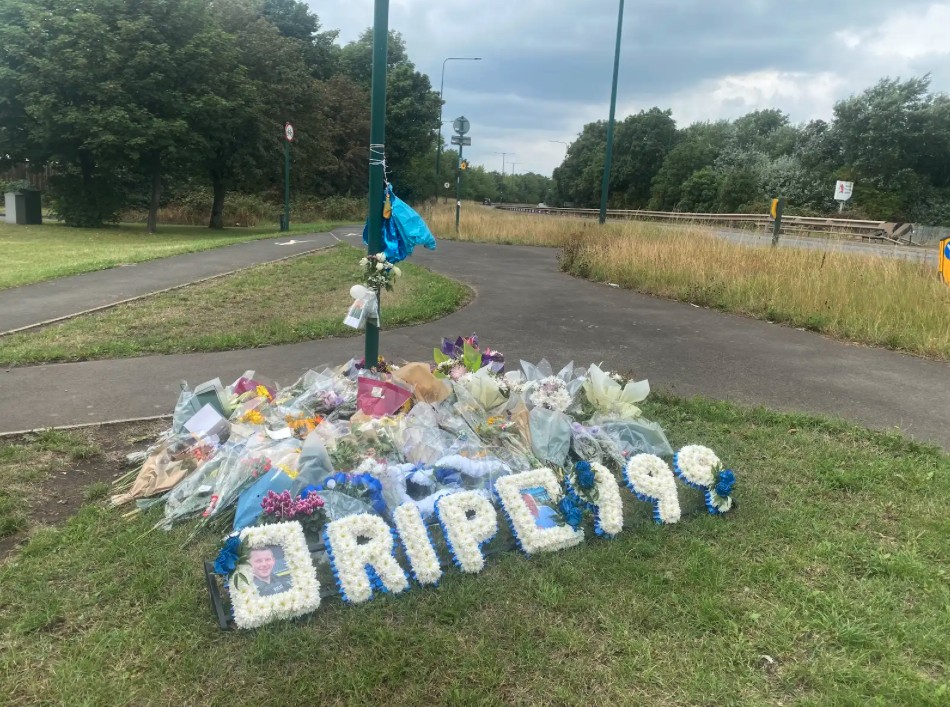
Down the road and around the corner sits another memorial and more bouquets. Nestled between them is a small plastic police car. It marks a spot near where, four days before the house fire, in an unconnected incident, two constables and five young men were killed when the young men drove their Volkswagen Passat the wrong way up the A66. The youths had amassed 37 convictions, from car theft to racial harassment, between them and, according to Cleveland Police, were linked to serious and organised crime. In the hours leading up to the crash, a Volvo SUV had rammed a home inhabited by the father of Cole Worthy, one of the men in the Volkswagen Passat. The Volkswagen Passat chased the Volvo with the police in pursuit, and when the Volvo veered onto the wrong side of the road to escape it crashed.
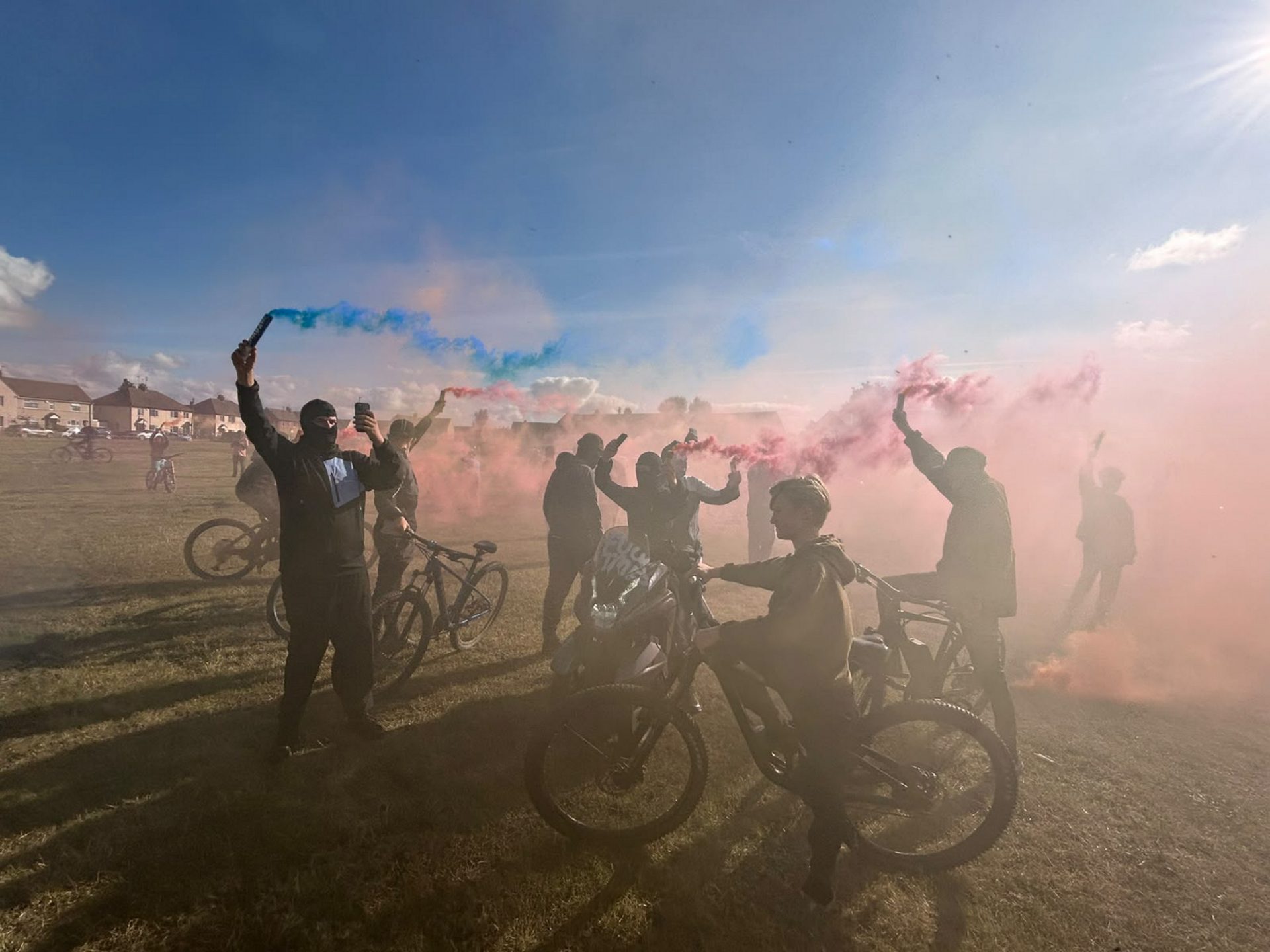
At a vigil for some of the young men, masked mourners released balloons. At another, cars were spun around and torched in a field. A man has since been stabbed in a suburb near the site of the house fire, while yet another house has been rammed. In an attempt to reassert command, hundreds of cops were deployed to the area.
In this corner of Middlesbrough, then, violence seems to be spiralling, a series of tit-for-tat attacks escalating beyond anyone’s control. The town already has the highest crime rate in the country outside central London. It is akin to “terrorism”, says Andy McDonald, a local MP. It’s a “feral underclass” gone wild, says Andy Preston, the former mayor. Speak to locals and they will blame feuding drug gangs and their teenage runners, battling for market domination.
Almost all of the recent crimes have taken place in just one postcode, TS6, a collection of deprived estates and suburban terraces in the town’s south-east. “TS6 has gone mad,” one local is reported to have told the Yorkshire Post. “It’s brutal.”
The area is remote, out on the edge of Middlesbrough. Turn one corner and you can see hills, turn another and you might spot an industrial estate or a brutalist church. In a field behind one street, I found five horses, as still and as artfully placed as statues. (These, a resident informed me, were the product of a local trend to live as “wannabe gypsies”.)
Dave lives here in a dark brick and PVC terrace, as neat as a doll’s house. When I introduced myself, he had been on his hands and knees gardening, but when I asked him about crime he ushered me inside to show me his bat. Dave’s bat is very big. It was at least half my height and thicker than those used to play baseball with a black tape grip at its base. Dave is a sober professional who asked me not to reveal his job or use his real name. He is concerned he might be sacked if he ever uses the bat. But he is more concerned about the criminals.
One night recently, while he was cleaning his bathroom, a lad knocked on the front door and asked for money to get home to his mam. Dave shut the door on him and called the police, but they didn’t come. One hour later, the lad was still in his front garden, so Dave stepped outside with the bat and said, “I’ll tell you once, fuck off while you can.” Eventually, the lad fucked off.
Another time, Dave was out shopping and two young boys began following him, waving and repeating “hello” in an eerie, drugged out key. He wanted to give them a clip round the ear, like adults used to be able to do, but he worried about getting a criminal record. So he told two police officers, and when they searched the boys they found a knife. It was as long as this, Dave told me, holding his hands at least eight inches apart.
If his mates don’t have a bat they’ll have something else by the door: a decorative sword, an axe, a pick-axe handle. “Everyone’s getting the same mentality,” he said. “If someone’s coming in my house they’re getting it. It’s fight or flight.” He is putting up CCTV cameras and has learnt the legal boundaries of self-defence. Where the state will not act, he is prepared to.
By now we were standing in Dave’s kitchen, which was very white and smelt faintly of cleaning products. He had pulled off one gardening glove to vape. Everything seemed to be deteriorating in Middlesbrough, he said. He told me about a local smackhead he knows, only a little over 40 but as taut and pale as a corpse, shot and stabbed several times, his habit funding the violence coursing through the area.
For poor children growing up in TS6, the easy money offered by selling drugs can be alluring. “I would see kids going past in scruffy clothes,” Dave said. “First they’d get a new bike, then they’d get a new phone. Then they’d have brand new clothes. Then they’d have an e-bike and they’d pull out a £20 note in the corner shop to buy milk and say ‘keep the change’. They’d pull it out of a roll of cash.”
Boys on bikes and electric scooters are constantly zipping around TS6. None of them seemed keen to talk. “What’s it like living here?” I asked a hooded young man with crooked teeth. “Shit,” came the monosyllabic reply.
Once, this was Ironopolis. There was ore in the hills and a river running to the sea and from the dawn of the 19th century the place boomed, dragging in workers and throwing up industries. In the wake of iron came steel and chemical manufacturing and shipbuilding. A hamlet of two dozen people was transformed into a global industrial centre. Visiting in 1862, Gladstone dubbed Middlesbrough “infant Hercules”: the youngest child of England’s enterprise. “We built the world,” wrote the poet Ian Horn many years later. “Every metropolis came from Ironopolis.”
Then came many decades of decline until, in 2015, Teesside steelworks closed. Sahaviriya Steel Industries, the Thai conglomerate by then in control of the business, blamed falling prices. It was, the Northern Echo declared, “The End”. For one local steelmaker, Ken McGlasson, that meant the end of 31 years of employment. “For the North East,” the paper mourned, “it is the end of an industry which was the bedrock of the regional economy for 170 years.”
Middlesbrough is now one of the most deprived places in Britain. In 2022, the local authority had the highest rate of drug and alcohol related mortality and the second highest rate of suicide in the North East. (“They’re not mentally ill,” declared a paper on the phenomenon, “their lives are just shit.”) As of last year, the town had the highest proportion of deprived neighbourhoods of any council in Britain.
Such statistics stack up here like steel girders, but do they explain the lawlessness? “Teaching kids right from wrong doesn’t cost a penny,” said Margaret (not her real name), who was standing in her front garden with her chin resting on a broom. Standards have collapsed within just a few years, she believes. People she knows are frightened to walk out at night while young men speed about the place on quadbikes.
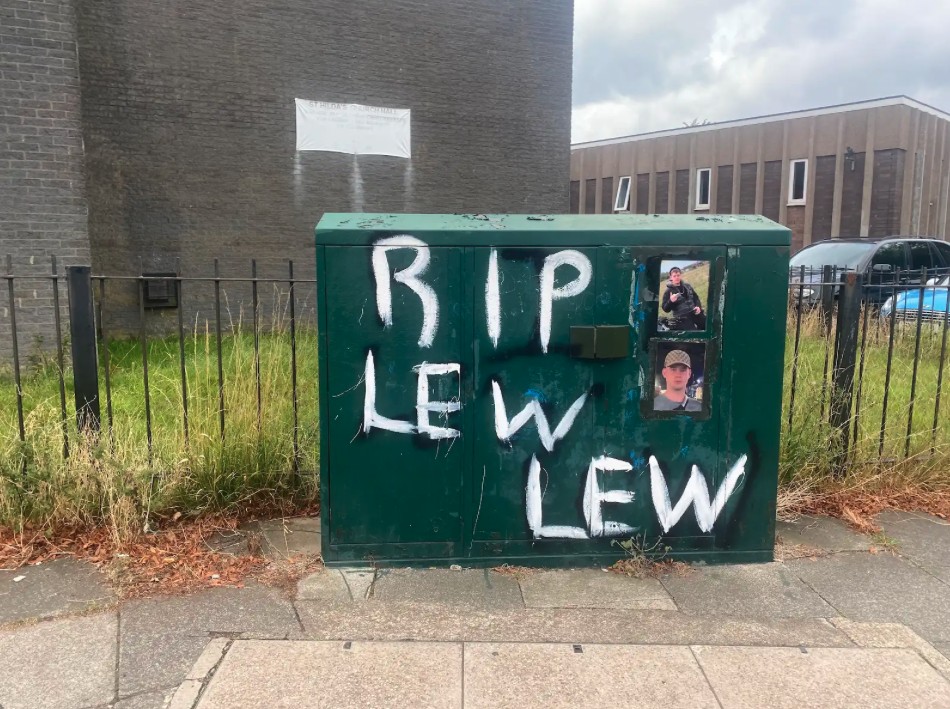
Close to her home is a green electrical box onto which someone has written “RIP LEW LEW” in white paint and pasted two photos of a young man. In one he is wearing a Gucci cap; in the other he is sitting on what appears to be an electric bike, his middle finger raised to the camera. This is Lewis Ward, killed four years ago when a car crashed into him while he was riding an e-scooter. One of the men in the vehicle had threatened to “ram” Ward, his friend later claimed, but no one was ever charged over his death.
For Margaret, the rocketing crime rate is down to soft parenting rather than economics, the result of a culture in which children are raised by teenage parents ill prepared to enforce discipline. In 2019, Middlesbrough had the highest rate of teen pregnancy in England and Wales. She still has faith in the police, she told me, but believes their hands are tied.
Ironically, given the events of the past fortnight, Cleveland Police had recently seemed to be on the up, to have recovered fom a nadir. In the decade from 2009, the number of officers on the force fell from 1,756 to 1,198. Then, in 2019, the force was put into special measures after becoming the first in the nation to be rated inadequate in all areas. Its own staff told inspectors the organisation was “directionless, rudderless and clueless”. One inspector had preyed on young women for sex, anti-terror legislation was used to spy on journalists, and the chief constable was found guilty of gross misconduct after he looked at his female colleague’s lap and told her that if she wanted to she could “touch herself”.
But in 2023, the force was taken out of special measures. An inspection last year concluded that it was good in half of all areas and inadequate in none. “We’ve put a lot of effort into making sure criminals see consequences for their actions,” then Chief Constable Mark Webster told the BBC. It is hard to find anyone in TS6 who would agree with that statement.
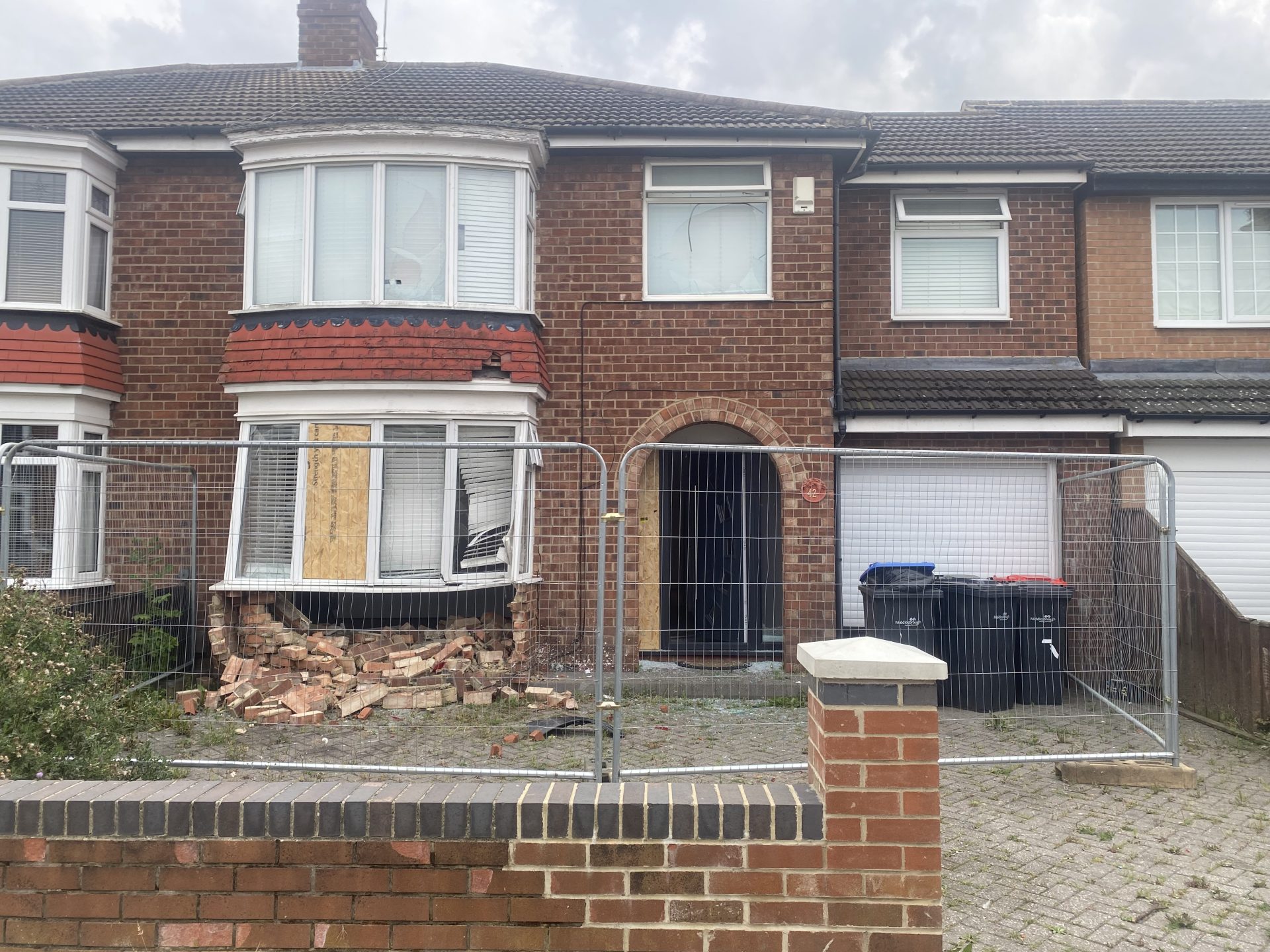
Cole Worthy’s father lives in a quiet, blue-collar suburb several miles to the east. When I arrived, almost a week after the crash, the consequences of the ramming attack were plain to see. The front wall of the house was part collapsed, all the windows were shattered, and the front door was hanging open to the world.
I wanted to understand what would drive a boy from a decent neighbourhood to such a mindless death. But when I knocked at the neighbours’ doors they refused to talk. Cole did not stay here often, explained one woman. Another began shaking as we spoke. “I don’t dare,” she told me softly, explaining that she feared what would happen if she was witnessed speaking to a journalist. “You understand. I’m scared they’ll see you on the doorstep.” A third woman repeated the same concern and, apologising, closed the door in my face. I understood.
When I spoke to Andy Preston, he told me that his constituents had said much the same to him while he served as their mayor between 2019 and 2023. It seemed that a code of omertà was developing across the town, as if post-industrial England had become Naples under the Camorra. Such fears were exaggerated, Preston said, but pervasive across Middlesbrough nonetheless.
The thugs did, however, pose a threat to local politics, he added. When a councillor he knew tried to put up CCTV cameras to deter antisocial behaviour, one of the boys who would later die in the A66 crash had threatened to stab them, Preston claimed. Other councillors were now scared of discussing crime publicly and would only comment anonymously in the media. “What’s happened in Middlesbrough in the last seven days, it isn’t normal in terms of the rapidity and the escalation but the individual issues and the tit-for-tat violence is normal,” he said. For years, a fall out between factions of the drug trade in the town had been fuelling attacks. Criminals were brandishing machetes in the street and firing shotguns at houses, Preston said. “I’ve always been astonished that it takes an actual crisis for politicians to give a fuck about it.”
The police, meanwhile, have become desensitised to gang warfare. In Preston’s telling, Middlesbrough was just the most prominent flare-up of a national catastrophe: a limp justice system failing communities in which a culture of dependency and delinquency has festered.
The idea that this culture was simply down to a lack of jobs was a convenient lie, he argued. For many years, employment had been available in Middlesbrough for those who wished to work instead of selling drugs and claiming benefits. And if the police were to lock up a hard-core of criminal leaders, the scrotes following them would back down. Instead, The Telegraph revealed last week, under a scheme run by Cleveland Police, criminals arrested for possessing knives can dodge prison by accepting mental health support and promising not to reoffend.
TS6, Margaret told me, was simply forgotten. Politicians cared about the city centre, not the outskirts. It had taken nine deaths in a week for anyone to pay attention. Now there were police patrolling the streets in pairs, as if we had returned to the Fifties, and journalists with southern accents were walking around taking notes on the decaying urban fabric. No wonder they wanted us to fuck off.
Middlesbrough may top some unfortunate statistical rankings but it is hardly unique. I have reported from postcodes in south Bristol and inner-city Birmingham which feature just the same blight. Young men, jobless and bored, circling the streets on electric bikes. Knife crime rates rising, pushed by TikTok beefs and escalating bravado. A fractious drug economy sustained by taut, pale users. Through chance, a crisis has exploded into view here first. It is unlikely to be the last.
