




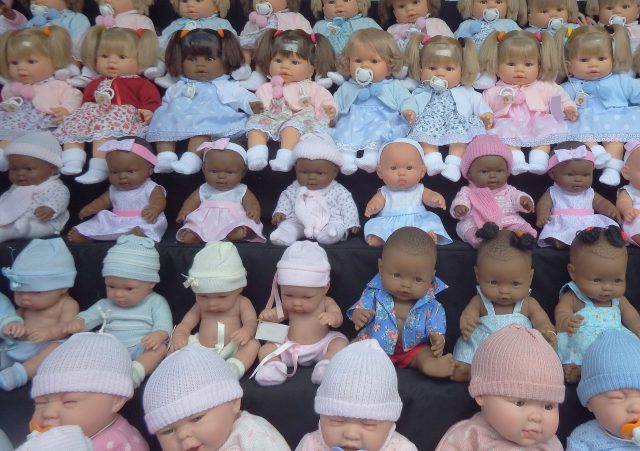
Foster parents are now required to master the say-the-right-thing-in-the-right-way language demands of modern social work (Japatino/Getty)





Fiona*, our new social worker, had checked the padlocked bolt on our garden-shed door; she had run her hand over our mattresses to make sure they were soft. Now she wanted to know where we stored our alcohol. “Doesn’t last long enough to need storing!” I joked. At the end of a long and rightly intensive recruitment process to become a foster carer, Fiona had been tasked with conducting a health and safety check on our home. When I took in her expression, my grin evaporated.
We were lucky that Gemma*, the social worker who had conducted the initial assessment a few months earlier, demonstrated a modicum of humour as she guided me through the process, intervening whenever I said the wrong thing.
“Do you have a diverse mix of toys?” she asked, when I told her that I was preparing to join the vacancy list.
“Oh yes, loads — boys’ and girls’ stuff,” I reassured her, thinking of my two birth children. She gave a cautionary shake of her head. “Well, I mean, girls can play with boys’ toys, of course, and vice versa,” I added hastily, cottoning on. “They can choose.”
“I think what you mean is,” Gemma said, the corner of her mouth twitching, “you believe children should be free to explore, without being limited by stereotypes. But also, do you have toys reflecting an appreciation and commitment to diversity?”
“Oh,” I said, looking at our pale-faced Barbies. “’Fraid not. But I can buy some.”
Gemma paused. “I won’t put that,” she said, pen hovering over her form. “Let’s just say you understand the importance of providing an environment that reflects a child’s cultural background, yes?”
“Absolutely,” I said, because I did.
If a child were to be placed with us, I would of course do my best to help them feel at home, whatever their background. I have wanted to foster since I was 13 and I discovered that my own father had grown up in care. Since having my own children, that drive had only grown stronger. Over several months, I had been quizzed about my past, my finances, my motivations. My children had been interviewed, along with several referees. And still the diversity-minded questions kept coming.
“Do you have enough cooking equipment to keep food separate, if required?” Gemma wanted to know.
“Er, no, probably not. But again, I can buy a few extra pans.”
Gemma nodded, making a note of my flexibility. “And you’re happy to buy and cook halal?” I hesitated. “It’s easier,” Gemma said encouragingly. “That way you can all eat from the same dish.”
And this, it turns out, is one of the sticking points that never appears on the glossy leaflets that advertise fostering. Most applicants know they need a spare bedroom and enough household income to absorb a drop in working hours. They need, in other words, to be comfortably middle class — which already rules out the working-class women who were once the bedrock of fostering. These maternal figures were more than happy to shift things around to bring another child into the fold, stretching to make one more place at the dinner table. But they struggled to master the institutional lingo and cultural demands of modern social work, with its increasingly bureaucratic, say-the-right-thing-in-the-right-way demands, its daily diaries, monthly logs and at least 30 hours’ formal training each year.
Now, even being well-off isn’t enough. Applicants are interrogated so vigorously that many drop off the vacancy list. Meanwhile, even those of us who tick all the procedural boxes are stranded in the middle, never quite accepted into the ranks of professional social workers — but no longer permitted to use our parental intuition either.
It’s important to stress that the rules are there for entirely understandable reasons: foster carers are expected actively to maintain a child’s religious and cultural identity, especially since many of these children will ultimately return to their birth families. As such, the National Minimum Standards, introduced in 2011, require foster carers to learn about and support the ethnic, cultural and religious backgrounds of the children in their care. This might involve preparing traditional foods, buying religious items like prayer mats, and resisting the urge to encourage a child who eats with their hands to use cutlery instead. Families might also observe religious holidays and celebrations; attend worship; facilitate prayer habits; and, if they are on the register for emergency fostering, keep a stock of suitable cultural products such as cocoa or shea butter for Afro hair care.
Foster carers must also complete equity, diversity and inclusion training, refreshed every two years, or sooner if they’ve fallen foul of the regulations. As part of this training, they will be warned not to take a child with Afro hair to a non-specialist salon; many carers have been mortified to find this mistake framed as a “cultural erasure” safeguarding issue by their agency or local authority. Indeed, one of my close fostering friends was accused of racism when she washed a child with Afro-textured hair using ordinary baby shampoo. The same carer had been devastated the previous year: having lovingly fostered a black child from birth, she was refused the chance to adopt her.
Preventing cultural friction is a tightrope for foster carers, and it’s a challenge that arises often: 28% of children in care are BAME, while only 13% of carers come from a minority background. Children are bewildered when they are removed from their home, so the least we fosterers can do is to make sure they’re not completely severed from any sense of who they are. But as long as a child’s needs are met in a warm and loving environment, does it really matter that a family ticks every ideological box? When does necessary scrutiny tip over into bureaucratic nitpicking?
Every child is carefully matched with a foster family, or should be. On that basis, it seems common sense not to place a child from, say, a devout Muslim family with a family who would be uncomfortable buying halal or taking them to a mosque. Nor would it be appropriate to place a practising Christian child with a family averse to churchgoing. I said as much to Gemma, who gave me another pointed look. “I’ll pretend I didn’t hear that. Let’s just say you’re happy to use different cooking equipment to avoid pork contamination, yes?”
I agreed. It seemed an unnecessary hill to die on, but over the years I’ve met many otherwise loving, public-spirited, well-functioning families who have been put off, or sometimes excluded outright, because they were judged “too rigid” or “lacking the cultural competence” needed to cope with placements that may never even arise.
I know applicants who have been turned down for being honest about their reluctance to support a hypothetical teenager through gender transition. Others were deemed too “actively Christian”, a curious stance considering that until the middle of last century, the care of vulnerable children was almost entirely administered by the Church. Another applicant was regarded with suspicion for failing to demonstrate a sufficiently diverse social network, despite living in a largely white-British village.
The shortage of foster homes is well-evidenced: in England, the number of approved mainstream foster carers fell from 63,890 in 2021 to 56,345 in March 2025 — a 12% decline. Earlier this year, the Children’s Minister, Janet Daby, identified a shortfall of 6,500 foster homes, citing a “stubborn decline to the point of crisis”. Yet recruitment data shows that of 125,195 initial enquiries to become foster parents, only 6% progressed to applications. Only a minority of these will make it to the approval panel stage, where their ability to foster is officially decided.
It is, of course, quite right that authorities ward off unsuitable candidates. Applicants must be thoroughly vetted. The initial “Skills to Foster” course is designed to offer a warts-and-all view of fostering, thus weeding out those who aren’t cut out for it. Nobody disputes that safeguarding should be a priority. Fostering is demanding, and a high dropout rate is inevitable. Yet the same standard is not applied evenly. I know of a number of Muslim foster carers who state plainly, without any fear that it may jeopardise their registration, that they would never consider fostering a child from outside their own faith. With a growing number of Muslim children coming into care and a low number of suitable matches, it seems practical and pragmatic to accept carers who have limits and are honest about them.
But why not extend this flexibility to all applicants nationally, instead of insisting that they demonstrate, explicitly and repeatedly, that they would welcome a child from any background? The same bureaucratic rigidity that has contributed to a steep drop in foster-carer numbers has, in recent years, seeped into other public services such as policing and nursing, filtering out many people with a natural ability to read a room and build a rapid rapport with people in crisis who might be eminently suitable for the job.
Let’s stop alienating potential carers who fail to adopt the correct language and instead bring back some appreciation of qualities that are harder to measure: warmth, kindness, competency, common sense. If a potential adopter has concerns about cooking halal meat for animal welfare reasons, or wouldn’t feel equipped to support a teenager through medical transition, why not allow them to honour their personal beliefs and match them with children accordingly?
The need is urgent. With a national shortage of foster carers, local authorities are resorting to using unregistered care homes at a cost of up to £10,000 per week per child. In some cases, that money ends up in the accounts of shell companies linked to organised crime. Meanwhile, public-spirited families with empty spare rooms are being turned away.
The financial waste is staggering, but the real tragedy is the human cost. A new Government report has found that care leavers are four times more likely to die early than their peers. That is why rejecting decent, well-meaning potential carers is indefensible. The result of rigidity is simple: fewer carers, and more children in unsafe, sometimes dangerous placements.
*Names have been changed.