




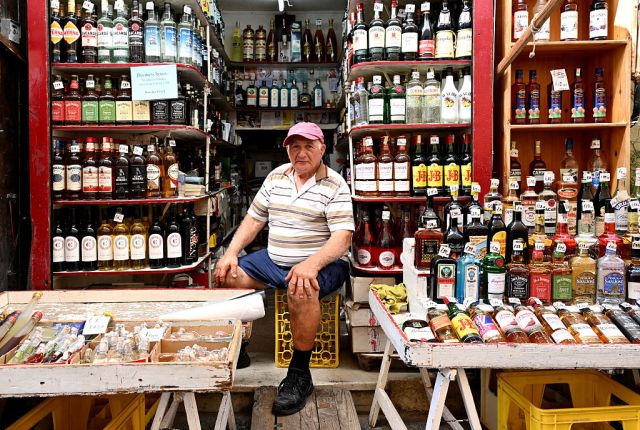
Economic progress comes at a cost. (Alberto Pizzoli/AFP/Getty)





Perched on Europe’s southernmost edge, Malta is an object lesson in the folly of lazy essentialism. A Catholic nation where devotees invoke Allah, the islands are home to Europe’s only Semitic language. The former capital, Mdina, derives from the Arabic word for “city”, while the nation’s symbol is the cross of St John. Malta may be smaller than the Isle of Wight, but it is a portal for civilisations.
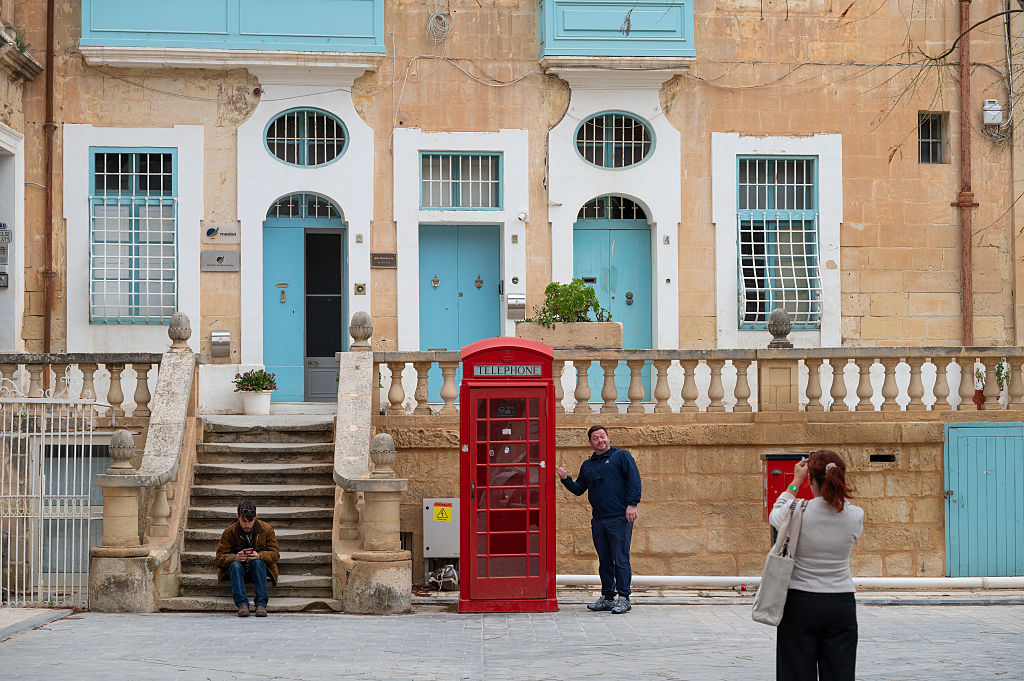
That is because it has always been a crossroads, the rocky harbour in the heart of the Mediterranean. The Arabs bequeathed the islands their distinctive language, while the Normans began fortifying their harbour. It is said that Ottoman troops, taken hostage after the Siege of Malta, furnished the locals with coffee before even Venetian traders knew of its pleasures. Later still, Malta was French and British. Both contributed to the national character, yet it was the last which endowed Malta with its legal system, a fondness for beer, and red phone boxes.
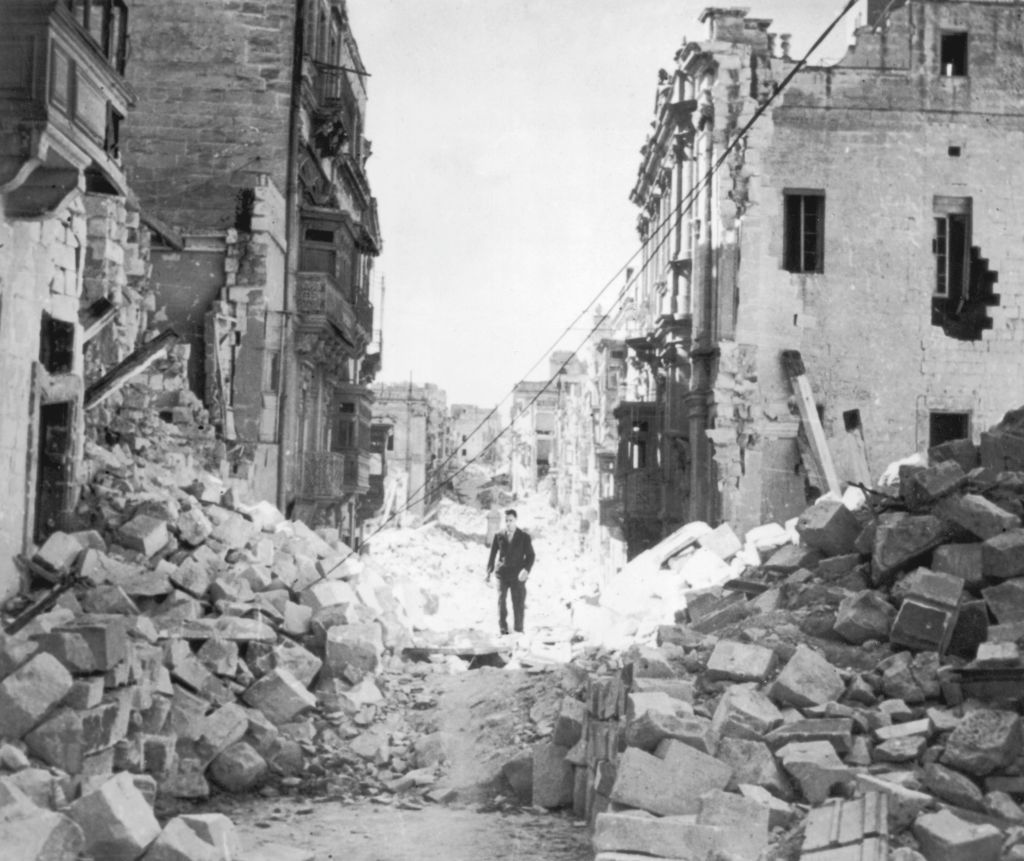
If foreign influence was one constant in Malta, grinding poverty was another. Even after an Axis siege brought the country close to famine, a lack of opportunities also saw thousands of Maltese men — including my wife’s grandfather — taking their families to the furthest reaches of the Commonwealth in search of work. The maritime heritage of their homeland meant they often found employment in the docks of Australia, Britain and Canada: something which also explains why, when the Maltese came to Britain, they gathered in places like London and Portsmouth. Independence in 1964 brought sovereignty but not prosperity, much as the new state tried to embrace tourism and logistics. So, like Ireland before it, Malta became defined by emigration. Between 1948 and 1967 almost a third of the population left.
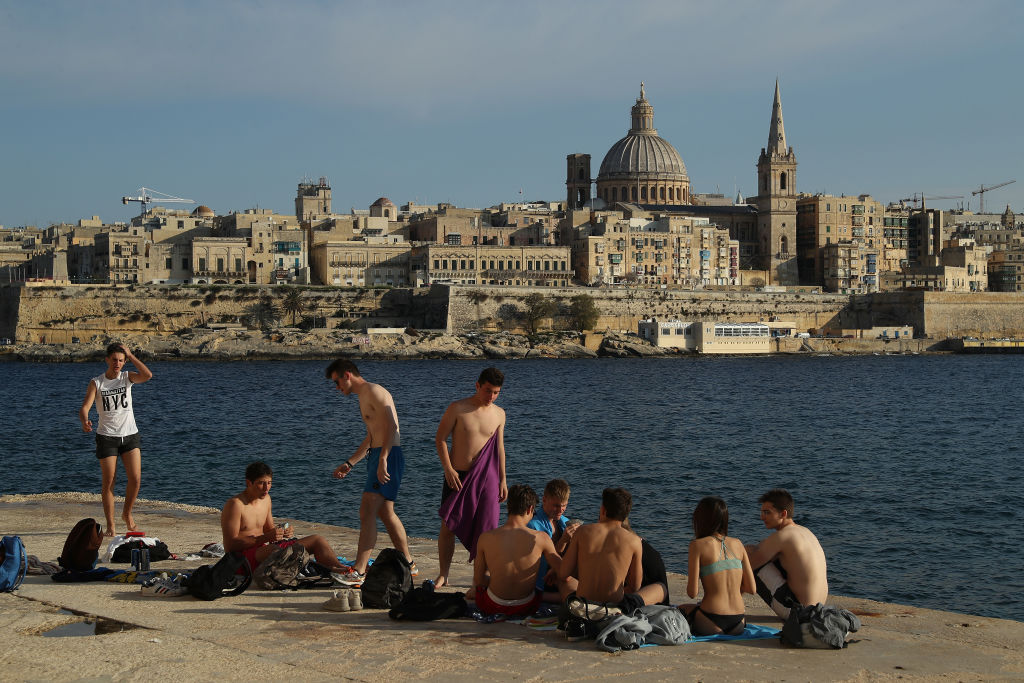
Today that history, of economic stagnation and depopulation, is a fading memory. EU membership, and an increasingly globalised economy, means the country has become a hub for not only tourism, but financial services and online gambling too. By one measure Malta’s output per person is now higher than that of Britain, France or Sweden. Of even greater cultural significance, though, is the comparison with Italy. As recently as 1990, Malta’s neighbour to the north boasted a GDP per capita almost 50% higher. But where Italian television, radio and football once offered the island a window onto modernity, today it is young Italians who cross the Maltese Channel in search of work. If you are an ambitious young person in Catania or Palermo, you might hear advice that nobody has proffered for a millennium: go south and get ahead.
Indeed, this economic revolution has been mirrored demographically. The nation that once watched its sons and daughters depart by ship for distant shores now draws workers from across the globe. Today, 41% of Malta’s labour force is foreign-born. First are the young workers filling labour shortages in lower-regulation sectors, from Italian hospitality staff to Indian workers in construction. Then there are wealthy foreigners, drawn by Malta’s favourable tax environment; the country’s millionaire population grew by 74% between 2013 and 2023. Finally there are the internationally mobile companies choosing warmer climes and 5% corporation tax. Last year SkyBet moved to the country, and it won’t be the last British firm to do so.
All this is doubly noticeable given Malta’s compact size. At the turn of the millennium, the islands were already home to 400,000 people, squeezed into little more than 100 square miles. Since then, Malta’s population has risen by almost half, with one recent projection suggesting it could reach 630,000 by 2030. For all the claims that Britain is overcrowded, an equivalent surge would mean our population approaching 90 million. Nor does this extraordinary trajectory show any sign of slowing. In June 2023, finance minister Clyde Caruana even said the country’s population should rise to 800,000 by 2040.
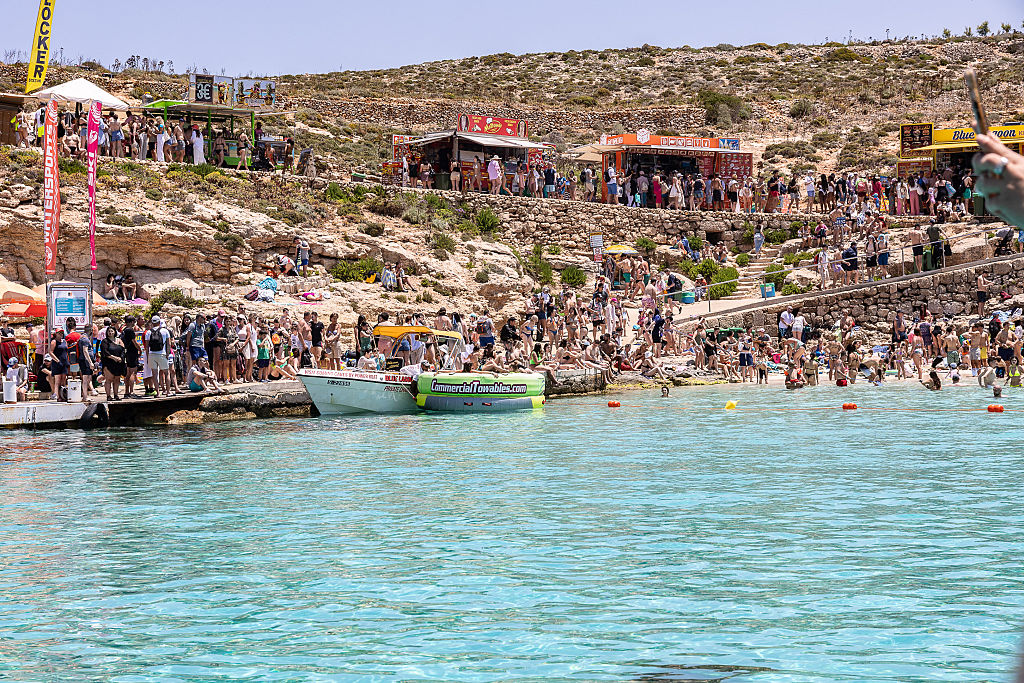
Combine that with record-breaking tourist numbers — last year saw around seven tourists for every resident, the equivalent of almost half a billion visitors to Britain — and property prices are soaring. The average asking price for an apartment now stands at €414,000: almost 10% higher than a year ago and roughly 16 times the average wage (in England this ratio is seven-to-one). Because this transformation is relatively recent, Malta still enjoys high rates of home ownership. But for younger citizens, the ladder has effectively been pulled up; buying a home, and with it the prospect of starting a family, is increasingly impossible.
That is also new. Just a few decades ago, my mother-in-law and her husband could buy a two-bedroom holiday flat in St Paul’s Bay — Jesus’ favourite disciple is said to have been shipwrecked on a nearby island — despite being a seamstress and bus driver in Portsmouth. Today, such a purchase sounds fantastical, not least for blue-collar workers. Amid all this, the remarkable thing is that Maltese leaders don’t seem too concerned. As far back as 2014, Joseph Muscat, the then-Prime Minister, spoke of Malta emulating Dubai — where 92% of the population is foreign-born — through absorbing unprecedented amounts of overseas labour.
Almost universally, of course, this model has led to adverse social and political consequences. And if, for the moment, the Maltese economy continues to motor, some locals now have doubts. What, they ask, was all of it for? Does the average Maltese family now enjoy a better quality of life? The answer is far from clear — and their worries go beyond just surging house prices.
One of the things the Maltese are most proud of is their language. A Semitic tongue, it remains somewhat intelligible to people in Tunis or Benghazi. Centuries of contact have left their mark in other ways: the Latin script, for one thing, even as Italian words like ciao, allora (“well then”) and kuċina (“kitchen”) sit alongside the term “Al Madonna”, cried in moments of anguish. In other words Malta boasts a linguistic jewel arguably unique in Europe: ancient, resilient and deeply bound to the identity of the islands.
It’s ironic, then, that it wasn’t a millennium of colonialism that posed the greatest threat to the idiom — but self-government in an age of globalisation. For while Maltese remains widely spoken, and is taught as the country’s official language, it is quickly being replaced by both English and Italian, with the internet and Sicilian baristas succeeding where Mussolini and the Luftwaffe failed. On more than one occasion I’ve gone to a restaurant with my wife — who speaks some Maltese — only to find that the staff can converse only in Italian.
Nor are such moments limited to the tourist traps of Valletta. Ghajn Tuffeiha — you say it “ayn tufiya” — is a stunning beach at the top of Malta and utterly unpronounceable to anyone north of Syracuse. Perhaps that’s why the beach has come to be known as “Singita Miracle Beach“: part of an Italian-owned chain of luxury beach clubs. Once again, all the staff there appear to be Italian. That’s no bad thing if you want a good espresso, but it’s another vivid example of how Malta’s unique culture is being overwhelmed by the forces of global capitalism. Is this how languages die in the 21st century? Not at the end of a Gatling gun, but because of hippy entrepreneurs performing “sunset rituals” using words you don’t understand.
Of course, one could argue that Malta has embraced the Promethean promise of modern capitalism: unleash growth first, solve problems later. Isn’t that the path China has followed for decades — a model that many on the Left, including myself, have praised? Yet Malta presents a more complicated picture. Unlike China, or the USSR, this is a tiny island rather than a continental landmass, boasting a fragile culture and delicate eco-system. What’s more, despite its economic boom, the island’s infrastructure remains underwhelming. Simply put, the average Maltese has shockingly little to show for decades of development, besides a loss of tranquility and a spot on the beach.
Take public transport. Once upon a time, Malta had a railway. Built under British rule, it operated until the early Thirties and connected Valletta with nearby Floriana. But it would be abandoned as the combustion engine re-defined island mobility. Presumably, however, nobody expected that, a century on, Malta would be home to almost half-a-million registered vehicles, making it the world’s most congested country.
What was once a tranquil pearl in the Mediterranean increasingly feels like a giant car park. Perhaps a Maltese Tony Soprano is involved in the highway construction business — because, failing that, the lack of alternative explanations is baffling. Either way, this moment of national prosperity increasingly feels strangely regressive, with growth becoming an end in itself rather than the means to a larger national purpose. As one Maltese commentator lately put it about language, the country spends “huge amounts of money protecting species and biodiversity, so why should it be that the one thing that makes us singularly human should not be similarly nourished and protected?”
A good question. Being in hock to a certain idea of capitalism, where GDP charts in the back pages of The Economist matter more than a sense of local place, is clearly part of the answer. Another is the European Union, and specifically the Eurozone. Whatever the accomplishments of both, not least for the Maltese exchequer, they have served to fuel a politics of inadequacy in Europe’s south: where being a “normal” country came to mean adhering to the policy prescriptions of the Dutch and Germans. Eurozone membership itself became synonymous with escaping Mediterranean backwardness. As a result, and in order to overcome an absurd inferiority complex, the likes of Greece, Italy and Spain — to say nothing of Malta — sought to do neoliberal modernity better than their northern cousins. The idea of an identity and culture peculiar to the region became either secondary, or something to be actively assailed.
Step back and all this is arguably connected to the tsunami of falling birthrates right across the Greco-Roman basin. Where Maltese families were once large, today they are distinctly East Asian in scale, with the country ranked 224th when it comes to making babies. Perhaps, collectively, the national consciousness has come to regard the future as being tied with economic “development”, and infinity annual growth of 4%, rather than stewarding a sustainable future for Malta’s children and grandchildren.
It would be unwise to say Malta has clear lessons for other, larger countries — least of all on migration (it’s a nation the size of Edinburgh). But it’s also undeniable that Malta has taken certain global trends, visible across the West and beyond, to their logical conclusion. Unlike Maltese, English has hugely benefited from globalisation, becoming the indomitable lingua franca of the 21st century. But the obsession with economic growth as an end in itself, and a flattening of cultural difference in the name of a consumerist cosmopolitanism, is just as visible in small-town England as in Melliha or Bugibba.
Indeed, if anything, Britain is further down the line than its one-time Mediterranean redoubt. Here, the boom years have faded, and we are coming to terms with failing to spend our treasure wisely. Despite the economic bonanza of the Thatcher and Blair years, and the jackpot of North Sea oil, we boast barely any high-speed rail or trams, and have failed for decades to build new homes or reservoirs. But Malta also shows how a critique of growth, and recognising some things are worth more than money, can bridge conventional assumptions of Left and Right. Political scientists call these “post-material” concerns. They are anything but. Issues of identity, collective meaning and spiritual nourishment pre-date capitalism by millenia. They are perennial questions.
As for Malta, it has been blessed by nature and history. And yet, speaking personally, there’s a fascination that lies beyond its monuments and beaches, for Malta exhibits the defining contradiction of our age. Never before have the islands been so prosperous, even as young Maltese feel less able than ever to buy a home or raise a family. And while, after centuries of foreign rule, the country is finally free, its fortunes are ever-more determined by global capital and the European Central Bank. Capitalism wants to flatten what is unique about any place; in the words of Karl Marx, making all that is solid melt into air. But the islands bring to mind the call by Aimé Césaire for a different kind of cosmopolitanism, a “universal rich with all that is particular”. Call it rooted cosmopolitanism, if you like.
Aaron Bastani is the co-founder of Novara Media, and the author of Fully Automated Luxury Communism.
 AaronBastani