




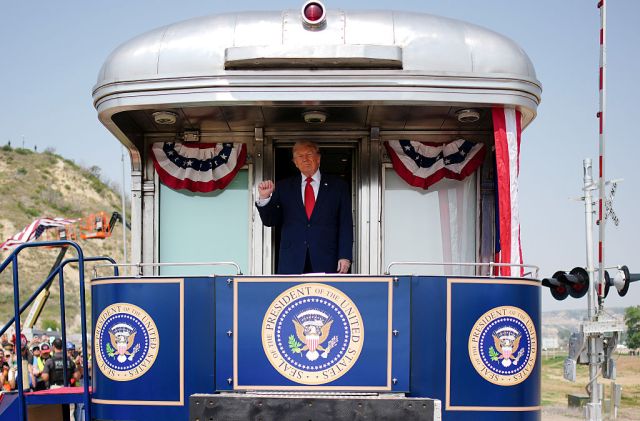
‘Donald Trump’s German side is far less familiar.’ (Andrew Harnik/Getty)






Donald Trump was made for America 250. The looks, the flair, the beguiling mix of arrogance and fun — the 47th president is his country in flabby flesh and bone. In his own clumsy way, Trump seems to grasp this too, nestling into the festivities like a hot dog in a bun. Liberal columnists might be right about its crassness, but cage fighting on the White House lawn feels as suited to this birthday as Johnny Cash and Kojak were to the bicententary in 1976. “We’ve never reached so high,” as Trump proclaimed last month. “This is our heritage.” America’s heritage, perhaps, but what of Trump’s own?
We know, by now, of his Scottish mother. Yet even after a decade as ringmaster of the national circus, the President’s other side, his German side, is far less familiar. Unlike Joe Biden with his Irishness, Trump rarely mentions it. Though his paternal grandfather came to America from the Rhineland, his family long denied the Teutonic connection. Its most famous manifestation remains essentially negative, when liberal comedians revived the family surname to mockingly call him “Drumpf”. Still, while Trump might seem the most American of men, he, like his country today, couldn’t exist without its German ancestry, with the community so deeply rooted in the republic’s soul that the two are now inseparable.
Germans have been coming to the New World since before the US existed. Across the 17th century, as Europe tumbled into sectarian slaughter, thousands headed west; Mennonites and Amish gasping for free religious air. It’s later, though, that German America truly took root. In the 40 years from 1850, some five million Germans made the Atlantic crossing, and almost as soon as they arrived set about transforming their New World home. As one German-American activist pointedly claimed in 1874, his countrymen’s presence heralded the “improvement” of national life.
This confidence was partly economic. Unlike the Irish or Italians — destitute, illiterate, condemned to years in rat-hole tenements — German Americans were generally richer and more educated. Most were farmers, dodging the East Coast slums and travelling west with the republic, founding towns like Oldenburg, Indiana, and Dutzow, Missouri, and Germantowns almost everywhere. Like many of their countrymen, my wife’s family chose the rich soil of Wisconsin, but an ethnic map of the nation today shows a German plurality stretching across a dozen states and 1,000 heartland counties, an unbroken chain from Philadelphia to Oregon.
Their spread was largely welcomed. Linguistically, culturally and ethnically closer to their Anglo compatriots than the classic Ellis Islander, they were accepted far more readily. As early as 1858, Abraham Lincoln reassured Chicago Germans that they were “like the blood of the blood of the Founders”. To be sure, tensions existed. Prim WASP clergymen, sober in more ways than one, dreaded the rise of “lager bier”. Yet compared with the Irish (“foreign barbarians”), let alone the Chinese (“degraded and inferior”), German Americans were generally accepted into what Victorian Social Darwinists blithely called the “Anglo-Teutonic” race.
It’s tempting, here, to talk of “assimilation” — but that isn’t quite right. German Americans were doubtless accepted faster than other settlers. Ironically, though, and especially given their wealth, numbers and vast geographic reach, that helped them shape habits without anyone really noticing. At Trump’s cage fight, after all, punters were offered that “All-American” staple: hot dogs. Like the hamburger, however, frankfurters first arrived in the cookbooks of German migrants.
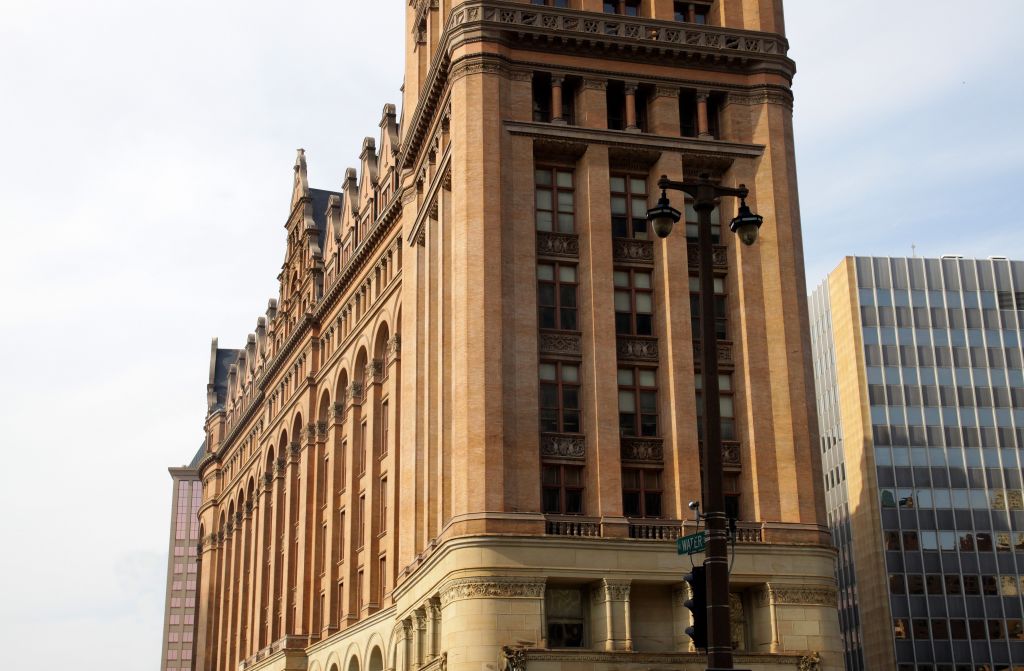
It wasn’t just their food that morphed the mainstream. Almost uniquely among migrants, German Americans developed their own architectural vernacular, and Milwaukee would be their Florence. Wisconsin’s biggest city, around one-in-three residents were German natives in 1860. They came — why else? — to brew. Ice from the Milwaukee River kept their lager cool, while docks on Lake Michigan made it easy to export. Brands like Pabst and Miller rapidly turned Milwaukee into “Brew City” and its streetscape into the most Teutonic in America. Even now, after years of deindustrialisation, Milwaukee’s churches look German, and its downtown offices too, and the mansions sigh for Saxony. The city hall, finished in 1895, might have lumbered to the Midwest from Hamburg, its square squat tower, complete with beer-stein sculptures, primed for a post-binge brawl.
This urban landscape has become America’s too. The gables, the timbering, the sharp roofs and curved arches — you can find them on main streets everywhere, not just in Fredericksburg, Texas, or Over-the-Rhine, Ohio, but in regions that received far smaller German flows. Then there’s how these places feel. Take Von Trier, a historic beer hall not far from Milwaukee city hall. As you enter, you’ll hear the growl of conversation, and the numbing clunk of glasses. Waitresses bustle past, carrying beer jugs and half-eaten plates of pretzels. The atmosphere is homely, convivial, a place to drink but also eat and talk, distinct from both brandy-soaked colonial taverns and the modern English pub. No, Von Trier is impeccably Teutonic — just like almost every bar in America.
This boldness was matched elsewhere. If some Italians rejected the strictures of mainstream America — the mafia was called cosa nostra (“our thing”) precisely to obscure it — Germans instead shaped New World morals to their taste. “May German diligence, steadfastness, and loyalty continue to be the hallmarks of the German element in the United States”, said one pamphlet from 1899, “and imprint themselves ever more indelibly upon the American national character!”
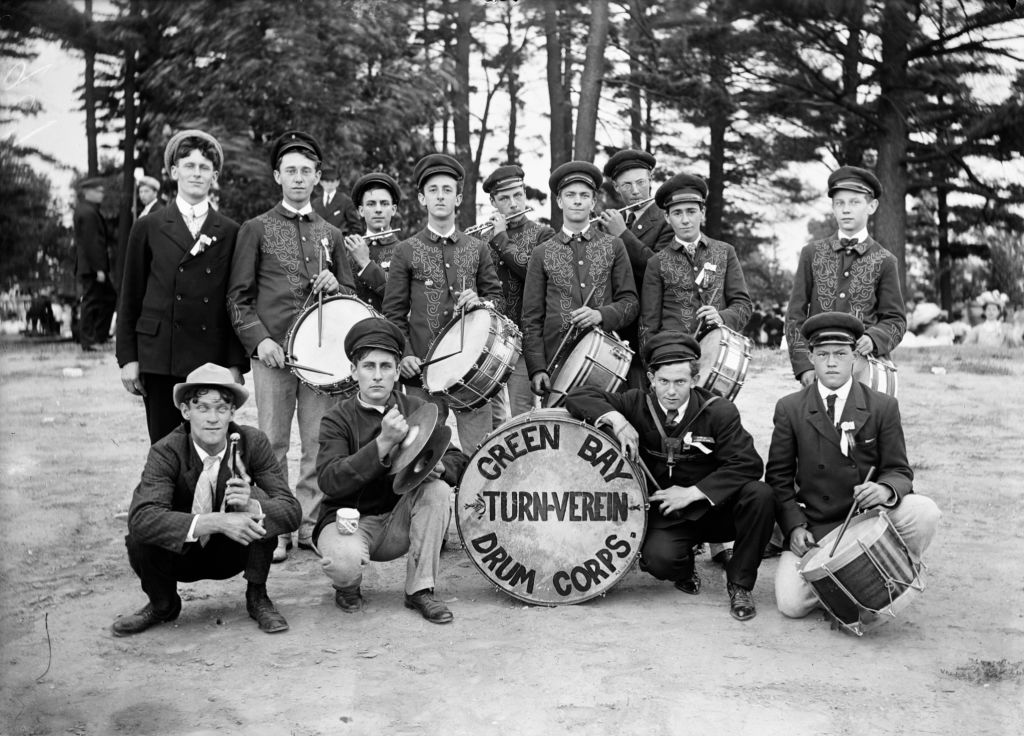
Indeed, probably the most enduring German contribution is how they balanced work and play. Until the mid-19th century, Anglo-America largely followed the Puritan Sabbath, with its devotion to family and faith. Germans, whether Catholic or Lutheran, were more relaxed. They built bandstands and picnic grounds everywhere they went, and Milwaukee became known as the “German Athens” for its proliferation of social clubs. Gambling was also popular. My in-laws have spent hours trying to teach me Sheepshead, a bewildering Bavarian card game now played wherever Wisconsinites meet. Taken together, anyway, the German Sonntagsspaziergang (“Sunday outing”) soon became an American staple — and this helped inform what the good life truly meant. To quote James Truslow Adams, the historian who in 1931 coined the phrase “American Dream”, “life should be better and richer and fuller for everyone”. That fullness would hardly have been possible without the distinctly German, distinctly American, waltz between toil and joy.
Trump himself was surely shaped by these ideas. Whatever his actual business acumen, he’s clearly proud of his success, once crowing that he’d “never lost” in life. A lifetime of dealmaking was never for the glory of God: but for pleasures of the flesh. Those private jets and endless rounds of golf are at bottom aspirational, with the President promising his voters that “you’re not gonna know where to spend all that money”. It hasn’t quite turned out that way — but in his blend of labour, leisure and over-weaning pride, Trump is as German American as an Independence Day hot dog.
That raises an obvious question: if even the commander-in-chief was forged by German America, why is he indifferent to his background? There’s an equally obvious answer: two world wars and a torrent of anti-German feeling. Things were particularly hysterical when America fought the Kaiser from 1917. Germans were spat at in the street and their dachshunds pelted with rocks. Books were banned, plays pulled, and sauerkraut rechristened “liberty cabbage”. The Second World War saw less trouble, but German Americans were nonetheless prodded into quiet. Schools closed and presses shuttered and several Germantowns changed their names. Surnames also changed, from Müller to Miller, Schmidt to Smith. Drumpf to Trump, too, with Donald’s landlord father pretending he was Swedish to avoid awkwardness with Jewish tenants.
If this implies the end of German America was merely a function of 20th-century disasters, I’d suggest a more subtle dynamic. Closeness to the Anglo, after all, is what gave the Germans strength. But when the moment came, that same closeness ensured assimilation was both rapid and near total — far more total than groups that struggled. According to the 2020 census, some 45 million citizens claim German heritage, among white Americans second only to English. Where, though, is German America today? Where is its Rocky, its Seinfeld, even its Big Fat Greek Wedding? Where are its songs, its stories? Where, come to that, are its politicians? Forget Biden’s plastic Irishness: Barack Obama has half-seriously adopted the Emerald Isle too, while everyone from Ted Cruz to Bernie Sanders exploits their ethnic backgrounds for political ends. Not so Trump, who echoed the Swedish story as late as 2016, and whose German-American Day comments feel like an afterthought, focusing more on defence spending than any ancestral affection.
Yet to borrow Wren’s epitaph, if you seek German America, simply look around you. In fundamental ways, the modern United States was made by red-faced Rhenish farmers and hard-nosed Saxon brewers. And whatever the undoubted achievements of other migrant groups, in movies, music or sport, their self-conscious othering means their mores are less likely to spread. Think again of food. Unlike the trusty hot dog, bagels, gyros and pizza retain a vaguely hyphenated air, something true of some Americans themselves. Reacting, perhaps, to a legacy of WASP stereotyping, Larry David still plays up his neurosis, while Martin Scorsese makes mob flicks five decades from his first. The point of these clichés isn’t their veracity — but that they guarantee a certain distance from the American mainstream, limiting their ability to shape the deeper, embedded culture.
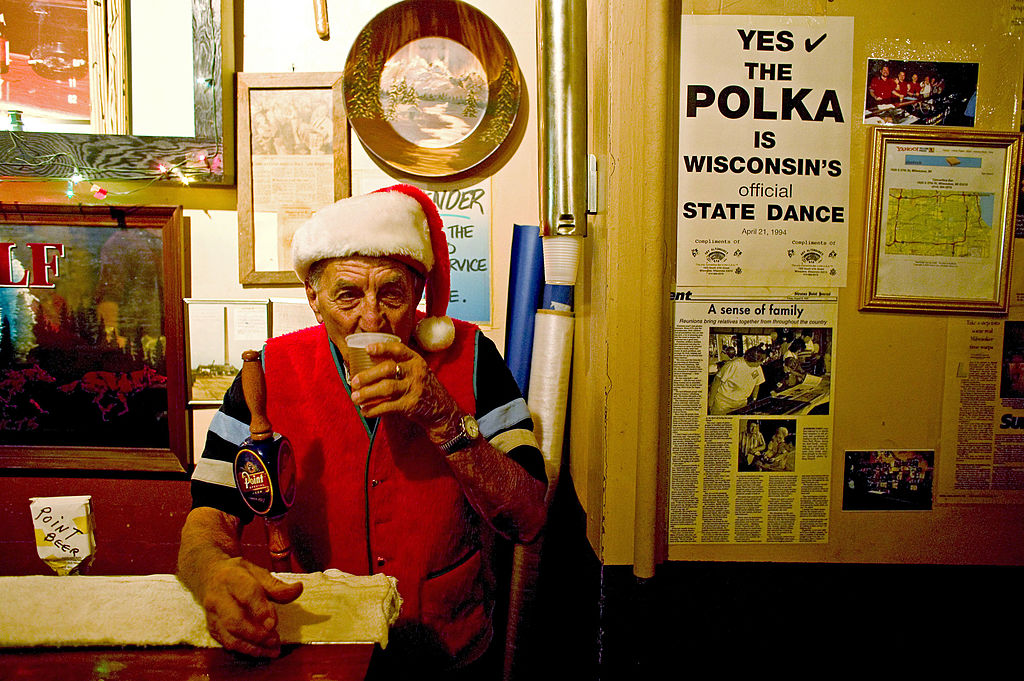
This matters, not least in appreciating the contours of American life over recent decades. The relative cultural silence of heartland America — those flyover counties where Germans most gathered — doesn’t preclude power. Trump’s rise since 2016 certainly suggests as much, even before you recall that the country will down the equivalent of 22 Reflecting Pools of (mostly) “lager bier” this 4 July. The same principles also offer lessons for the future. It’s tempting, particularly on the Right, to see the spread of new music or food as outriders of more thoroughgoing shifts in American life. But using German America and its European cousins as a guide suggests this link is far from straightforward. It’s certainly true that 21st-century immigration will sway the national experience. Yet just as The Godfather didn’t fundamentally alter the tenor of the American Dream, it’s unlikely that Yemeni coffee or Hispanic rap will either.
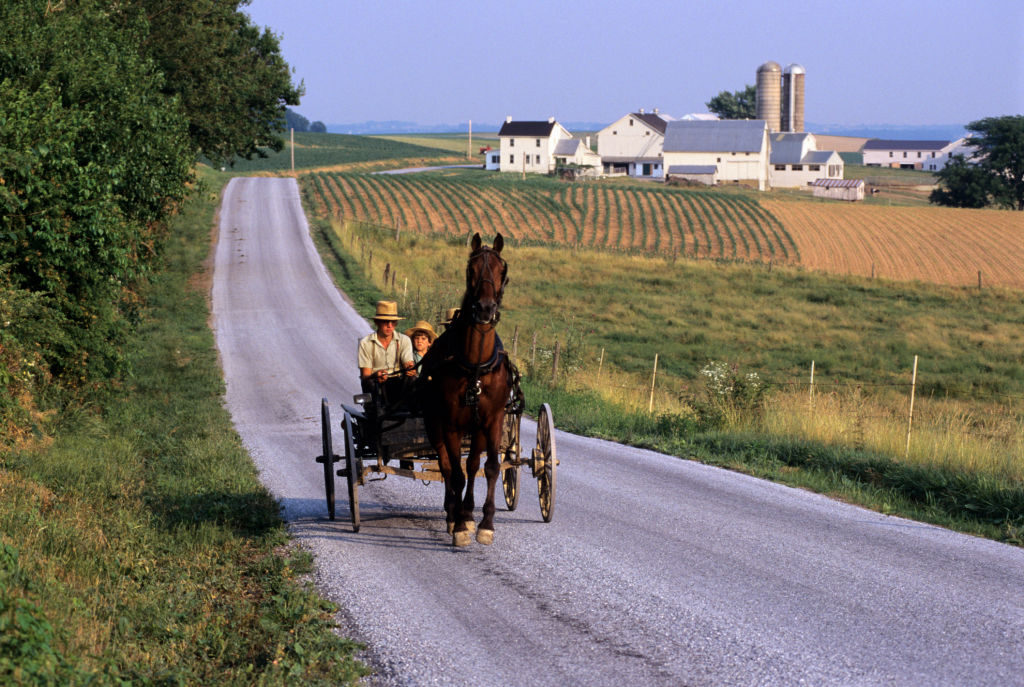
The opposite, in a sense, is true as well. Think again to those early German settlers. The Amish still live much like their bearded forebears, planting and praying in the Pennsylvania soil. Yet if they, almost uniquely among German Americans, preserve their tongue and customs, centuries in the New World have left few indelible traces. In other words, and as the mass of German migrants belatedly learned, the ultimate mark of influence is to be drowned in the American tide.