





‘Dolly is as beloved for her charity as she is for her mountain lilt.’ (Jason Kempin/Getty)





Traffic was at a standstill on Interstate 40 through the Pigeon River Gorge when the message came through.
Whoa. Breaking News. Dolly is actually going to be here.
I gawked at the little green text bubble and shifted restlessly in the driver’s seat. “There’s no way,” I muttered. An hour behind schedule already, I could see the endless chain of brake lights ahead of me curving around the neck of the mountain like a piece of flashy costume jewellery. The midsummer sun was moving westward, its rays glinting off hood ornaments shaped like flying pigs and angry rubber ducks.
I too was headed west, travelling some 500 miles to Cornersville, Tennessee for the grand opening of Dolly Parton’s Tennessean Travel Stop. For months, there’d been buzz online about the Queen of Country Music joining forces with one of the South’s most iconic truck stop brands. It never occurred to me that Dolly might actually show up.
Ryan Schefsky, a trucker based in Texas, had agreed to meet me at the exit. He beat me there by a few hours. When I received his text, I was angry that the highway couldn’t get me to my destination any sooner. I looked around at the road crews rebuilding whole stretches of I-40 ravaged by Hurricane Helene. Then there were the miles and miles of semi-trucks bottlenecked in the gorge. A minor inconvenience for most travellers is a daily battle for truck drivers. The highway doesn’t care about clocks or calendars. Truckers know that instinctively.
“Trucking can make a liar out of you when you didn’t want to lie,” explains longtime driver, troubadour, and storyteller “Long Haul Paul” Marhoefer. Graduations, weddings, anniversaries. Commit with the best of intentions. Then, “some knucklehead has got two pallets of cheddar that you’re waiting on and he’s still in Kenosha”. All of a sudden, you’re a liar.
A few hours later, my phone lit up again. Dolly was there. Waiting in my inbox was video footage of her arrival. For the ribbon cutting the songbird wore a blue sequin dress and her signature six-inch platform high heels. “I’m sure some of you are wondering why I wanted a truck stop,” she suggested. “Well, I couldn’t just leave it to beavers. I had to throw my squirrely little self in there.”
The remark was a jab at Buc-ee’s, the Texas-based chain of travel centres known for its buck-toothed beaver mascot. The roadside megastores, with their chopped brisket sandwiches and whole walls of beef jerky, have gained a cult following among some road-trippers. Even so, the company’s longstanding policy prohibiting semi-trucks, 18-wheelers, and commercial trailers has been a source of some controversy. In 2023, a couple reported being thrown out of a store in Texas for parking a semi-truck — without a trailer — in the lot. The company’s general counsel explained that the parking areas are not designed to accommodate commercial vehicles.
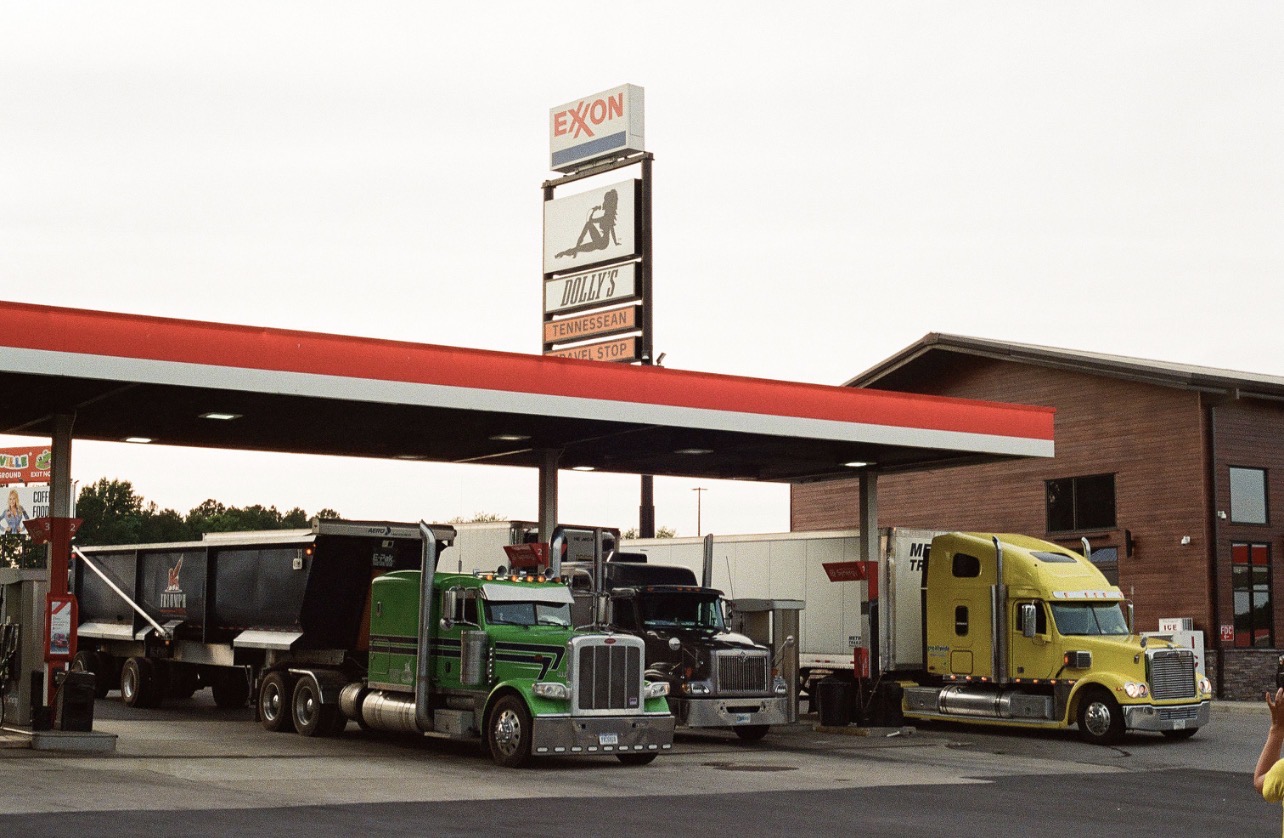
Dolly and her business partners have taken a markedly different approach. Their flagship location, an expanded version of the existing Tennessean truck stop, welcomes all travellers and caters specifically to long haul truckers. It offers free overnight parking and a Southern-style restaurant with a steady lineup of live country music acts.
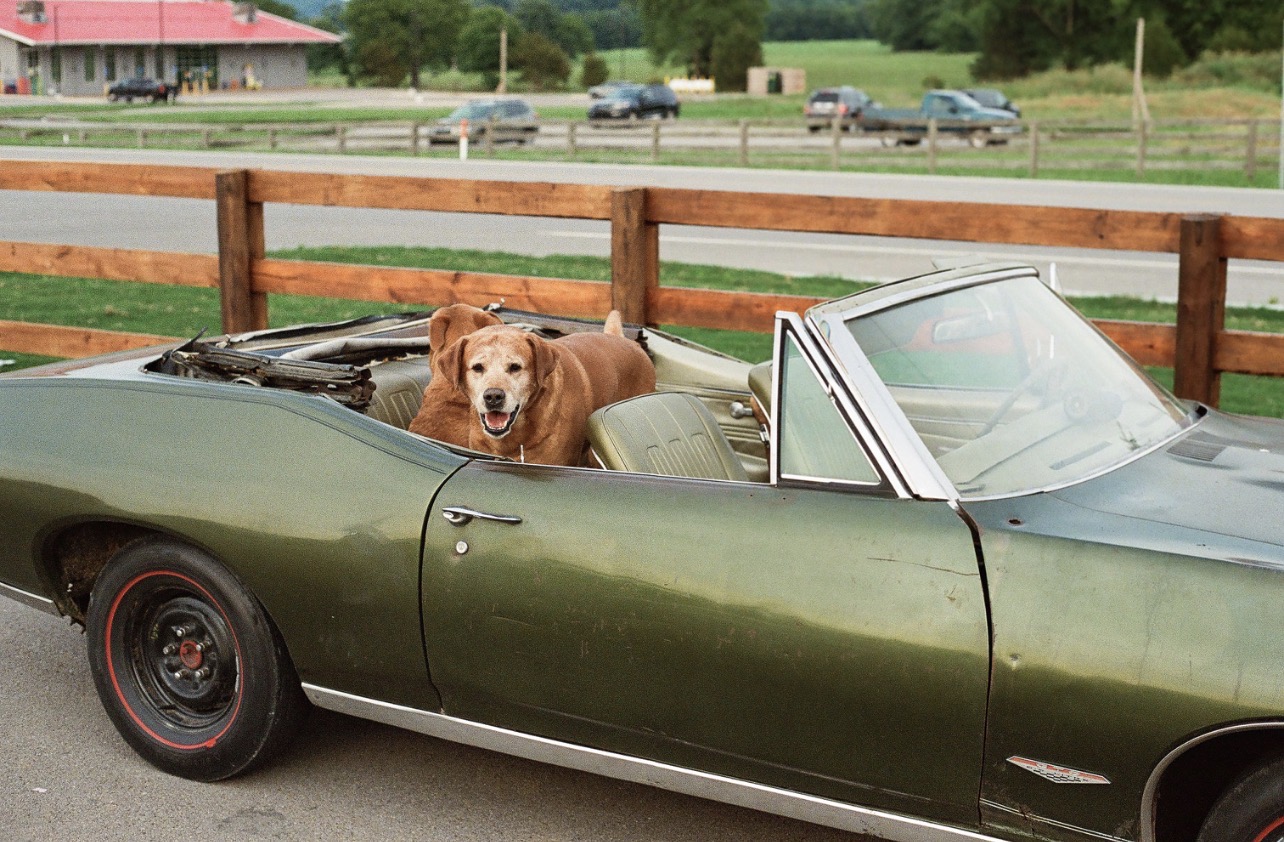
When I pulled into the parking lot, there were a couple of guys haggling over parts for a 1968 Pontiac GTO under a sign featuring a busty silhouette of Dolly, a homage to the mudflap girl of the Seventies. Neither of them knew that Dolly had been there, but they figured it out when they stumbled into piles of brightly coloured confetti at the entrance. “I do think,” one of them volunteered reflexively, “that this is a good thing for truckers. Dolly… she’s done a lot of good for Tennessee… and I think she really does care about working people.” That’s a common sentiment across the South. The daughter of an East Tennessee sharecropper, Dolly is as beloved for her charity as she is for her mountain lilt.
What makes Dolly relatable to truck drivers, though, is her career as a touring musician. “I have spent the bulk of my life on the road,” she said in a statement. “All the years spent visiting greasy spoon cafes, truck stops, and roadside pit stops have given me an understanding of what travellers desire… I believe we will fill a void out there on the highways, all while bringing the heart and soul of Tennessee.”
For truckers, the void Dolly is talking about is palpable. Mounting economic pressures, corporate consolidation, and strict federal regulation are forcing many of America’s beloved truck stops — along with their cafeterias and 24-hour diners — to sell or close their doors. On a BigMackTruck.com forum, one driver laments: “I miss the old Shenandoah truckstop in Mount Jackson, VA. True Southern hospitality. With every fuel-up, you were given three free chicken wings and a coffee.” Another reminisces about Kelly’s Truck Terminal, Inc. in Greenwood, Louisiana, where attractive women in orange jumpsuits would fuel the truck, check the oil, and clean the windshield and mirrors.
By contrast, drivers complain that the corporate chains dominating the industry prioritise efficiency over service, shuttling customers in and out with as little ceremony as possible. “Truck stops have always played an important role in the industry, and not merely as a place to park, get something to eat, and then go to bed,” trucker-philosopher Gord Magill explains in his book End of the Road: Inside the War on Truckers, “though that strictly utilitarian vibe is becoming the norm.”
Magill paints a picture of the truck stop not as a liminal space, but as a kind of town square for the highway set. “Truck stops comprised a combination of what sociologists call second and third places,” he writes. “The first place is home, the second is work, and the third is where people gather — bars, churches, or anywhere else — for convivial human connection. The particular kind of third place formed by truck stops was imbued with a type of working-class aesthetic that shares something in common with military mess halls and perhaps a more masculine approach to the classic American diner.”
Dolly’s Tennessean Travel Stop seems to be trying to recapture (and perhaps reimagine) some of the sense of togetherness that the old haunts created, absent the hyper-masculine sensibility, while also making the service station a destination experience for other travellers. It’s too early to tell how the experiment will turn out, but if the opening is any indication, things are looking up. “I work with an old timer who used to drive [Dolly’s] tour bus, and he says she’s a sweetheart,” one trucker wrote in a Reddit thread. Another chimed in: “The epitome of ‘making the right person famous’.”
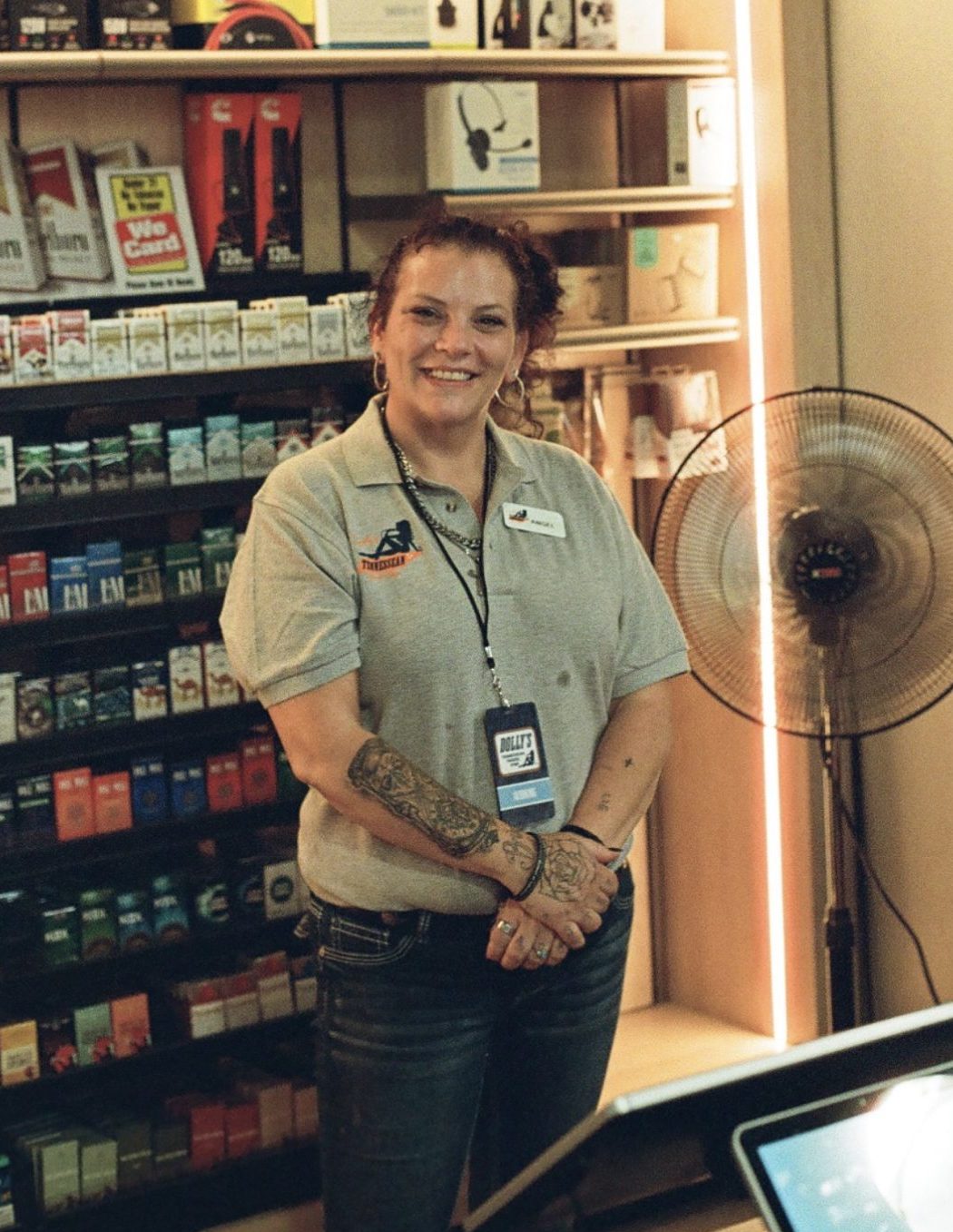
Inside the service station, a clerk who introduced herself as Angel Rose pointed to a cylindrical Tupperware container filled with lemon water. “That’s Dolly’s cup,” she whispered. “I know because that is exactly where Dolly sat for her TV interview.” Angel playfully acted out the scene. “I want you to have it,” she squealed, pressing the plastic cup into my hand. Something about her felt familiar, like she could have been an old friend or even a first cousin. “That is exactly the kind of person you would want to meet coming off the road,” I whispered to Ryan. “Oh, absolutely,” he agreed.
Truck driving is an increasingly isolating gig. Drivers face gruelling hours of operation: federal rules allow most truckers to work about 70 hours each week which has, in a cruel twist of fate, become the standard expectation for many employers. Then there’s the mandatory electronic logging that undermines driver autonomy and flexibility, and long stretches of time away from home. According to a recent survey, 28% of drivers report struggling with extreme loneliness on the road.
On the back patio, Ryan and I were approached by a trucker from Kansas who told us that his grandmother used to joke, “You can go anywhere in the world from Wichita, and most people do.” He asked Ryan for route advice and then settled in for a good long chat. “You know,” he said after a while, “my daddy was a truck driver. He always said he had three rules: (1) you can always be late, (2) if the company doesn’t get that, get a new company, (3) you only die once. Order of importance is flexible.” He reminisced about his mother and father, their deep love for one another. “Sometimes, I think they’d fight just so they could make up,” he said. I wonder if there are other places along the interstate where these kinds of conversations can still unfold.
In trucking, there is a cautious optimism that celebrity involvement in the industry could transform the perception of interstate infrastructure among the public and policymakers. Things that most people take for granted — a hot meal, a clean shower, and a good night’s sleep — can be hard to come by for truckers, who spend almost every night away from home. Truck parking, meanwhile, has become a hot-button issue. With just one parking spot available for every 11 trucks on the road, drivers often stop driving early to make sure they get safe parking. Still, it’s become commonplace in recent years to see truckers forced to park illegally in dangerous places — along highways, on exit ramps, or in vacant and abandoned lots. According to a survey conducted by the Federal Highway Administration, 98% of truckers struggle to secure parking each week, costing drivers something like $5,500 each in annual income. When drivers have to pay for parking, it comes out of pocket, and they generally aren’t reimbursed. The shortage has even given rise to new businesses, like Truck Parking Club, a sort of Airbnb for overnight parking that opens trucker access to more properties.
As lawmakers work to address the problem, including by securing some funding in the annual budget to build free truck parking spaces, drivers continue to rely on places like the Tennessean for their parking needs. There were rumours, ahead of the opening, that the revamped truck stop might switch to a paid model, but those turned out to be unfounded. Instead, the once-dirt lot was paved, parking lines were striped, and truck capacity was added.
The lot was starting to fill up when Ryan and I made our way through the shop, past the aisles of Dolly-themed hats and jackets, and into the night. “It’s already expensive to live on the road,” Ryan told me, “so being able to park for free is a huge relief. “There’s also just a humanising aspect to it,” he went on. “If you’re forced to park illegally, you have to go without bathrooms or food or water for the night.”
Ryan and I navigated the maze of parked trucks arriving finally in front of my Chevrolet. He must have sensed my anxiety about taking up a spot. “You’re ok,” he said. “The lot’s not full yet.” He pulled a t-shirt out of his truck and handed it to me. “I thought you’d want one of these.” I unfolded it and examined the logo — mudflap Dolly.
They say charity starts at home, but there’s still a place for it out on the road. Dolly herself will tell you that.