




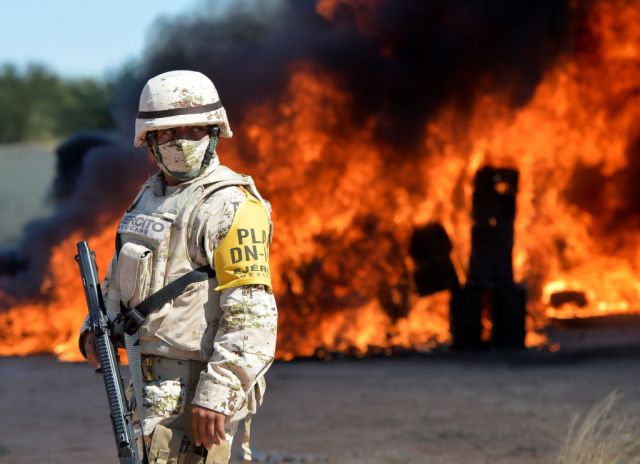
‘The Jalisco cartel is now infamous for staging brazen attacks against Mexican government officials’. (Israel Garnica/Norte/Getty)





It’s been more than five years since Daniel Flores Fernández disappeared. But telling the story now, his father Héctor still wells up. It happened when Daniel was just 19, living with his pregnant girlfriend in the Mexican city of Guadalajara. Early one Saturday in May 2021, men linked to the Jalisco New Generation Cartel (CJNG) stormed his apartment, snatching Daniel from his girlfriend and unborn child. Half a decade on, he’s still missing. Héctor has since learned that his son is being held prisoner at a CJNG “safe house” somewhere in Guadalajara, where unwilling recruits are forced to work for Mexico’s most violent drug gang. “All I can do is hope that he comes back to me one day,” Héctor says, dabbing his moist eyes with a thumb. “The pain is tremendous.”
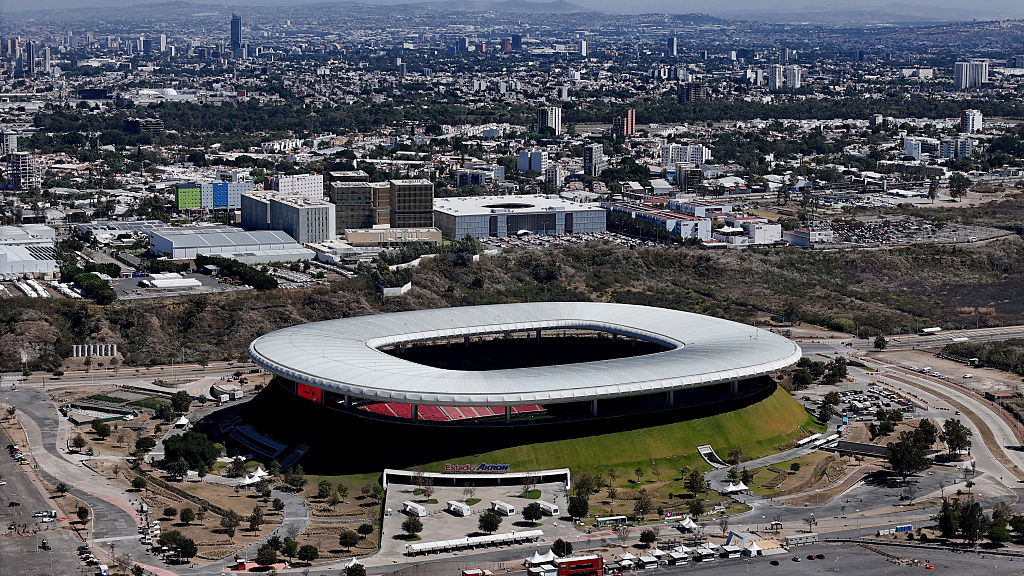
Daniel’s story is darkly familiar. Around a third of Mexico is ruled by cartels like the CJNG, while more than 130,000 people are missing nationwide. But what’s different about Guadalajara, capital of Jalisco state in the west of the country, is that it is now welcoming thousands of football fans. The World Cup has just started, and the city’s gleaming Akron Stadium is hosting a number of games. Cartel violence has unsurprisingly thrown these plans into doubt — and, even if the security forces do manage to keep order, the scourge of the drug gangs will linger long after the final whistle blows.
The Jalisco New Generation Cartel has dominated the state for years. Emerging in 2010, after the so-called Milenio gang broke up, it’s since expanded across Mexico and beyond. Today it boasts a presence in some 40 countries. Its big earner is drugs: the cartel pulls in billions of dollars annually trafficking fentanyl, meth and cocaine to the US. Jalisco’s geography is key to this bonanza. Importing chemical precursors through ports such as Manzanillo, in the neighbouring state of Colima, the CJNG then smuggles finished narcotics north to America’s southwestern border.
With wealth has come violence. The Jalisco cartel is now infamous for staging brazen attacks against Mexican government officials; that the CJNG leader Nemesio Oseguera Cervantes, more commonly known as “El Mencho”, remained at large was deeply embarrassing for President Claudia Sheinbaum and her government ahead of the World Cup. Further pressure came from Donald Trump, who pushed his Mexican counterpart to “go after” the cartels, ominously warning that he’d put US boots on the ground if she didn’t.
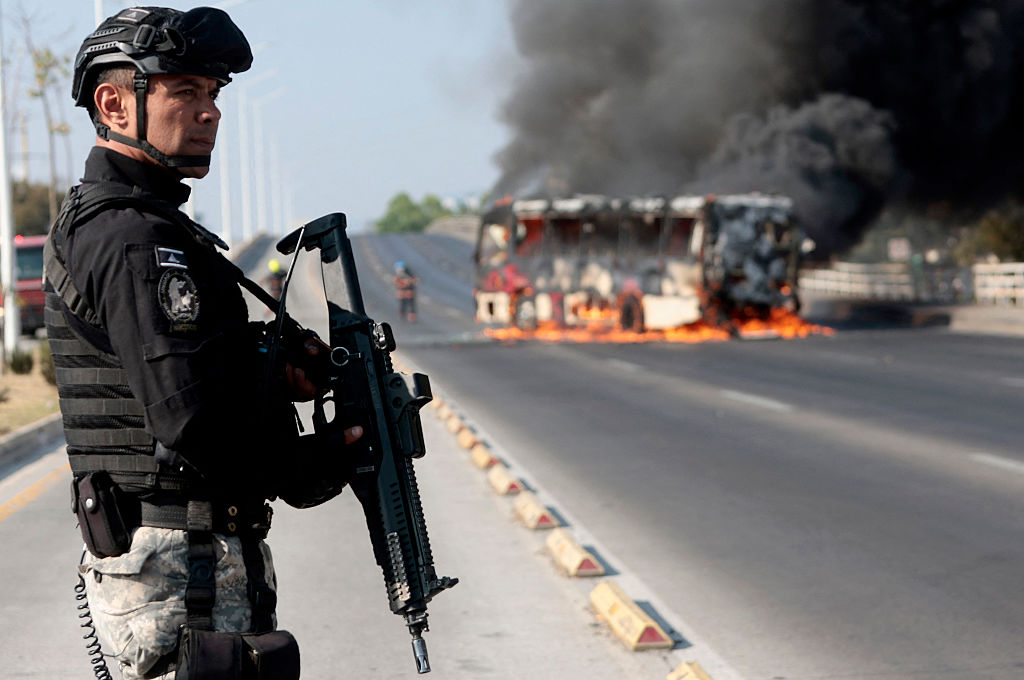
Things came to a head in February, when Mexican special forces swooped on El Mencho. He was fatally wounded, Mexican officials say, following a shootout at a remote mountain property near the town of Tapalpa, about 100 miles southwest of Guadalajara. But that coup, aided by US intel, soon sparked cartel reprisals across Jalisco. Gunmen torched cars and blocked roads, including at the beach resort of Puerto Vallarta, where terrified tourists were left cowering in their hotel rooms. The violence left 25 National Guards dead in Jalisco alone, with bloodshed taking place within 10 miles of the Akron Stadium.
With the World Cup approaching, Sheinbaum urged calm, claiming that Mexico could ensure there was “no risk” to supporters travelling to Guadalajara. Héctor Flories isn’t convinced. We speak in his Guadalajara home, as the smell of gas wafts in from a nearby restaurant. “We want them to come,” Héctor says of World Cup visitors, a picture of his son’s smiling face emblazoned on his t-shirt. “But [the government] can’t even have security for their own people, let alone people coming from other countries.”
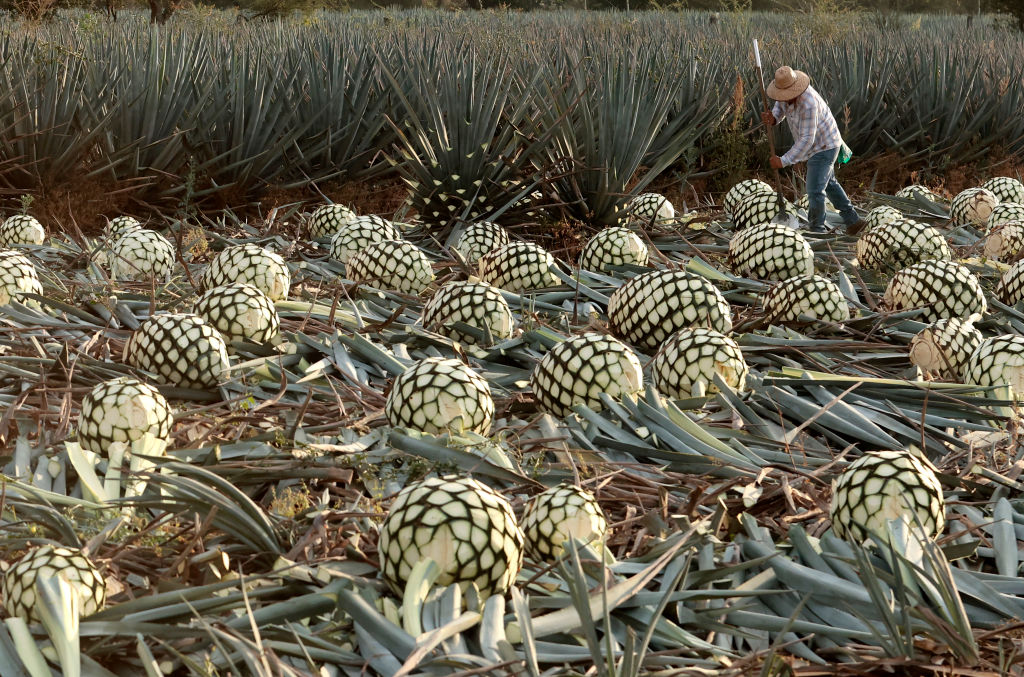
In theory, Guadalajara has plenty going for it. A booming tech industry has earned it the title of the “Silicon Valley of Mexico”. Intel and Bosch are just two global firms to have a presence here, drawn to the steady flow of computer science graduates from the city’s several universities. In truth, though, it’s tequila, not tech, that puts the city on the map. The eponymous town of Tequila, just an hour from the state capital, is the cradle of an industry that produces up to 500 million litres of booze each year. It all comes from the rows and rows of blue agave plants that thrive in Jalisco’s volcanic lowlands, with profits from the drink running into the hundreds of millions of dollars.
Yet the party town has a sinister side. Across Guadalajara, extortion is a major problem. For obvious reasons, no hard figures exist, but national surveys suggest there are hundreds of thousands of extortion attempts against Mexican businesses each year. Guadalajara is no exception. From tortillerías to car washes, “cobro de piso” (“floor charge”) is just another cost of doing business. Pity anyone who doesn’t — or can’t — pay up. There are roughly 1,500 murders a year in the Guadalajara metropolitan area, with many down to cartel brutality.
As if that weren’t bad enough, CJNG also raises money through kidnapping, forcing their victims to act as lookouts, move drugs — or worse. According to one former prisoner, who later spoke to Héctor Flores, the criminals sometimes make their victims carry out sicario hits. Daniel is far from alone here, with 16,000 people officially “disappeared” across Jalisco’s canyons and agave groves.
When I visit Guadalajara, there are signs of resistance. The city’s Monument to Boy Heroes, built in 1950 to commemorate a 19th-century battle against the United States, has been rechristened the “Roundabout of the Disappeared” ahead of the World Cup — and is covered by posters of the missing. One features the face of Jonathan Emmanuel Serratos Virgen, who was just 31 when he was abducted. A caption below the poster pleads: “Have you seen him? Help us find him.”
Héctor Flores tells me he’s co-founded a group called Luz de Esperanza (“Light of Hope”), which campaigns for the disappeared. Printing out flyers and posting on social media, the activists also lobby the state to invest more money in identifying corpses, increasingly found in mass graves across the city.
The grim irony is that this toll has risen with development. As the authorities have ploughed money into preparing Mexico’s Silicon Valley for the World Cup — widening roads and building new apartment blocks — contractors have chanced upon a bloody harvest. According to activists, some 22 graves have in recent years been found around the Akron Stadium alone. One of the most horrifying examples emerged in February last year, when construction workers turned up 260 bodies at a place called Las Agujas, on the outskirts of Guadalajara, with many mere body parts.
A year on from the discovery, I decide to visit Las Agujas myself. I’m accompanied by Maria Luisa Estrada Hernández, a crime journalist who reports on the cartel, as well as a colleague from the UK. Héctor Flores had warned us that the cartel shooed away other journalists who’d tried their luck here — and Hernández had other reasons to be nervous. In July 2023 she’d survived an assassination attempt, after a gunman on a motorbike opened fire on her car when she was travelling with her daughter. He missed — but according to official statistics at least 141 journalists and media workers have been killed in Mexico since 2000, and, according to a 2024 Amnesty report, at least 61 of those deaths were clearly related to their work.
It’s early on a Saturday when we drive up a dirt track towards the area of Las Agujas where the mass grave was found. We park our car beside a neat lawn, water sprinklers stuttering. It’s only 10am, but the air is dry and dusty, the sun already biting. High walls block the view into the killing site. We approach a security hut and ring a bell, hoping to gain access. A wiry security guard in his sixties emerges from behind a booth, the gate beside him firmly shut. He gruffly tells us he has no authority to let us pass, directing us to contact the landowners instead. To our right, a hooded man with long hair saunters back and forth, glancing in our direction. Another hooded man races by on a motorbike.
We ignore them, and instead keep walking, hoping to peek at the mass-grave site beyond the wall. Suddenly, a man speeds towards us in a dark blue pickup truck, the window on the driver’s side down. He pulls up on our left, his tyres spinning in the dirt. “Guys, you can’t be here on this property, you gotta go,” he says in perfect American English, another hint of the cartel’s reach north of the Rio Grande. He’s in his late forties, thin, bearded, and wearing a black baseball cap. “We’re journalists,” we insist, as if that phrase means anything to him. “I know,” he replies in a menacing voice, “but you gotta get outta here now.” We pile into our car and Hernández takes the wheel and races back down the dirt road towards the highway. A red pickup truck follows and matches our speed. Estrada takes a sharp right; the red truck follows. She pulls off to a clearing on our left, then does a sharp u-turn as we race back towards Guadalajara.
That only leaves one more place to visit: the Akron Stadium itself. It rises, a low white oval, from a grassy mound on the edge of the city, more spaceship than sports venue. As we drive round the perimeter, the security presence is heavy. Army pick-up trucks stand guard, with officers in the back manning .50-caliber machine guns. The Special Forces and National Guards have their own contingent of trucks — I easily tot up more than 100 trucks in total. Football’s governing body seems pretty positive too. “FIFA is confident that the efforts being made by the governments of Canada, Mexico and the United States will ensure a safe, secure, and welcoming environment for everyone involved,” the organisation tells UnHerd, noting that Mexico and the other host nations safely welcome thousands of visitors every day. As for the cartels themselves, they have been quieter in recent weeks, apparently warning their members not to bother visiting fans.
Whether that’s enough to protect the throngs of tourists now descending on Jalisco remains to be seen. The US State Department has advised its citizens to “reconsider” travelling to the state, while violence in Guadalajara continues unabated. Just this week, armed men on a motorbike chased down a man not far from the city centre — before shooting him in the head. For his part, Héctor Flores is sceptical whether a show of force really makes Guadalajara safer, not least when so many officials are on the CJNG payroll. Remarkably, he says, that includes the same men who kidnapped his son, with members of Jalisco’s state prosecutor’s office caught on camera that fateful day in 2021. Local police still haven’t acted, even though, in June 2025, a tribunal confirmed that officials were indeed involved in Daniel’s disappearance. “In Mexico,” Héctor laments, “you don’t know when organised crime starts and the prosecutor’s office begins.”
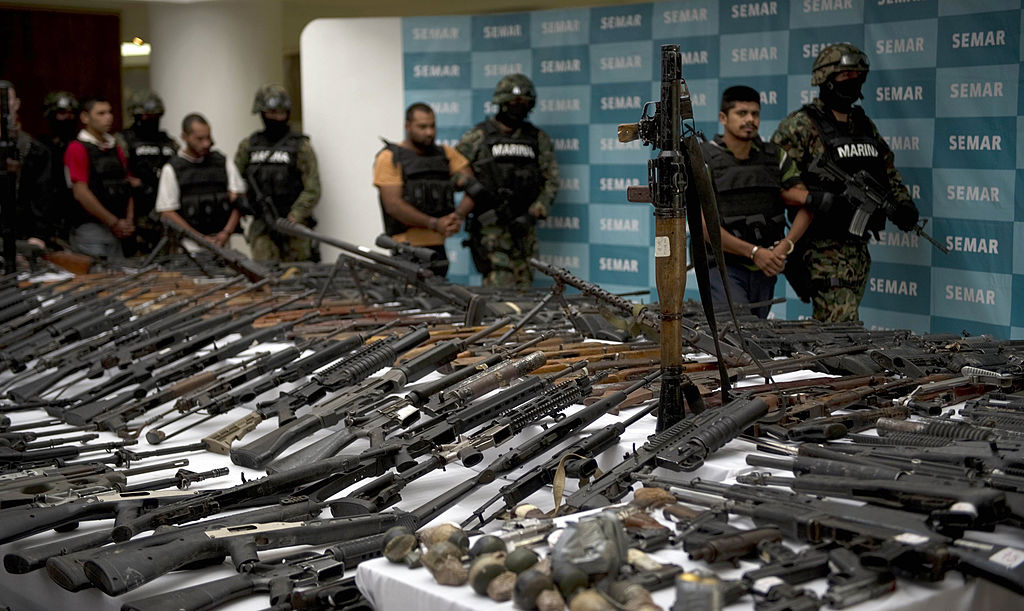
If the Sheinbaum administration has struck some blows against the cartel’s leadership, few here believe that much will change. In fact, things could soon become even worse. If a leadership fight erupts for El Mencho’s crown, it could spark an all-out war, a bloodbath — and a disaster for Mexico during the World Cup. It hardly helps, here, that the flow of weapons from the US continues unabated. Cartel men boast heavy guns of the sort wielded by troops at the Akron, with government forces sometimes overwhelmed by superior firepower. Bullet casings from these weapons have been traced back to the US: one factory, the Lake City Army Ammunition Plant in Missouri, is even owned by the government. Once such bullets enter the open market, they soon end up in the hands of criminals, a neat way to spend all their American drug money.
Aware, perhaps, of the oddly symbiotic relationship between his country and Mexican gangs, the Trump administration has kept up the pressure on Sheinbaum. Last month, for instance, the head of the US Drug Enforcement Agency claimed that Mexican officials have been “in bed for years” with drug traffickers. Perhaps that’s fair enough. Yet political point-scoring does nothing to help Héctor Flores, let alone his vanished son.