









The Muslim Brotherhood is many things: a political organisation with global presence; a secretive society, with high-level connections into business and government; a missionary body that seeks to maximise the presence of Islam around the world; an institution-builder, whose members are prolific in setting up organisations, putting its presence at one remove; a movement, stretching way beyond its Arab Muslim origins; and a network of networks that among other things allows Muslim and non-Muslim groups to fight alongside each other. It is associated with Hamas in Palestine and has past ties to Al-Qaeda. Its people put themselves forward as interlocutors, seeking to intercede between governments and their Muslim populations, using their networks as leverage. In some respects it is a state proxy, closely linked to Qatar and the Turkish regime of President Erdoğan. It is a charity promoter, working for the sake of Muslims and Islam worldwide, but especially in Palestine. And, last but not least, it is an ideology, with a commitment to Islamic supremacism and the defeat of the West.
These different aspects don’t always work in tandem. Indeed, the Brotherhood sometimes finds itself on different sides of political conflict. But such ambiguity can work to its advantage, creating leverage to maximise its interests and undermine its real enemies: to turn them against themselves and each other.
After decades of large-scale Muslim immigration, the Brotherhood as a movement, ideology and style is now firmly established within Western countries. Its positions on such things as decolonisation, Islamophobia and Palestine-Israel are now mainstream positions in the West. But the Brotherhood itself, as a body, remains under the radar, clearly present but rarely overt. It operates in the shadows, with assertions about its influence easily written off as conspiracy-mongering.
Yet sometimes this influence becomes visible. In November 2015, former prison governor Ian Acheson wrote to the Ministry of Justice about how a review team he was leading had found numerous examples of Islamist extremist texts in British prison chaplaincies. In evidence to the Commons Justice Committee the following July, Acheson said the books contained “sometimes sectarian, homophobic and incendiary information that was freely available to vulnerable prisoners in many prisons with no obvious control over it”.
Acheson’s review team looked at eleven prison chaplaincies and found inflammatory texts in nine of them, including titles from some of the main ideologues of the Muslim Brotherhood: The Way of Jihad from Brotherhood founder Hassan al-Banna; Milestones by Sayyid Qutb (also author of Our Struggle with the Jews); and The Lawful and Prohibited in Islam by Sheikh Yusuf al-Qaradawi.
Acheson submitted his final report to Michael Gove, Secretary of State for Justice, in March 2016, with a stripped-down summary released in August of that year. Behind the scenes, he had also written to Gove highlighting what he calls a “significant finding”, beyond his terms of reference. This concerned the Senior Muslim Advisor to the National Offender Management Service (NOMS), which makes sure convicted criminals serve the sentences and orders carried out by courts. The advisor was Ahtsham Ali. Acheson stresses now that he was not making any specific allegations. However, he noted that Ali had appeared on platforms with extremists and had attracted complaints from Sufi imams who felt unfairly discriminated against in the prison appointments process.
Following Acheson’s warning, Gove launched an investigation into Ali. According to the Sunday Times, it found that 140 of the prison imams Ali had overseen the appointment of (around 70%) were from the Deobandi tradition, a conservative Sunni denomination prevalent in British Pakistani communities that has influenced the Taliban and has significant ideological commonalities with the Brotherhood. However, by the time the investigation process was completed, Gove had been sacked and Acheson’s term had ended.
Following the investigation, Ali was exonerated and he remains in his position today. The Ministry of Justice now issues the statement: “There is no evidence that Ahtsham Ali was responsible for extremist texts identified in some chaplaincies.”
But he certainly has strong “links” to the Muslim Brotherhood and other Islamist groups. Sheikh Abdullah al-Judai, Ali’s long-term teacher and guide, was a founder of the European Council of Fatwa and Research (ECFR), part of the inner network of Brotherhood institutions in Europe. Qaradawi, author of one of the texts that Acheson’s team warned about, was a co-founder of the ECFR and led the organisation for many years. The Iraqi-born Judai is involved in other institutions of that network too: the International Union of Muslim Scholars (IUMS), also formerly led by Qaradawi; the charity Islamic Relief, recently deselected as an aid partner by the Swedes but retained as such by the UK; and the European Institute of Human Sciences (EIHS), the main branch of which was dissolved by the French government last year for promoting radical Islamic ideology and justifying armed jihad. Signalling that you are a longstanding pupil of someone with such connections sends quite a message to those in the know.
It is worth taking a moment to discuss Qaradawi, the foremost Brotherhood ideologue of recent times, who died in 2022. Qaradawi acquired a certain notoriety in the West for stating that Islam will conquer Europe via “da’wa [the Arabic term for proselytising] and ideology” and for advocating a “jihad of necessity” against Israel, including civilians and the “innocent child” as legitimate targets. He also praised violent jihadists in the West for their aims if not their means, for their love of truth and the concern they show for Muslims.
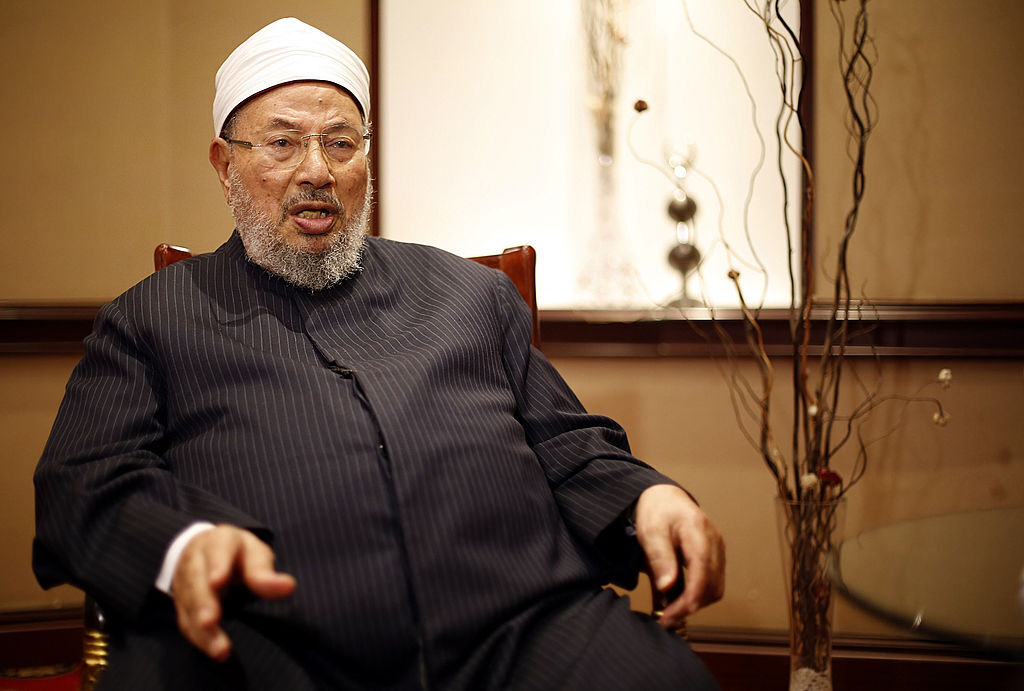
Qaradawi’s The Lawful and the Prohibited In Islam, one of the texts found in British prisons, is an interesting case. Effectively a handbook of Islamic law for Muslims and potential converts in the West, most of it is emollient and even ecumenical, far from being inflammatory. However, this stance emerges from a standpoint of necessary Islamic supremacy. As Qaradawi says, “Islam came to be followed, and not to follow; to be dominant, and not subordinate.”
Among non-Muslims, Jews and Christians at least deserve protection and even love from Muslims, he says, drawing extensively on the Qur’an and hadith — but only if they defer to Muslim dominion. “Neither rabbis nor priests, kings or sultans, have the right to prohibit something permanently to Allah’s servants; if someone does this, he has certainly exceeded his limits, usurping the sovereignty which, with respect to legislating for the people, belongs to Allah … alone.”
Jewish people present a difficult case here. On one hand, Qaradawi says, they deserve respect as People of the Book. But he also condemns them several times for their “rebelliousness”, their deviousness and a tendency to inveigle wealth from others.
Notwithstanding its generally peaceful tone, the book contains a clear threat. If non-Muslims resist the imposition of Islam and its codes of halal (lawful) and haram (prohibited), the latter including such things as the consumption of alcoholic drinks, homosexual marriage and uncovered women in public, then they may be fought against.“In order to keep the Muslim society purified,” he says, “a continuous war must be waged against all belief-systems which originate in man’s ignorance of the divine guidance and in the errors of idol worship.” And it is imperative, he adds, for the Muslim Ummah “to muster military power to the utmost extent of its capacity in order to defend itself.” This is the responsibility of every Muslim, not just governments.
Here we might see the origins of what some observers call the Brotherhood’s “double discourse”; also its “obfuscation” and “dissembling” on such matters when challenged. On one hand there is plenty of generous, peaceful language in Qaradawi’s book to demonstrate how Islam is not a threat to non-believers. On the other hand we find exhortations to violence against those who fail to submit to it.
Whether or not Ahtsham Ali had anything to do with this and other Brotherhood texts being present in British prisons, it is remarkable that someone with such links maintains an overseeing role in those prisons, including over the appointment of imams (leaders) who minister to prisoners.
Ahtsham Ali and Sheikh Judai were both offered the right to reply to the facts and assertions above which concern them, the former via his employer the Ministry of Justice. However, no response was forthcoming from either.
In recent decades, British prisons have become notorious for the domination of Muslim gangs. A Ministry of Justice report in 2019 noted that staff and inmates referred to the gangs as the “Muslim brotherhood”, with former prisoner Steve Gallant, hero of the 2019 London Bridge terrorist attack, describing it as “less an organisation than a network, one fusing Islamist extremism and grievance with the gang discipline of existing prisoner groups”.
This reflects a wider reality of the Muslim Brotherhood in the West, as a style and source of inspiration as much as anything. The organisation has grown some serious wings.
***
The Muslim Brotherhood was originally founded by the Islamic scholar and schoolteacher Hassan al-Banna in Egypt, 1928, which was then nominally independent but dominated by the British. Banna was consumed by the colonisation of his homeland and much of the Muslim world by Western powers and Western modernity. He attributed this partly to non-Muslim strength — but also to Muslim weakness, which he attributed to the abandoning of Islamic principles. Real Islam, he said, was about fighting and defeating non-believers.
Gamal Abdel Nasser, the Egyptian nationalist, revolutionary and President from 1954 to 1970, was briefly a member of the Brotherhood in the Forties. A friend and associate of Nasser’s in the Free Officers movement recounted their initiation into the “secret apparatus” of the organisation: “We were taken into a totally darkened room where we heard a voice and, placing our hand on the Quran and a gun and repeating after the voice, we took an oath of obedience and total allegiance for better or worse, to the Grand Master [Banna], swearing by the Book of God and the sunna of the Prophet.”
Nasser soon turned against the Brotherhood (Ikhwan in Arabic), rejecting its insistence on shari’a law in favour of secular nationalism. In response, a Brotherhood member shot at him in 1954 as he was celebrating the withdrawal of British forces from the country. He was not hit. But the pattern was set for Egyptian politics: on the one side, secular nationalists who could draw upon the backing of the military; on the other, the Brotherhood, who drew their strength from within Egyptian society as de facto representatives of Islam. At times, the two forces have cut pragmatic deals with each other. However, their visceral opposition meant this never lasted: witness the coup that overthrew the Brotherhood-led government of Mohamed Morsi in 2013 — and the Rabaa massacre of protestors that followed.
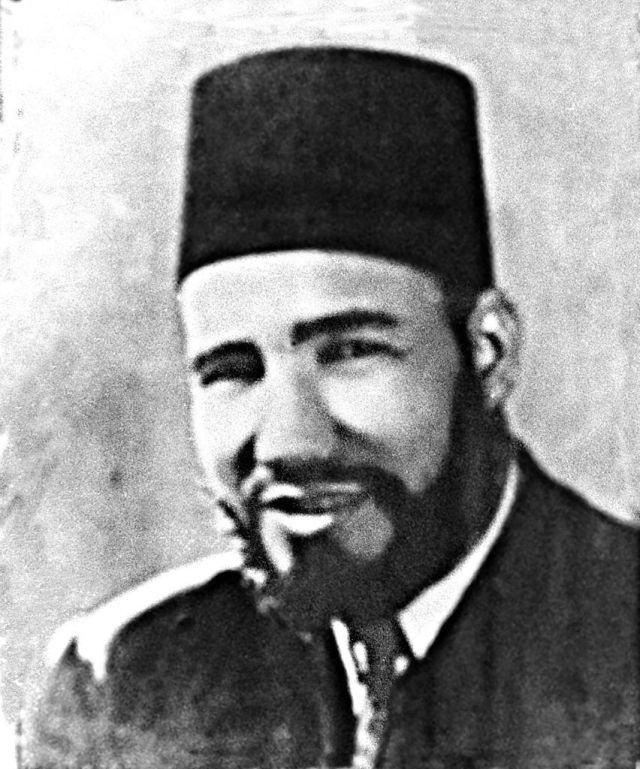
Meanwhile the Brotherhood expanded internationally. Under Nasser’s rule, some members fled: to Saudi Arabia, where they began to exert particular influence in the universities, on Osama bin Laden among others; and to Europe and North America, where they started to pitch up in the Fifties and Sixties.
The institution-building they engaged in on arrival is one of the defining traits of modern Islamism, going to the heart of the Brotherhood’s style and success. For it is fixated on achieving things: on power, strength and winning. In The Way of Jihad, one of the books found in British prison chaplaincies, Banna wrote: “Jihad is an obligation from Allah on every Muslim and cannot be ignored nor evaded.” In another text drawing parallels between Islamic law and Italian fascism, he presented jihad as “the highest goal of humanity in this life.” Islam, he said, “urges its followers to be imbued with the military spirit in war and peace … Therefore, Signor Mussolini is not the only one who calls for this, and these are not the principles of fascism alone.”
A military-style approach to both war and peace has certain implications, including treating those who discard Islam like deserters and encouraging deception, a crucial tactic in war. Such traits don’t mean that the Brotherhood is against peace; nor that it won’t compete in elections — and win them, as it has in Egypt and Tunisia. It is more that peace appears for Islamists in its tradition as a situation that occurs after Islam has won, following the submission of its enemies. Until then, they are always pushing, always contending, seeking to increase their power.
Interpersonal and family relations are as important to this struggle as anything. Qaradawi’s The Lawful and the Prohibited In Islam describes how Muslim women are prohibited from marrying non-Muslim men, yet Muslim men are allowed to marry non-Muslim women, just as long as their wives’ beliefs do not influence the rest of the household. This law, if implemented, ensures that Islam prevails in the family environment wherever at least one partner is a Muslim, continuing through the generations.
Needless to say, this is not the law of a private faith that lets everyone choose their own path in life. Such law, if followed, effectively mandates that Islam can never decline; it can only grow. If followed consistently in the West, as it appears to be for the most part in Muslim communities, then the West will become more and more Muslim over time, making Qaradawi’s prophecies come true.
As founder of the Brotherhood, Banna had developed an ideology with a simple and effective good-and-evil dichotomy, whereby Islam is “the solution”, the source of good which must triumph. Western modernity, by contrast, is the source of evil, which should — and will, inevitably — be defeated. This framing was attractive for many — and the Brotherhood’s reach grew rapidly in the years following its founding. In the Indian subcontinent, it greatly influenced Abu Al-A’la Mawdudi and the Jamaat-e-Islami movement. Two of Jamaat’s members set up the Islamic Foundation, which named one of its halls in Leicester after Banna. Ahtsham Ali of the Prisons Service has spoken there, on the subject of converting prisoners to Islam. The then Prince Charles opened a part of its campus in 2000.
“Banna isn’t talking about a religion in the sense it’s understood in the West,” Shadi Hamid, writes in Islamic Exceptionalism: How the Struggle over Islam is Reshaping the World, “but about a programme to be applied and implemented.” There is no separation between religion and secular politics here like that which emerged out of the Christian tradition. One serves God by maintaining one’s devoutness, but also by winning territory, imposing Islamic law and drawing converts. As Hamid says, the Brotherhood recognised that achieving these things would require patience. “They believed that history — and God — moved with them, and so it was never a question of whether but when they would prevail.” Here we can see the apparent paradox of “Islamo-progressivism”, in which an Islamist movement that appears to be anti-modern is also consumed by “that most modern of assumptions: that history moved with purpose and that progress was inescapable.” As Banna put it, “It is the nature of Islam to dominate, not to be dominated, to impose its law on all nations, and to extend its power to the entire planet.”
Like other revolutionaries, the Brotherhood learned to protect itself through secret methods, establishing the usra (“family”) cell structure and being careful about introducing new recruits. Lorenzo Vidino, who has written two books on it, says: “We have to remember that the Brotherhood is a very selective organisation. No one applies to be a member. You are selected based on a variety of skills that the spotters within the Brotherhood identify — and being extremely clever, extremely well-educated, extremely driven are some of the key features they look for. It’s an elite group.”
Once a potential member has been selected, he (always a he, it seems) is given tasks to fulfil in his specialist area — whether in education, politics, finance, media or, nowadays, social media. As recruits prove themselves reliable and trustworthy, they rise up through the different layers of the organisation, becoming more distanced from everyday operations. The organisations that members create in turn establish centres of expertise to advance the purposes of the centre, operating in unison but without public deference to an orchestrating force. This in turn conveys a crucial appearance of strength and weight — as if its objectives are shared by all Muslims when in fact, a relatively small group of people are behind it all.
It is worth emphasising the scope and sophistication of this approach. Indeed, Banna even showed signs of digesting Gramscian political ideas, writing of the need to change al-rouh al-’am alazi uhaimin (the hegemonic public spirit) in Muslim countries before targeting state power. The Brotherhood’s aim is to maximise its freedom and therefore the power of Islam wherever it finds itself. It has learned to be flexible and make alliances which help to consolidate its position. As a result it has thrived in the countries that it saw as its principal enemies.
***
On 7th June 2016, just a few months after Ian Acheson submitted his report on Islamism in British jails, Dr Ibrahim Mounir, the elderly Deputy Supreme Guide of the global Muslim Brotherhood, sat in front of the Foreign Affairs Select Committee in Westminster as part of its investigation into political Islam. The Brexit referendum campaign was in full swing. In his native Arabic, Mounir told the committee, “What we are hoping for is to achieve Islamic unity. A parallel of that is European unity.”
The Committee investigation came shortly after David Cameron’s Government published the main findings of its review into the Brotherhood. Within 24 hours of Cameron announcing that review in 2014, the Brotherhood had appointed a legal team including the former Director of Public Prosecutions Lord (Ken) Macdonald and threatened legal action against “any improper attempt to restrict its activity”.
Sitting alongside Mounir in Portcullis House were three others with associations to the Brotherhood: Dr Anas al-Tikriti, chief executive and founder of the Cordoba Foundation; Dr Radwan Masmoudi of the Ennahda party in Tunisia; and, in hijab, Sondos Asem, who used to serve as media advisor for President Mohamed Morsi in Egypt and is now a senior news editor for Middle East Eye.
When pressed on how the Brotherhood legitimates and uses violence, each of the witnesses pushed back. Tikriti said there was no evidence for it. Asem stated that such claims were “unsubstantiated” and “misleading”. One might counter that the fact that Hamas was formed as the Palestinian branch of the Brotherhood, or that the Brotherhood’s logo features two crossed swords, or that its leading ideologues like Banna and Qutb frequently invoke violence, speak for themselves. But the four held the line, not giving an inch.
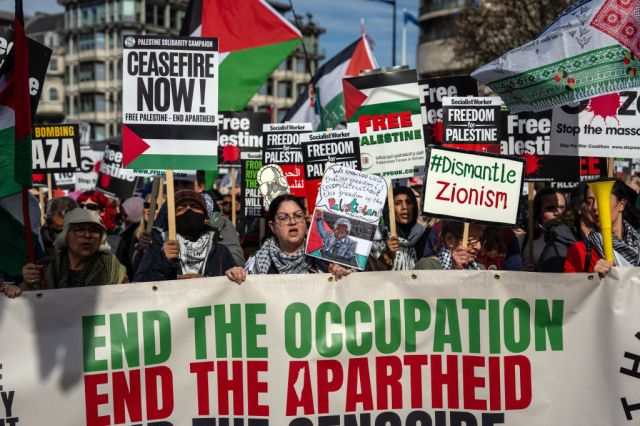
Step forward to the present day, Britain looks like something of a redoubt for the Brotherhood and its wider movement. Salah Abdel-Haq, acting leader of the whole organisation, has reportedly been resident in London since 2023. Highly-organised marches and protests for Palestine and against “Zionism” have attracted large crowds ever since Hamas’ attack on Southern Israel in October that year. On one occasion, organisers celebrated their success in being allowed to march down Whitehall again with the statement: “We are pleased to report that the police have yielded”: a telling way of framing it. Among the signatories of this statement, we find the Muslim Association of Britain (MAB), founded by Tikriti, who described it to the Select Committee as “the closest there is to the Muslim Brotherhood” in Britain. Another signatory was the Palestinian Forum of Britain, one of whose officials was Zaher Birawi, a Palestinian-British journalist who was recently sanctioned by US authorities for his role “clandestinely acting on behalf of Hamas.”
Tikriti, who described the mass slaughter and rape of Israeli citizens on 7th October 2023 as “a lie” and the taking of hostages “a very important part” of any “act of resistance”, has also been advising The Muslim Vote (TMV) organisation. He and his sister both signed an open letter released by TMV before the 2024 election, urging Muslims to “unite behind the single Muslim vote candidate” that it had chosen. The organisation came from nowhere to back four Muslim “Independent” MPs who were elected to Westminster, also backing former Labour leader Jeremy Corbyn and various candidates from other parties.
London’s Metropolitan Police recently noted that the marches have “routinely seen arrests for racially and religiously aggravated public order offences, for stirring up racial hatred and for supporting terrorist organisations. It is not normal to see criminality of this nature or on this scale at what are billed as peaceful protests.” Nevertheless, they have been a significant success for the organisers, mobilising support from way beyond Palestinian and Muslim diasporas, keeping Gaza at the forefront of public attention, and bringing in support and resources for Muslim Brotherhood causes.
Primarily, the Brotherhood’s influence can be seen in British Islamist networks, which link its own predominantly Arabic speakers to Urdu-speaking and other Muslim groups in Britain. Bodies like TMV and the Muslim Council of Britain (MCB) share the Brotherhood’s emphasis on Muslim “unity” and on using the weight of Muslim presence to influence and dictate public policy. They have had considerable success. The Labour Government’s long-promised definition of Islamophobia, rebranded as “anti-Muslim hatred”, is a case in point, seeking to protect Islam and what we might call “Muslimness” from negative sentiment. The former Conservative Attorney General Dominic Grieve, who chaired the working group that developed the definition, previously carried out a review on behalf of Islamic Relief, a charity in the Brotherhood network, following an anti-Semitism scandal. This last Ramadan, Islamic Relief has been soliciting “zakat” charitable donations via adverts featuring the slogan “Zakat is our Sacred Duty”: striking messaging that suggests a religious obligation to give them money, not far away from taxation — and in line with Qaradawi’s instructions on the using of charities where an Islamic state doesn’t exist.
The French anthropologist Florence Bergeaud-Blackler, who says she has received death threats for her work, has developed the notion of “frérisme” to describe how the Brotherhood’s influence works. Translating as “Brotherism”, it describes “a blend of ideological coherence and collective identity formulated around a specific vision of global Islamic hegemony, to be pursued with a strategy of slow infiltration that leverages [all] possible allies.” In a report for the ECR group in the European Parliament, she and Tommaso Virgili suggest that these allies “may include individuals and entities that are not part of the MB in any structural sense but are influenced by its ideology and operate accordingly, as well as individuals completely unaware of their role in the plan and even coming from very distant ideological backgrounds, such as the materialist left.” They point out that the Brotherhood has established religious and cultural institutions all across Europe, claiming to represent the Muslim faith and community before the state and public authorities. It has also founded numerous charities, think tanks and trusts that ostensibly have nothing to do with religion, while training a network of professionals “to penetrate all sectors of public life, including education, health, development, business, law and justice.”
Brotherist politics matches what is sometimes called the “radical flank effect”, by which the more moderate wings of a political movement benefit from the presence of more radical elements. This dynamic is on constant display in Islamist politics, as older, more respectable representatives maximise their bargaining power by emphasising their ability to prevent street violence and terrorism. In this way, some think the emergence of Al-Qaeda and Islamic State has benefited the Brotherist tendency. Alain Chouet, the former head of France’s counterintelligence service, the DGSE, has even said: “Al-Qaeda is only a brief episode and an expedient instrument in the century-old existence of the Muslim Brotherhood. The true danger is in the expansion of the Brotherhood, an increase in its audience. The wolf knows how to disguise itself as a sheep.” We might also note the Brotherhood’s pragmatic alliance with the Islamic Republic of Iran, especially via Hamas, currently bringing terror to the West as well as the Middle East.
***
V.S. Naipaul described Islam as “an imperialism as well as a religion.” Its followers are duty-bound to God to impose the ways of their religion wherever they go. Brotherist movements have articulated this commitment through modern ideology and political method. Founded in opposition to Western imperialism, they are now imposing themselves on the West, assisted by naive, unthinking and sometimes self-interested liberals and Left-wingers, including in the present-day Labour Government.
How do you counter something like this, that is both ubiquitous and intangible, that works within the system while eroding it? Some want to follow states like the UAE by banning the Brotherhood itself. However, you might respond: “Ban what?” The Brotherhood’s methods of organisational secrecy hobble such an idea from the start. There is no official organisation to be banned. There are individuals who are either likely members of the Brotherhood or have previously been identified as members elsewhere; and then there are the organisations formed by these people, which operate within the letter if not always the spirit of the law.
The strength of Brotherism means something more comprehensive and joined-up would be required. Governments will have to recognise that these movements threaten the foundations of Western civilisation, including liberalism, social democracy and conservatism. The Islamist scene is so large, so active and international that it is difficult for even dedicated researchers to keep track of what’s going on even in single countries, leaving policymakers and public in the dark about the organisations and individuals that approach them. In 2020, the Austrian government set up the Dokumentationsstelle Politischer Islam (the Documentation Centre on Political Islam, or DPI) to remedy this, to document and scientifically analyse political Islam, its networks and structures, to raise awareness about religiously motivated political extremism and its threat to democracy, the rule of law and fundamental rights. We could do with a similar institution in Britain, with strong links to other countries and, if possible, the EU level, where Brotherhood network institutions are prominent lobbyists.
Western governments also need to offer a more convincing, attractive alternative to Islamic rule, re-founding their own weakened polities by gathering around core principles like individual freedom, legal equality and what we might call “civilised tolerance”. State bodies will have to refocus on core tasks, enforcing the law without fear or favour and dismantling the special carve-outs that multiculturalist structures have facilitated — and which undermine the state’s authority. They will also have to recognise that large-scale immigration has a negative impact.
Our governments should say they won’t work with, engage or financially support Islamist-related groups. They should also make it illegal for public bodies to give public goods — including public space — to them. They should reinforce the duty of public sector employees, such as those who work for the prisons service, to serve all citizens, not giving preference to certain identity groups.
Then there is the question of charitable status. In Britain, charities receive Gift Aid from the Government, since religion is recognised as a public good. Mosques, Muslim groups and even individuals exploit this widely. According to some researchers this helps Islamists to engage in political work full-time, giving them a major advantage over secular political movements. We should legislate to change this. Either Islam should be disqualified as a beneficiary of charitable status, or all religions should be.
Qaradawi, as the premier Brotherhood ideologue of recent decades and a keen advocate of using charities to exert Islamic power, called his approach wasatqiyya or the “middle way”, suggesting moderation. Yet this apparently moderate form of Islam explicitly calls for the Ummah to see itself as a military force wherever they find themselves, waging a permanent war against alternative beliefs and lifestyles. There is a clear ideological link here to violent attacks committed in the name of Islam. We are fools to not recognise and act on it.
Western democratic states should not be subsidising movements that are encouraging war-like attitudes to groups other than their own while working towards their destruction. Unfortunately, unbelievably to many, this is what the Muslim Brotherhood is trying to do.
***
A previous version of this piece wrongly named Sheikh Abdullah al-Judai as an author of one of the texts Ian Acheson warned about. We apologise for the error.
Ben Cobley is the author of The Tribe: the Liberal-Left and the System of Diversity and, most recently, The Progress Trap: The Modern Left and the False Authority of History.
 bencobley