




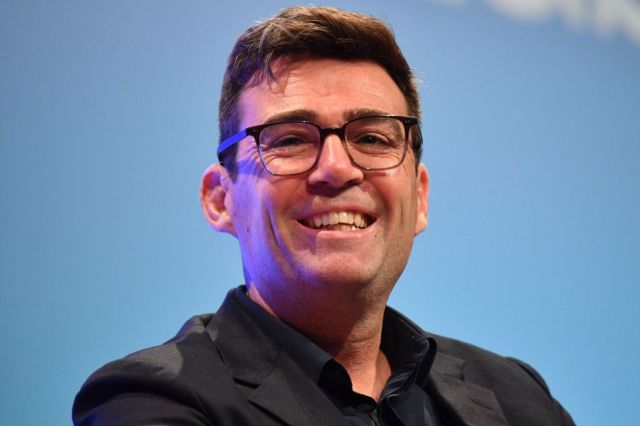
The next 24 hours will be decisive. Justin Tallis/AFP/Getty Images





Local elections have long been used to punish ruling parties. In 2008, Gordon Brown lost 331 councillors, reported at the time as Labour’s worst results since 1968. In 2019, Theresa May lost more than 1,300, a local election which precipitated her downfall. In this context, the scale of Keir Starmer’s defeat is already clear. Labour looks set to lose somewhere between 1,200 and 1,900 councillors by the end of today; to lose control of the Welsh Senedd, which it has held since its founding in 1999; and to suffer its worst ever Holyrood result in Scotland.
It is amid this wreckage that Andy Burnham plots his next move. Long touted as a potential challenger for the Labour leadership, and after years biding his time in Manchester, Burnham and his followers sense that this is his moment to strike, and indeed perhaps his last chance to return to Westminster.
The prospect of a Burnham coup has taken on new potency in recent months, discussed as a serious proposition not just by the usual suspects of the soft-Left, but also by his erstwhile factional foes. The party is loathed across the country — after the first 10 declared councils, Labour has lost around 83% the council seats it was defending, including in former Red Wall areas such as Hartlepool. This ratio is unlikely to be carried throughout the day, yet it speaks to a deep loss and anger in areas which were once deemed the party’s heartlands. In this context, Burnham remains one of the few national political figures with positive cut-through among the public. Survation polling suggested that had Burnham stood in the recent Gorton and Denton by-election, Labour would have taken 47% of the vote, with the Greens on 25% and Reform on 21%.
The key to Burnham’s success has been his experience as Mayor of Greater Manchester. From buses and policing to homelessness and housing, this estranged child of Blairism has forged a new political identity, distinguishing him from the toxic trappings of Labour party loyalty. Burnham’s talents don’t lie so much in the technical detail of policy, as in his apparently effortless knack for strategic narrative, and his uncanny grasp of public mood. From nixing Ultra Low Emission Zones to backing investigations into grooming gangs, Burnham has resisted, at every stage, attempts to be pigeonholed as a daft Lefties caricature, one unconcerned with the issues which matter to Reform and its voters.
The relentless logic of “Burnham or bust” has even begun to acquire force among the Mayor’s factional opponents. Yet his route to No. 10 will not be easy. To begin with, of course, Burnham needs to find a way to re-enter Parliament. While his team has briefed that several serving MPs are willing to step aside for the good of the party, that’s easier said than done with the added prospect of challenging a Labour NEC famed for making factional decisions against him. Then there’s the volatile electoral environment, which makes any by-election a roll of the dice — even for the King of the North. Take today’s results in Burnham’s own patch: in Tameside, a Greater Manchester borough, Labour has lost 16 seats, as Reform gained 18. Elsewhere in Greater Manchester, the news is grim too; though the party clings to power in Wigan, every Labour councillor up for election is now out of a job — and near clean sweeps for Reform in Salford too.
There are other problems. Assuming that he does manage to both re-enter Parliament and outfox his rivals, today’s results hint that even as prime minister he could struggle at the next general election. Labour’s task now is split between recouping votes from Reform to their right, but also from the Greens to their left, illustrating the very different voting tribes Labour now caters to. In the Northern post-industrial towns of Wigan, Salford, and Hartlepool losses have primarily accrued to Reform. In Oxford, Exeter and Ealing, the Greens have made gains. The loss of the Senedd and Scottish Parliamentary presence also bakes in Labour’s decline in two former powerhouses: confirming the eradication of these former vote-farms for the party. Labour, in short, seems politically snookered, with an English voter-base so riven between Reform and Green, and with nationalists triumphant in Cardiff and Edinburgh, that the former party of the people seems to have no natural constituency left.
No less important, this fractured political landscape shows the difficulties any potential leader will face on the policy front. For the first time in decades, Labour’s lost voters have alternatives, yet these alternatives disagree on everything except dismantling the hated status quo. The Greens have turned Labour’s moral wounds on Gaza, housing, and metropolitan neglect into a new political home, with a membership surpassing 200,000. Reform, meanwhile, has seized much of the narrative around nationhood, pride and belonging in many of Britain’s deprived post-industrial regions.
If anyone can perform this balancing act, it’s Burnham. But unlike in Greater Manchester, Burnham in Parliament will be dependent on a large body of disparate MPs to carry through his vision. Years in the wilderness have weakened his connections and friendships, leaving him with little in the way of a truly loyal following among the PLP. The road to Parliament will also require him to make deals with many on the Labour Right, the same machine politicians responsible for the tone-deaf posturing and self-destructive factionalising which has landed the party in such a mess.
Not that it’s all bad news for Burnham. For one thing, both Reform and the Greens have serious weaknesses. Zack Polanski’s rapid rise has brought organisational strain, factional tension and intense scrutiny over allegations of antisemitism. No less important, mass activist membership is not simply new to the Greens, it also marks a departure philosophically from a party which has always traditionally seen itself as an electoral vehicle more than a social movement.
Reform, too, has compromised its radical credentials. Defected Tory frontbenchers proffering fiscal conservatism obviously dilute Farage’s potent narrative of change. Revelations of huge undeclared donations from foreign entities and crypto-billionaries are scandalous, while the party’s previous electoral successes have ended badly too. From Kent to Stafford to Lancashire, Reform councils have been mired in fratricidal squabbling and operational chaos; they have failed to deliver on key promises such as cutting waste, lowering council tax and managing local services more effectively.
As Reform picks up many more councils over the next 24 hours, not least after its triumph in erstwhile Labour strongholds like Newcastle-under-Lyme, expect more awkward questions over the months and years ahead. There is also a risk for Reform of too much success, too quickly. This organisation with no real experience or history managing the complex organs of local government could easily flounder. In a sense, Farage finds himself caught in his own momentum, relying on the wave to carry on crashing through without breaking and receding.
As for Burnham, he may have other reasons for hope too. While it’s true that both Angela Rayner and Wes Streeting are already in Parliament, and both purportedly sitting on the 81 MP nominations needed to trigger a leadership contest, the results today show that neither of them have the security to reinforce a leadership bid, facing the prospect of losing their thin majorities at the next general election. Think again to Tameside: not only has Labour been punished in the council, it’s also Rayner’s own seat. As for Streeting, he defends a slim majority in Ilford North.
Yet if Burnham’s rivals may now be thinking of their own futures, whether in No. 10 or indeed Parliament generally, Burnham’s route to Westminster requires a delicate dance: one in which Starmer is defenestrated but not so quickly as to preclude his ability to participate in a future contest. Streeting, in particular, is all too aware of this. Facing certain annihilation in a run-off with Burnham, the Health Secretary’s allies are already briefing that they could precipitate the contest early, denying Burnham his chance.
In this, the events of the next 24 hours may prove crucial. The pro-Burnham camp’s strategy to head off a pre-emptive challenge from Streeting is to pressure Starmer into a timetable for managed departure, providing breathing space to find a seat and allowing a dignified retreat for the beleaguered PM. Yet Starmer seems unlikely to enter such an agreement willingly, without tremendous pressure. Burnham’s best chance lies in the goldilocks zone between complete wipeout — increasing pressure for Starmer’s immediate departure — set against devastating, but not cataclysmic results which allow for a more measured and timely departure. Success, then, requires skilful and co-ordinated interventions from both parliamentary colleagues and timely presentations from Burnham himself.
For the moment, anyway, Labour’s sensible money seems to have little choice but to accept the Burnham wager. The time is nigh for the organisation to decide if it values its survival more than it hates its most popular figurehead. The party will likely find answering that question harder than it should — regardless of how grim today proves.