




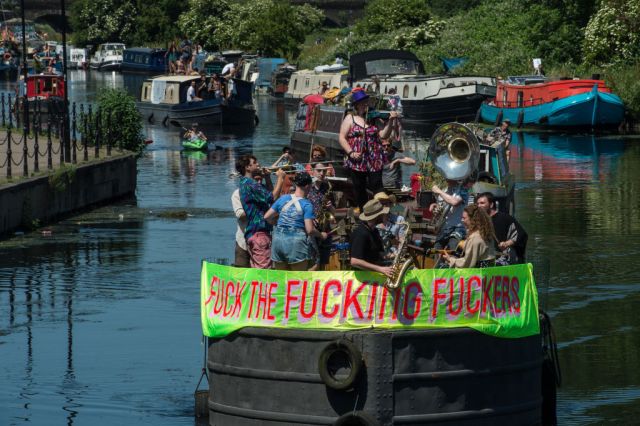
‘It’s a hideaway, populated by people who wanted to escape things’. (Guy Smallman/Getty)





In a city like London, whether we know it or not, people agree to a strange kind of psychic bargain. There’s opportunity in the city — or at least proximity to opportunity. And, in exchange, Londoners also tolerate an intense, interlocking structure of control. Call it conformity, or regulation, or norms, we all know it’s there. Yet there are people who transcend this bargain. They might not lead lives we ourselves would lead, but help the rest of us keep the bargain afloat, knowing in our timid hearts that we could transcend it too, only we’d rather not squat, or become a Benedictine nun or a Beefeater.
That said, an increasing number of Londoners have decided to live on the water. The Green Party leader, Zack Polanski, made headlines recently when it emerged that he may have failed to pay council tax on his houseboat, moored in East London. People may think Polanski is a typical canal-dweller — and, to some extent, they’d be right. But, on closer inspection, the social constellation on London’s waterways is infinitely more complex.
The capital’s canals have become a strange kind of borderland, part of London, certainly, but nonetheless different from the hyper-corporatised, surveilled cityscape that surrounds them. Perhaps that’s because they were never meant to be lived on. The Victorian canals — which make up most of our manmade waterways — were built by an exploited, maligned class of labourers known as “navvies”, who somehow executed one of the most ambitious civil engineering projects in British history, practically by hand. The navvies toiled, died in their hundreds, so that the canals could transport freight. But then the railways came, and the motorways (also built by navvies) which usurped the canals. They became vestigial, which, with some exceptions, tends to make infrastructure more interesting in the long run.
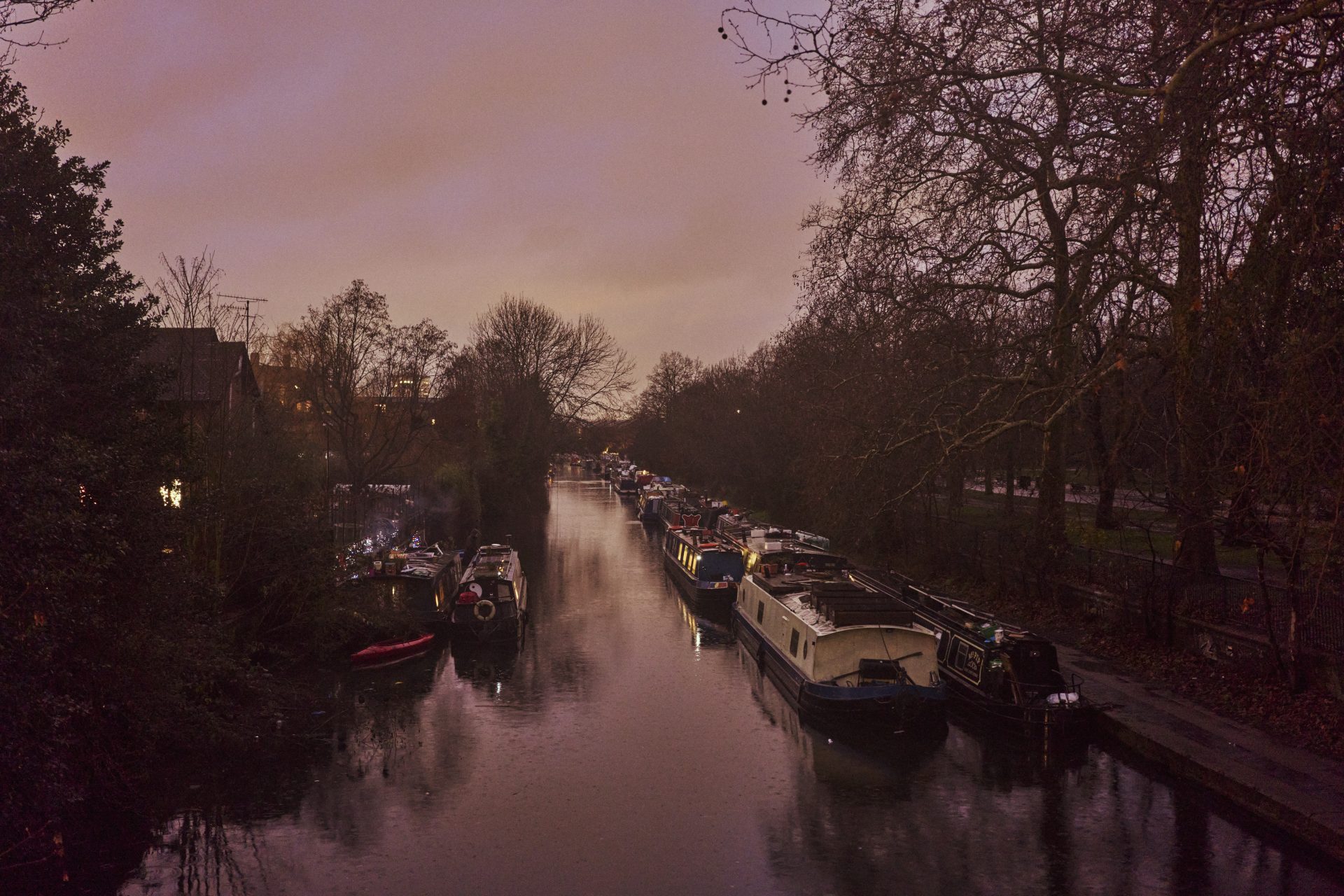
Today, the canals are busier than at any other time in their history, which would’ve been hard to imagine back in the mid-20th century, when, particularly in big cities, they tended to be filled with shopping-trolleys and associated with crime. 20 years ago, walking along the Hertford Union or Regent’s canal towards Hackney would’ve felt sketchy in a way it no longer does. Back then, canals even had their own serial killers: in London, John Sweeney (“The Canal Killer”) dismembered a sex worker and threw her remains into the Regent’s; in Manchester so many bodies were hauled onto the unlit towpath that a paranoid city had to invent a serial killer via urban legend — “the Manchester pusher”.
In time, though, the canals started becoming associated with boaters rather than corpses. The number of boats on London’s canals increased dramatically during the austerity years since 2012. The bends of the canals make watery loopholes and, if you walk the capital’s towpaths, you’ll speak to people who want to live “off grid”, or in some way escape the manacles of city life, while continuing to benefit from it. These people tend to dislike the Canal & River Trust (CRT).
Unless you’re reading this afloat, the CRT is probably the largest charity that’s never occurred to you. According to the Charity Commission, in 2024 their total income was over £237 million. About half of that comes from property holdings; the CRT has roughly a billion pounds in long-term investment assets. They used to be a government body called British Waterways and, when they broke away in 2012, it amounted to the largest ever transfer of UK state assets into a charity. Now they’re tasked with maintaining the canals, which are expensive, and overseeing its boaters, who can be too.
There are two types of boat dwellers on London’s waterways: “continuous cruisers,” who buy a boat, then pay the CRT a licence to use the waterways, provided they move a vague distance (which not everyone does) every two weeks; and people with permanent moorings. In London, permanent moorings can set you back up to £15,000 per year in prime locations, so the majority choose the former category and it’s up to the CRT to make sure they’re keeping to the rules.
“The CRT, for whatever reason, have decided that they don’t want to have this community of boaters living on the canals,” says Jack Saville, a spokesperson for the National Bargee Travellers Association (NBTA), a member-led organisation set up to lobby for the legal rights of continuous cruisers.
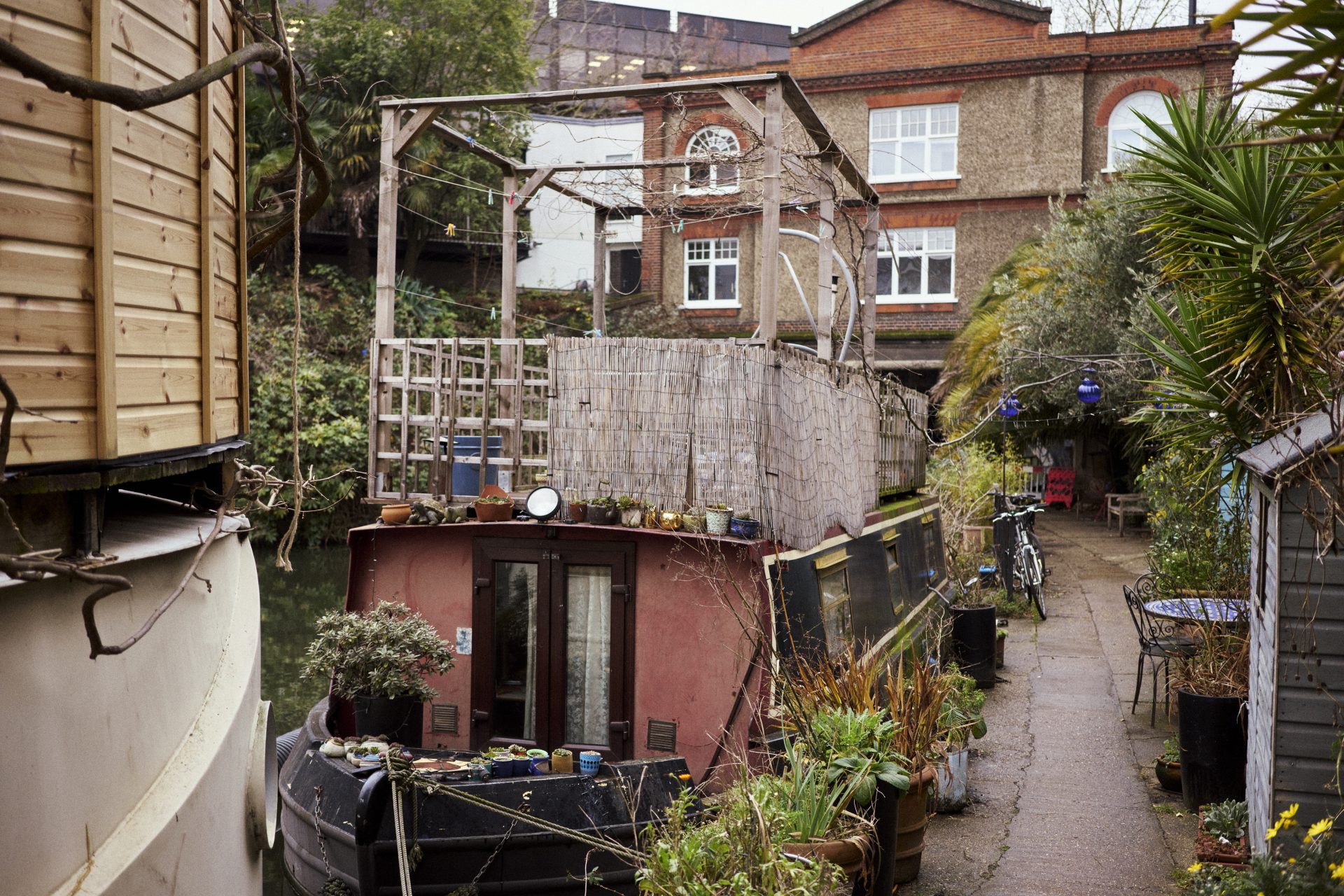
The NBTA are unsettled by a 2025 CRT report titled “The Future of Licensing” which, among other things, recommends using compulsory trackers to monitor difficult boaters in congested areas. It also argues the CRT needs the power to employ “reasonable force as a last resort when removing a boat subject to a Court order.”
Saville thinks the rules are fine as they are — but the CRT fears they’re too ambiguous, and that there’s a need to clarify, in official terms, what it means to be a boater, particularly a continuous cruiser. I spent a few days in London trying to clarify this same question in non-official terms. What I found relates right back to my earlier point about the freedoms and unfreedoms of city life. It’s a hideaway, populated by people who wanted to escape things: the housing crisis, or the system, or an expected life. In some cases, they escaped only to find themselves escaping even more things, whether an increased licence fee, or a faulty engine, or that bane of London boaters: “The Beneficiary.”
***
Jonesy has always tried to do things differently. He’s hitchhiked the UK, even went a year without a phone. As such, he’s a fairly typical young boater who enjoys building saunas and smoking weed and using his hands. Jonesy took to the waterways four years ago, but didn’t hear about The Beneficiary until last summer. By then, even the CRT were aware of The Beneficiary and sent out a community wide email warning people about him.
It turned out The Beneficiary isn’t an official title — it’s just the odd name someone calls themselves. Going by the CRT’s email, he was “a black male, aged approximately 40-50 years old, short hair with a top knot”, and who “may be in possession of a stolen boat”. Not everyone who exits the urban societal bargain can re-enter quite the same way. According to rumour, which travels fast on the canals, The Beneficiary was the sort of guy who took too many psychedelics in his twenties and later lost his mind.
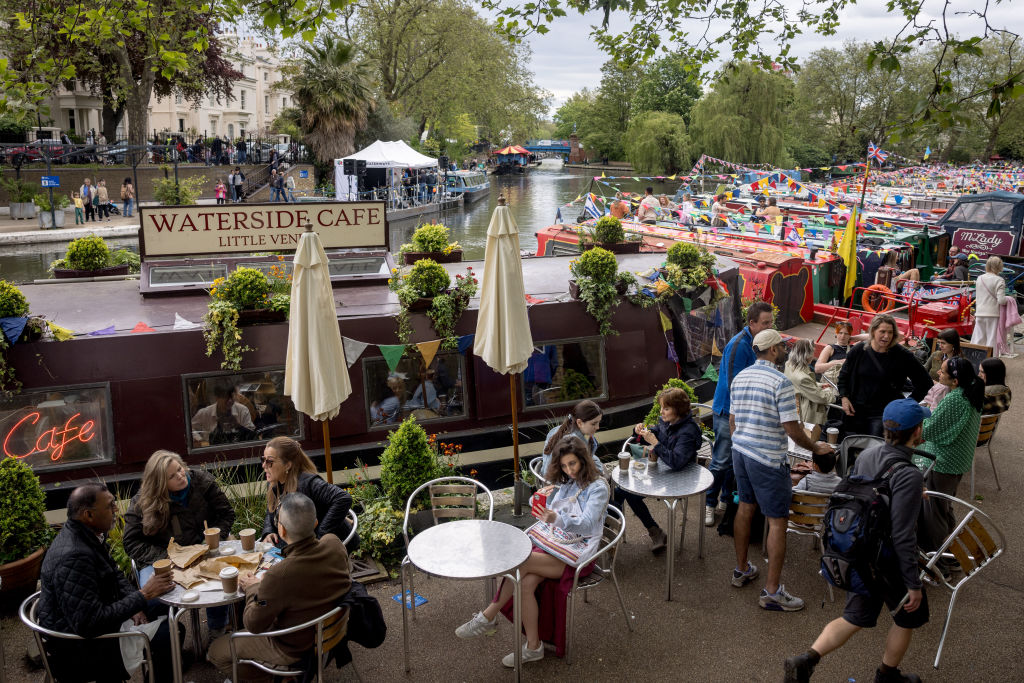
Jonesy says The Beneficiary had been hurling bricks through the windows of narrowboats and, if the broken window wasn’t addressed within a week, he’d steal the boat and repaint it. Someone told Jonesy that The Beneficiary had stolen the wrong boat, and a posse had been assembled to attack him. No one I spoke with is sure exactly what happened there. According to Jonesy, The Beneficiary now lives in a tent somewhere in Hackney. A number of boats also burned that summer, one in a suspected arson attack — it was a strange time.
If you could create a personality compass for the canals, with “peaceful-gnarly” on the x axis and “good-bad” on the y, tranquil hippies like Jonesy would be somewhere in the middle, and The Beneficiary in the bottom right (“gnarly, bad”). As for the top right corner you’d find the “gnarly, good” Vince. The Beneficiary wouldn’t have gotten far with one of Vince’s boats. “Even if you disarm the tracker,” Vince explains, nursing a tinny, “I’ll send three boys that way, three boys that way!” I like Vince, who flips boats for cash, and has the distinctive, snuffling swagger of a party bloke. I encountered him on the Lee, a canalised river near to Haggerston station.
Algerian Chaoui music plays out of a Bose speaker on the table while we chat shit — literally, in some cases; Vince tells me about the “shatamaran”, who used to float around the canals collecting toilet waste for 20 quid. Apparently the shatamaran-man would always be wasted, always be covered in shit, and always try to embrace upon greeting. “He tells me, ‘put the money in my wife’s account’”, Vince recalls, laughing, “I say, ‘YOU’RE MARRIED?!’” Vince, by contrast, is not married. He’s a quarter Indian and keeps a portrait of an ancient Raj-era dignitary which he pretends is his great uncle. “That’s got me in so many girls’ knickers it’s unbelievable.”
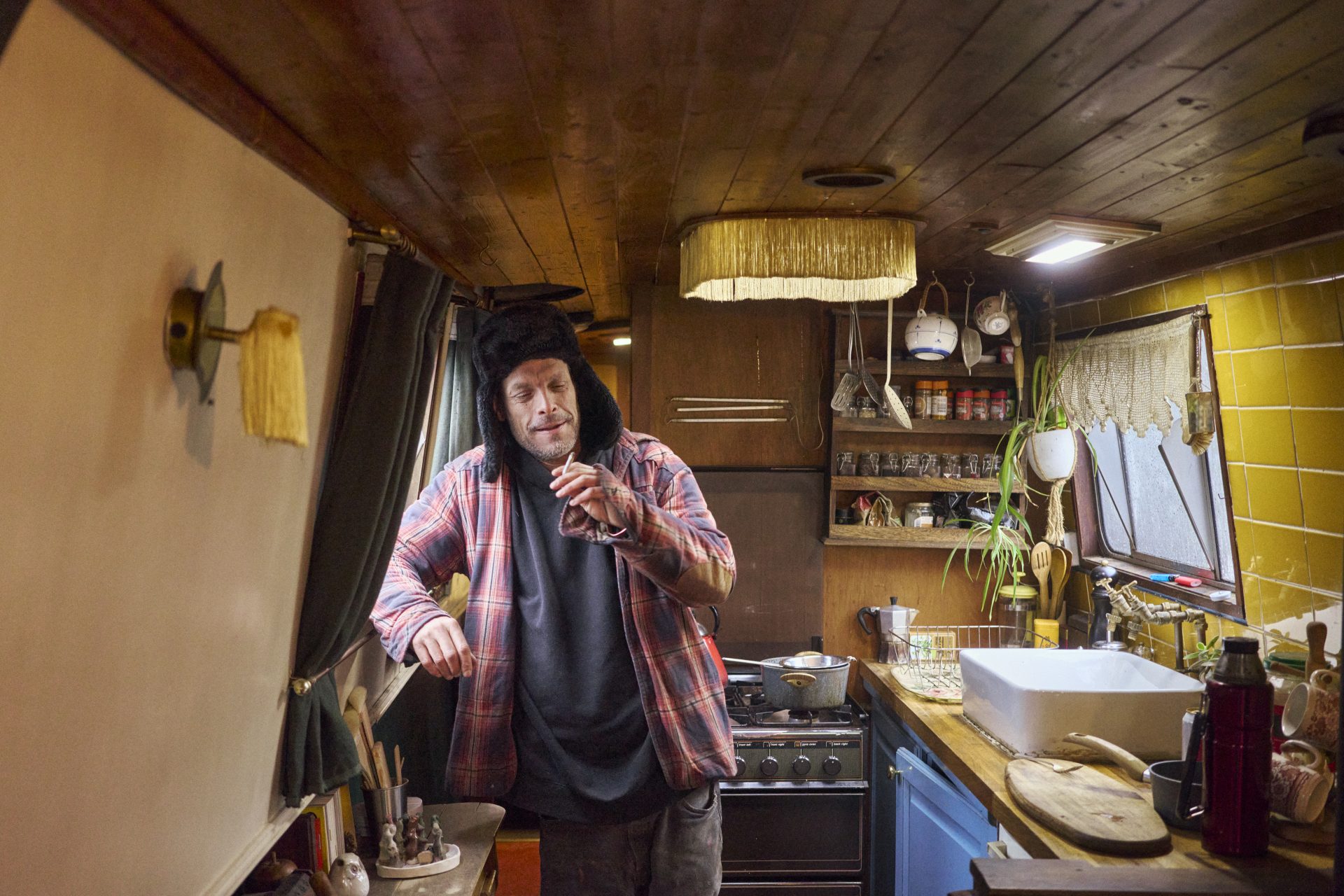
Like other boaters, Vince has a strong sense of solidarity. He grew up “poor as fuck”, with nefarious friends. One of his boats, which he’d previously fitted with speakers and ferried to carnival, is being turned into a travelling gallery. A photographer by trade, Vince wants to use it to exhibit photography by impoverished East London kids, ferry it across the city and repeat the process with their West London counterparts. Vince has noticed the potential of the canals, as a non-place where culture can be mobile. He also has the tenacity of poverty but the free spirit of a posh girl. “When I became a teenager,” he explains, “I started dating posh girls… these people have no boundaries, I wanted to start thinking like them.”
There are posh girls on the canals too, girls like Octavia Sheepshanks, 32, moved onto the water to take up a bucolic romance. I encounter Sheepshanks on the Little Venice towpath, which cleaves London in two. On one side there are the boutique shops and high-end houses of Warwick Avenue; on the other is the Westway, and the traveller community who live underneath, just five minutes from their local pub, which backs on to Grenfell. Speaking abstractly, you’d find Sheepshanks (“peaceful, good”) in the top-left corner of the compass.
After sinking about 20 grand on a 38-foot boat called The Yan Tan Tethera, she was supposed to navigate her way up to Cambridge and moor next to her boyfriend. But life has a way of unravelling, and now she’s weathering her first winter on the water alone, drafting a romantic fantasy novel called The Chronochasm.
Sheepshanks moved onto the water for love but stayed for the freedom it grants her. When she first became aquatic, she found a nest of coots under a neighbouring boat and everyday a seagull would swoop down, pick up one of the chicks and smash it on a nearby roof. It was traumatic. At boarding school, she recalls, the girls used to hide spiders in her bed. Animals meet on the towpath too.
Octavia does not keep a pet, though maritime animals are common on the canals, especially cats. They venture onto the towpath at night, communing while their owners are asleep. There are dogs too, the largest probably being Baloo, the 92-kilo Central Asian Shepherd who lives with John, a Polish man who floats around East London selling diesel.
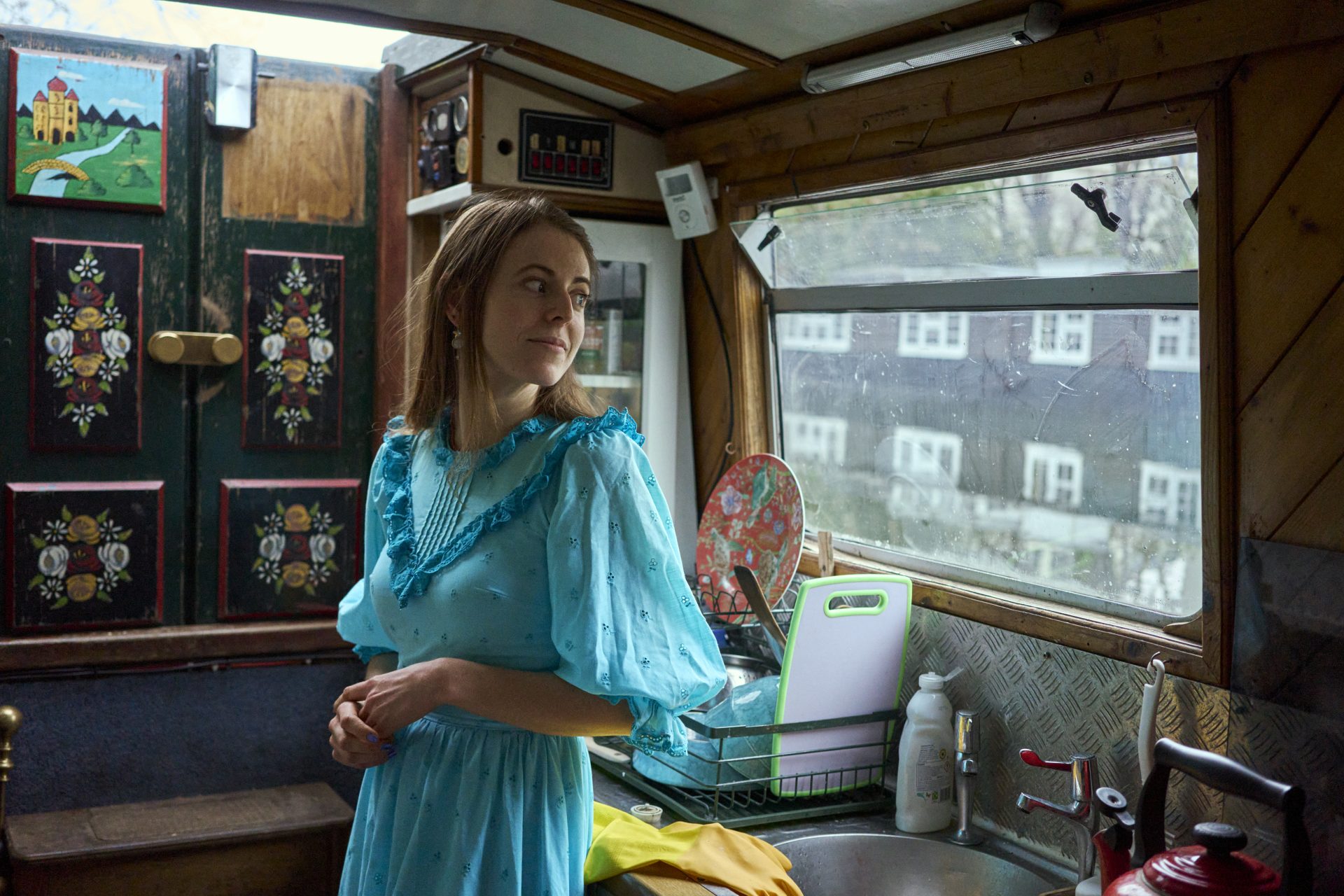
Thinking of The Beneficiary, I ask Sheepshanks if she feels safe living alone as a woman on the canals. She answers that she does. She did once arrive home to find a man asleep under her engine cover, but he turned out to be quite apologetic and nice. As most boaters will tell you, you’re much more likely to encounter people illegally renting an Airbnb along the towpath than you are to be robbed. It took me about 45 minutes before I bumped into an Austrian couple renting out a boat which didn’t have a permanent mooring (a cash grab the CRT has tried to police but lacks sufficient resources to do so). Often, boaters don’t like tourists because they don’t know what they’re doing. They also moan about the expensive wide-beams which are too broad for the locks; sometimes people call the locks “twat filters”.
No one moans about Ali, who, as both peaceful and gnarly, somehow sits outside the canal compass. He’s known as the “unofficial mayor” of his stretch of Little Venice. He’s a strange, quiet man who speaks to the fire and was jailed, according to him, in four different countries. “Everything is relative,” he says, “everyone is a victim of his own circumstances, there is no criminal in this world.” In summer, Ali grew strawberries from the roof of his boat and a little girl would always run up and pick them on her way back from school, her grandfather shouting in Greek for her to leave the boats alone and return to the city, where the bargain holds.