





Burnham aims to challenge Keir Starmer. (GM Business Board)





Strategy. It’s a word mystically intoned by self-help influencers, business podcasters and sports pundits alike — often carrying a whiff of bullshit. But good strategy is real. It’s something you can learn and implement. Rather than the product of inspiration, the upstart mark of genius, it generally consists in little more than saying “no”.
For Professor Richard Rumelt, author of Good Strategy, Bad Strategy — and one of the few experts on the subject who isn’t a charlatan — the formulation of effective strategy goes something like this. First, diagnose the problem. Second, adopt a guiding policy. Third, devise coherent actions, marshalling your resources to execute them. Everything else is irrelevant. Distraction is the enemy.
When it comes to diagnosing our problems in Britain, there’s much consensus among the public. Those services which are, relatively speaking, well-funded feel inefficient — parts of the NHS especially, with military procurement worse but less recognised. Meanwhile, for less generously furnished services like the police, what was once sold as prudence has long been recognised as crippling austerity.
Elsewhere, the economy isn’t productive enough. Recent immigration has been too high, at least in the abstract. Work no longer pays. The country lacks a vision of the future. And there’s litter everywhere. These are the issues that matter most to those who voted in recent local elections — and others who simply didn’t see the point.
They also seem central to Andy Burnham’s pitch to return to the House of Commons. Just days into his campaign to win the Makerfield byelection, the former health secretary has blasted the two main parties, declaring that Britain has been on the “wrong path” for 40 years. As a country, we keep doing bad strategy. And both Labour and the Tories are complicit.
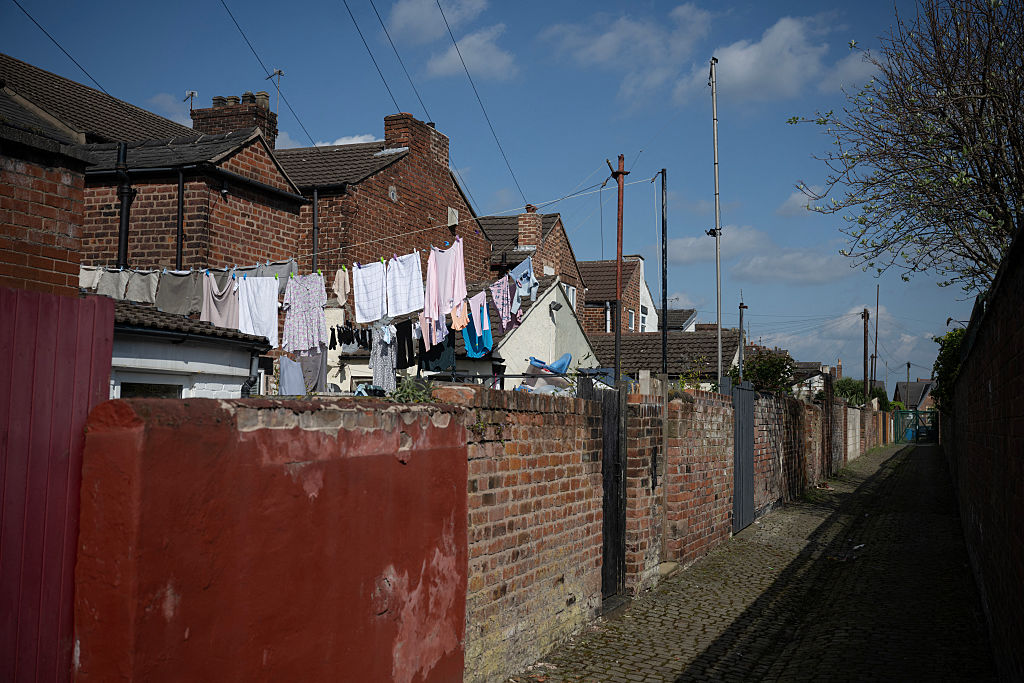
Whenever I speak to punters, from Runcorn and Birmingham to Winchester and the Welsh Valleys, they tend to agree — embedding their criticisms in what they can see rather than abstractions. Thus their disquiet generally boils down to the simple fact that the physical infrastructure of the community has decayed while people feel less affluent. Conversations invariably drift to high streets, the ground zero of our national malaise. Such places combine the sense of a fraying built environment with the recognition that our economy doesn’t work. It is here where we feel poorer, both in body and spirit.
And so, in response, we get the Government’s Pride in Place programme. Unveiled last September by the prime minister and Secretary of State for Local Government Steve Reed, it was expanded in February and now has a budget approaching £6 billion. The plan? To throw pots of money towards disadvantaged neighbourhoods, with tranches of £20 million allocated over a decade to almost 300 areas. Almost all the recipients are outside London.
Alongside that deluge of cash comes a democratic innovation: rather than local authorities determining how the money should be spent, newly formed “neighbourhood boards” will “co-create” a plan alongside the local community, as well as the constituency MP and council. “Local people are best placed to determine what should happen in their neighbourhoods” as Reed put it last autumn, “and they don’t need government to dictate it.”
Where I live, in Portsmouth, two areas stand to gain £40 million from this largesse. One is Landport, labelled “Fratton West” by Whitehall mandarins. The other is Paulsgrove, in the north of the city. Each is a small part of a single council ward. In ONS-speak, they are “Middle layer Super Output Areas”: neighbourhoods comprising between 2,000 and 6,000 households. Fratton West is on the low end of even that, with the area home to just 5,000 residents. Over the next decade, and thanks to Pride in Place, they can now expect additional spending of £4,000 per person.

But as more historically middle-class parts of the city are being given over to HMOs, halfway houses and student housing — as family homes become lucrative bedsits for landlords — Landport and Paulsgrove already have high amounts of social housing and amenities for young families. Both also have youth and community centres and are, by the squeezed nature of Portsmouth, Britain’s second-most densely populated city, rather green. Castle View Academy, in the heart of Paulsgrove, has been rebuilt in recent years. In 2022 it was described as a “Good” school by Ofsted.
My hometown of Bournemouth is an hour’s drive up the coast. Three areas there — West Howe, Boscombe West and Hamworthy West — will receive £60 million between them. While there is no doubt these are similarly disadvantaged areas, it’s again unclear what such tiny places (West Howe’s population is 7,000) will do with such large sums of money, and so quickly. What’s more, the directors of these newly convened neighbourhood boards, who will be responsible for managing £20 million of public investment, and generating plans as soon as November, will be volunteers — and expected to hang around for years.
But what is even being measured? What counts as success? And given the scale of the scheme, and the hundreds of locations where it will apply, how can we guarantee there won’t be corruption, grift and poor value for money on an industrial scale? Nobody seems to have answers to such questions.
Which brings us back to good strategy. Throwing money at poor areas might sound laudable, and if there are specific objectives it can be. But it isn’t an end in itself. As with defence spending, the Government fails to grasp an obvious point: that conflating more cash with a strategy — or, in the case of military spending, a higher percentage of GDP — is moronic. It’s also a world away from the promise of mission-oriented government that defined Starmer in opposition. Where before he promised “laser-like focus” on key priorities, now the Government appears indifferent as to whether this spending will even create skills and jobs.
Given the Government is expected to spend £1.6 trillion over the next 12 months, £6 billion doesn’t sound like much. You might also ask why I, supposedly a socialist, would begrudge a few hundred neighbourhoods such a tiny slice of luck.
That’s a fair question. Returning to my seaside roots — my now-wife and I left London in 2018 and came to Portsmouth, her native city — has shown me how far even a little money can go. The point, though, is it needs to be spent wisely.
The older I get, the more I realise how that undermines the argument for government-led investment. Profligacy has become the enemy of progress. This is particularly surprising given Starmer’s promise of “deliverism” before June 2024, and his purported desire to do politics differently.
If anything, indeed, Burnham’s promise of “Manchesterism”, combining public control and the elimination of outsourcing with a pro-business, pro-development instinct, seems truer to Starmer’s original vision. It’s certainly a more sensible political offer than maintaining the outsourcing debacle and intermittently hosing areas with cash.
In the case of Portsmouth, £100 million would move mountains in its revival — not least for Fratton and the city centre, both abutting the Landport neighbourhood set to receive funding from Pride in Place. In these particular areas, urban renewal, done assiduously, would serve working-class communities more than anyone.
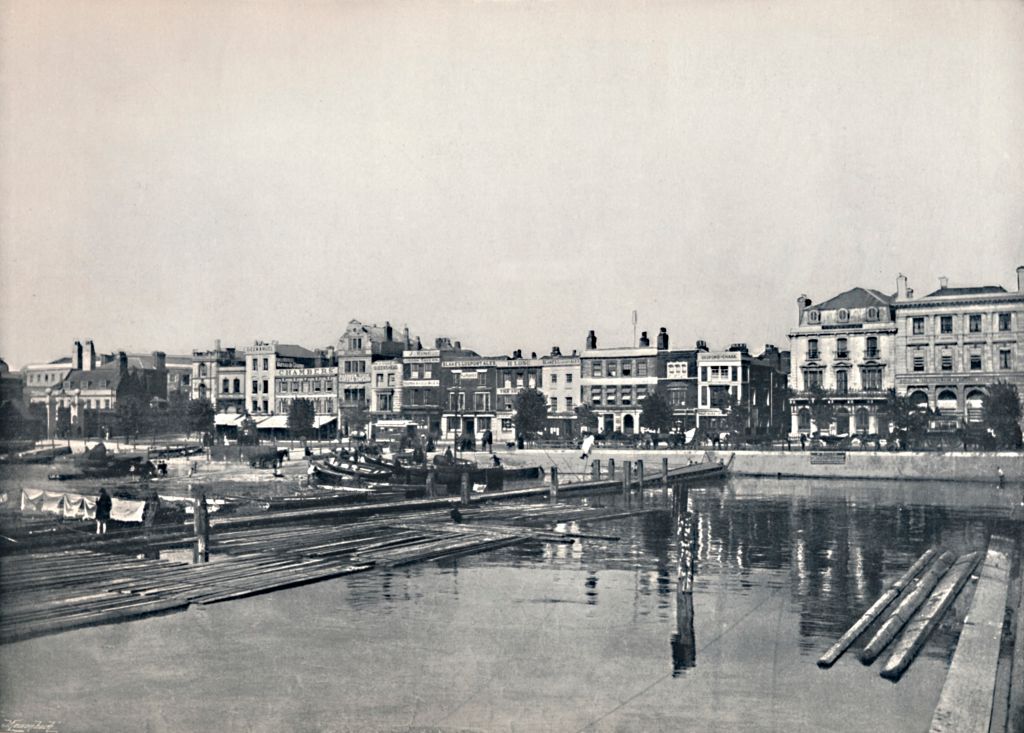
The recent pedestrianisation of Castle Road, a conservation area in the more affluent Southsea, could be repeated in half-a-dozen smaller streets in the area. Roads around major transport hubs could also be developed. The local authority could buy commercial property in both areas, anchoring investment by providing municipally-owned space for small business. Whatever’s left over could be put towards investment for tourism, and reversing some of the worst horrors of postwar development. Who knows: some money could even be found to fund apprenticeships for young people, a worthy idea given the rising problem of youth unemployment.
Of course, a minimal tram network, as Portsmouth once boasted, and a connection to neighbouring Gosport (thanks to Dr Beeching the largest town in England without a train station) would also be sensible, value-generating developments. But unlike the items listed above, these would be large-scale capital investments. The painful truth, which should also provide succour, is that many of Britain’s medium cities don’t even need that level of investment to kickstart a renaissance.
But money, spent wisely, still matters. A good example is the recently opened “Mid Cornwall Metro”. It may not be the maximalist option that locals wanted, the re-opening of a line that was also subject to Dr Beeching’s axe. But at a cost of £56 million it means that, for the first time since the Sixties, a direct train will run between Falmouth and Newquay, helping tourism and businesses as well as residents. A reminder: Pride in Place will be spending almost as much in Portsmouth, and more in Bournemouth, just without a clear vision or goals. These, apparently, are the options: either game-changing transport infrastructure, or youth clubs in a neighbourhood which already has them.
Sometimes I wonder if we even want large towns and smaller cities to succeed at all. Bournemouth is a Victorian jewel on the South Coast, once home to everyone from Robert Louis Stevenson and Tolkien to Mary Shelley. Yet today its town centre, a sort of Dubai for the late Victorians, is synonymous with vacant shop fronts and vape stores. Nearby Boscombe, another fashionable 19th-century resort, has long been home to innumerable bedsits — many of which are owned by DWP Housing Partnership. Those letters don’t stand for the Department for Work and Pensions, but a property company started by the notorious Dave Wells, a recently deceased slum landlord.
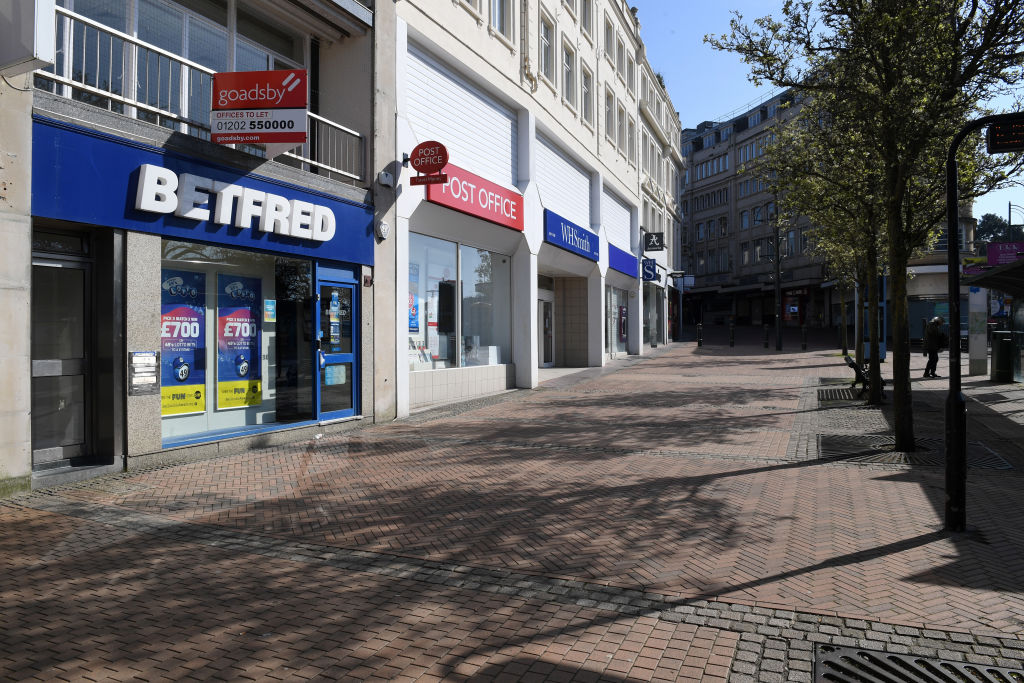
Where’s the wisdom of building a community centre with taxpayer funds while letting such men run riot, and permitting what feels like infinity HMOs? A refurbished play-park is always welcome, but if the area is also warehousing recovering addicts — as Boscombe does — how is that meant to transform the life chances of those living there? Just as important, how does any of this help those addicts in recovery? Nor is Bournemouth alone: this is an issue that afflicts places right across southern England.
But rather than address issues like rent-seeking, outsourcing and the treatment of addiction, Starmer’s government has decided on the easy option: a Frankenstein of David Cameron’s “Big Society” conjoined with Fabian welfarism.
In fact, Pride in Place seems particularly bizarre when viewed against the long-heralded Local Government Reorganisation (LGR). Merging councils, and integrating services and back offices, is meant to reduce costs. For their part, new metro mayors, including one planned in future for Portsmouth, promise to create a singular point of local accountability. So why, at the very moment that the Government is trying to create efficiencies, and focus scrutiny on a single individual, is it creating more bureaucracy through neighbourhood boards?
In 2020, The Economist wrote that “other countries have poor bits. Britain has a poor half.” The first step in addressing that should be to drive up productivity, and the quality of life, in our large towns and smaller cities. There’s no reason Sheffield should be poorer than Katowice, or Birmingham less affluent than Lyon. But turning things around requires good strategy — more even than money and the best of intentions. That means Westminster must stop looking at the world beyond the M25 as a basket case whose only hope is a one-off cash bonanza amid inexorable decline.
Aaron Bastani is the co-founder of Novara Media, and the author of Fully Automated Luxury Communism.
 AaronBastani