




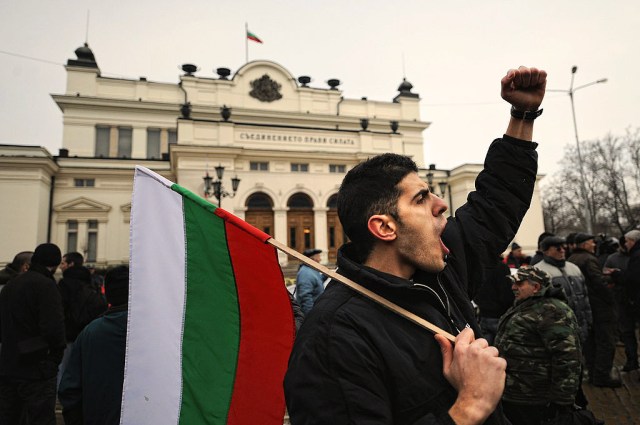
Which way, Bulgarian man? (Dimitar Dilkoff/AFP/Getty)





In central Sofia, the old Russian embassy still bears signs of the Kremlin’s patrimony. First, there’s the building itself, a stately, 19th-century affair, which now houses a business centre promoting ties between Moscow and Sofia. Then there’s Tsar Osvoboditel Boulevard, named for Russian Tsar Alexander II, where a greeter dressed as a nobleman beckons passersby into an upscale Russian restaurant. Near the street’s intersection, the golden domes and green-tiled roofs of the Church of St. Nicholas the Miracle-Maker, the only Russian Orthodox church in town, peek through the still-leafless canopies of nearby trees.
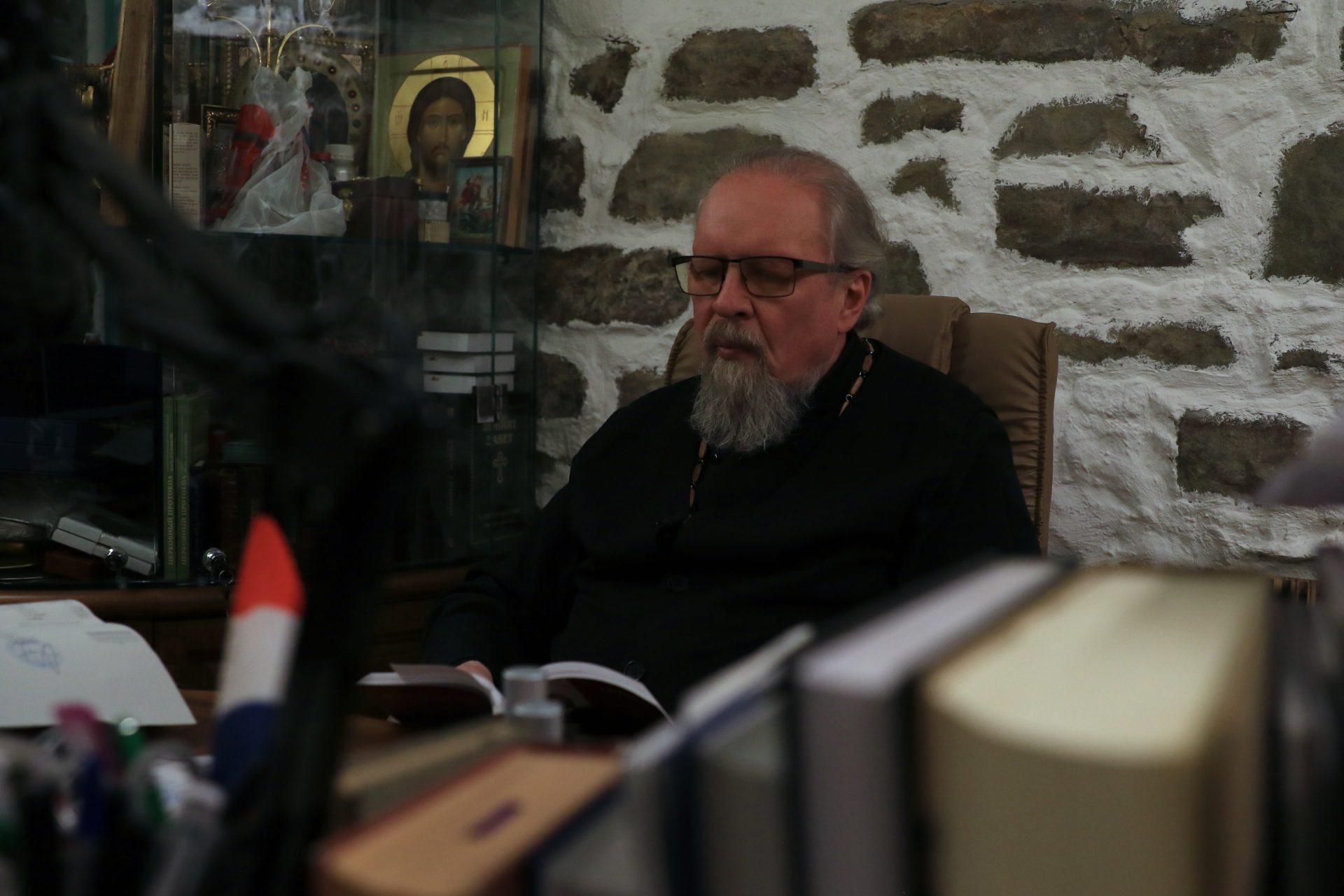
Yet despite these homages to the long arm of the Russian world’s spiritual and cultural influence, Moscow’s representatives here in Bulgaria are not as comfortable as they might seem. “For me, it was not easy to come here,” admits Father Vladimir Tyshchuk, the church’s archpriest, his stone-walled office surrounded by books and Orthodox icons. He came to Sofia from Vienna a few years ago, replacing a predecessor expelled from the country on national security grounds, much to Moscow’s chagrin.
Tyshchuk has had to live in the shadow of that event ever since. Just last month, an article in the Bulgarian press accused him of secretly meeting the ousted priest in Jerusalem: to receive instructions from Russian intelligence. The claims came without evidence, yet whenever Tyshchuk has crossed back into Bulgaria, he says he’s been held by the security services for extended passport checks. To him, these experiences stand in stark contrast to the treatment he’s received from many regular Bulgarians, for whom Russia is not an enemy — but something close to kin.
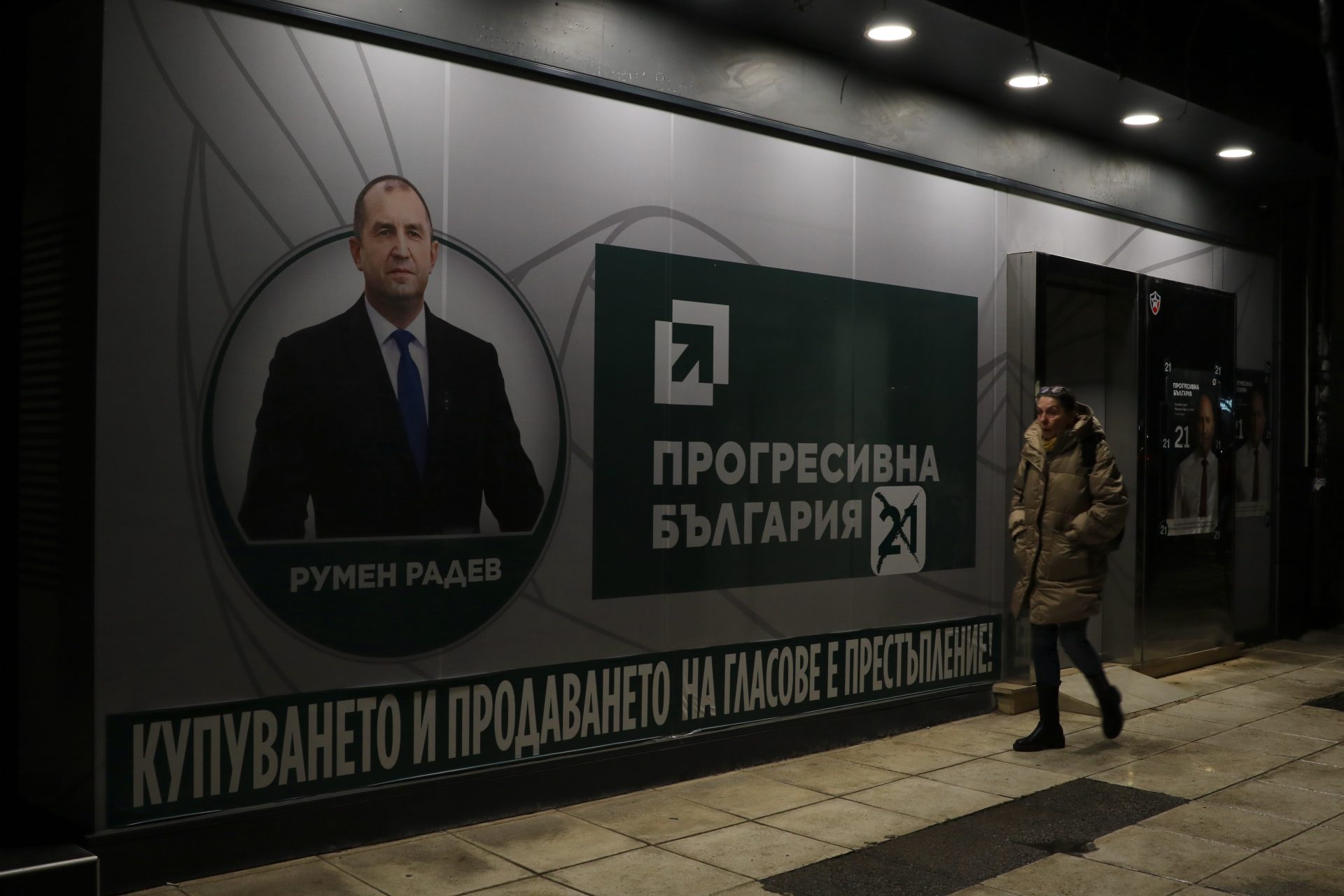
Bulgaria’s relationship with Russia is hardly straightforward. A member of the European Union and Nato for nearly two decades, its leaders have often taken an anti-Moscow line. Yet Bulgaria’s historical and economic ties to Russia run deep, arguably much deeper than any other EU state. Indeed, after seven parliamentary elections and several popular protest movements since 2021, Bulgaria’s electorate is now turning to yet another populist champion for Moscow: ex-president Rumen Radev, whose political alliance looks set to win the largest share of seats in snap elections this weekend, along the way making Radev himself Bulgaria’s prime minister.
While Viktor Orbán’s defeat in Hungary has been heralded as a sign of the decline of Russian power in Central and Eastern Europe, Radev’s probable victory presents another, more nuanced challenge to the Brussels establishment. Radev is hardly a Kremlin stooge like Orbán, and Bulgarian society, despite its connections to Russia, is growing increasingly hostile to Putin’s influence. All the same, Bulgaria’s experience offers valuable lessons about how Russia can still exploit popular sentiments to fill gaps left by the waning West.
In practice, these attitudes ensure a kind of political schizophrenia. Over the past 20 years, after all, Bulgarian governments have pursued strong ties with Brussels and Washington while signing energy deals with Russia. More recently, they’ve sent weapons to Ukraine since 2022 while allowing Moscow to maintain several high-profile properties in Bulgaria — in violation of EU sanctions and despite security risks to Nato operations. As recently as this year, Sofia adopted the euro, even as its oligarch-dominated economic and political system continues to be based on the post-Soviet Russian model, with connections to Kremlin money everywhere.
While openly pro-Russian parties are restricted to the far-Right, Russophilia in the Bulgarian mainstream is much less overt — exactly where Radev has learned to shine. Having been elected to the presidency in 2016, allegedly with the help of a former Russian intelligence officer, Radev took a number of Moscow-friendly positions on Ukraine, opposing sanctions and defending his country’s dependence on Russian energy. But after resigning from his largely ceremonial post in January, following a spate of anti-government protests, Radev read the room keenly, de-emphasisising his pro-Russian credentials to settle instead on a broad, anti-corruption platform opposed to Bulgaria’s oligarchic elite.
“It’s really a candy bag,” says Professor Emilia Zankina, from Temple University Rome, of the coalition of voters Radev’s alliance has gathered together. “He gets nationalists, socialists, progressives, urban elite, rural disappointed people, and that’s because he’s seen as the new saviour.” That alone is a notable achievement given Bulgaria’s notoriously fractured and chaotic politics, with Radev himself becoming something of an empty vessel for anti-establishment Bulgarians. His own background presumably helps too: as a former major general in the Bulgarian Air Force, who speaks calmly yet decisively, he enjoys a statesmanlike reputation.
That’s especially true now that Radev’s trenchant stance on Ukraine has been replaced by platitudes about reaching a “just and lasting peace”. Given that Putin’s invasion remains a polarising issue, that may be intentional — but unlike elsewhere in Europe, the dominant historical narratives that underpin Bulgarian identity mean people here don’t always equate Putin with the Russian nation as a whole.
“I never had anything against Russia, because a long time ago Bulgarian people were together with Russians,” says Viktor Toshev on a dreary night on Vitosha Boulevard, a pedestrian street that stretches out toward the mountains past Sofia. Toshev works at a car wash, but gesturing toward the sky with frustration, he tells me he’d had to leave work early because the rain had robbed him of customers. “Russian people are innocent people, good people,” he adds, his voice husky, his hair mottled. “Only this war is no good.”
Toshev’s sentiments cut to the heart of the popular narrative Bulgarians have been sold about Russia: that the two countries have been bound by language, religion, and history since the dawn of Slavic Christendom. This logic served as part of the justification for Russia’s intervention in the Balkans following the Ottoman Empire’s violent suppression of a Bulgarian revolt in 1876. Following the Sultan’s subsequent defeat in the Russo-Turkish War two years later, the Treaty of San Stefano granted Bulgaria its independence for the first time in nearly half a millennium — under Russian auspices of course. An alternate plan for the new state ultimately divided it between the Moscow-aligned Principality of Bulgaria and the autonomous Ottoman province of Eastern Rumelia, with the two eventually merging to form the modern Bulgarian state in 1908.
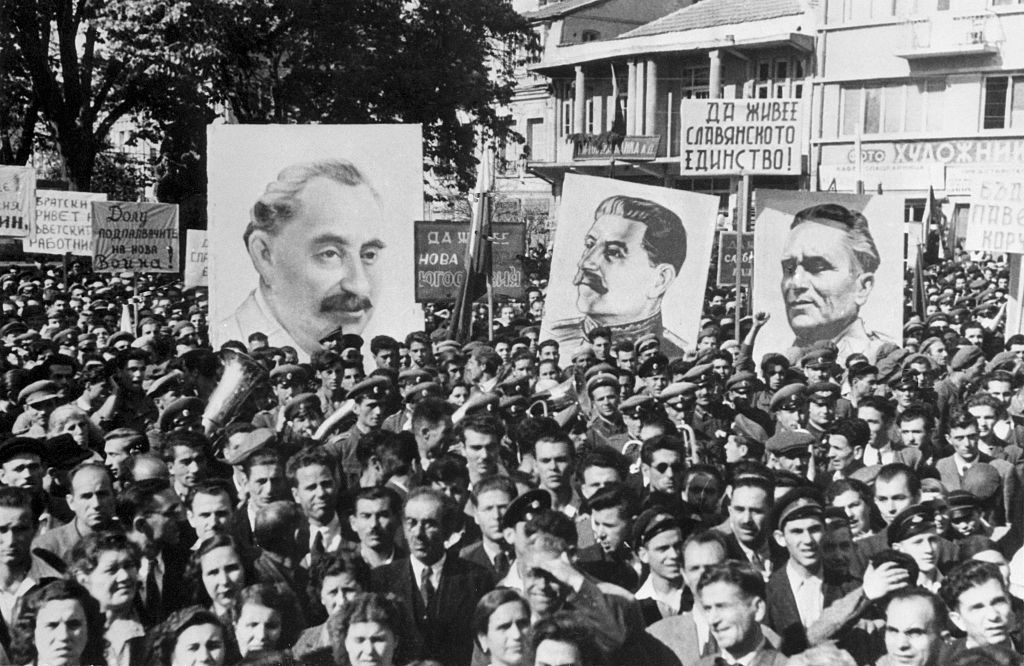
In the popular mythos of the fight for Bulgarian independence, Russia is an altruistic saviour, an “older stepbrother” to quote one Russian journalist, to whom Bulgaria owes its very existence. And despite the fact that Bulgarians themselves also played a large role in securing their freedom from the Ottomans — and that Bulgaria far predated Russia as an independent entity during the Middle Ages, even introducing the Cyrillic alphabet to Moscow — many Bulgarians’ affinity for Russia as its guardian angel was solidified during the communist period following the Second World War.
“On the one hand it was a repressive regime, one party rule, no private property,” Zankina explains, describing Bulgaria’s experience as a Soviet satellite state during the Cold War. “But at the same time, the country was agrarian and rural before communism and during that period the country industrialised, so many people and families saw their lives change dramatically for the better.”
It’s no surprise, then, that the shock of the Nineties brought with it a heavy dose of Soviet nostalgia. According to Stoyan, a longtime activist-turned-techie, there was never even any desire for the communist years to end among regular Bulgarians. “When the wall fell, nobody gave a fuck,” Stoyan explains in his typically incisive fashion, adding a dash of the self-deprecation characteristic of so many Bulgarians. “The communist party here was never protested away, it was never taken down. Actually they won the first democratic elections.”
Perhaps for that reason, Russia’s influence continued uninterrupted as Bulgaria’s system transitioned from one regime to another. For years after the collapse of the Warsaw Pact, the dominant party remained the Bulgarian Socialist Party, a rebrand of the communist party that had governed the country throughout the Cold War, and which continued to serve as a vehicle for Russian interests into the 2000s. As late as 2016, indeed, the party supported Radev’s initial run for the presidency. Nor was this influence merely political. As Stoyan explains, many of Bulgaria’s bureaucrats and economic heavyweights gained power with Russia’s backing; even today, adds Zankina, many members of Bulgaria’s security services received their training in Moscow.
Stoyan, who says he’s been active in protest movements since he was a teenager, leads me to a public fountain next to the Bulgarian Parliament. It was here, aged 13, that he was first arrested for arranging an unauthorised protest against a far-Right, pro-Russian party. (A far-Right, anti-Russian party also exists.) Unlike some of his countrymen, Stoyan, who asks me to only use his first name for his safety, says he saw early on that the prosperity provided by Russia and the Soviet Union was nothing more than an illusion. Despite the relative growth Bulgaria experienced during communist period, it came at a heavy cost — up to 10,000 people perished as a result of forced collectivisation and persecution at the hands of the Soviet-backed regime between 1944 and 1989.
Such blunt displays of power are history, yet Russia’s reach has adapted to Bulgaria’s own changing fortunes, becoming less direct with each passing decade. Near the Bulgarian city of Burgas, Russian oil giant Lukoil today operates Bulgaria’s only oil refinery, providing the Sofia government with up to 80% of its fuel. If it weren’t for sanctions waivers from the Trump administration, which were renewed this past week, Bulgaria’s energy landscape would likely face catastrophe if forced to pivot away from Russian energy.
Bulgaria boasts more physical manifestations of Russian influence too. Perhaps most notable here is the Kamchia complex. Ostensibly a wellness resort, owned by the EU-sanctioned Moscow municipal administration, it was once envisioned by Putin’s Foreign Minister Sergei Lavrov as a hub for spreading Russian soft power. Even Tyshchuk, the priest, admits that diplomats at the Russian Embassy, which he occasionally visits, have expressed a desire for the Church to play more of a political role in Bulgaria.
The Russian Cultural and Information Centre in Sofia, also owned by the Russian state, is another brick-and-mortar example of the Kremlin’s footprint in Bulgaria. After several unsuccessful attempts to get in touch by email and phone, I visit the building one overcast afternoon in the hope of interviewing its director. As I walk up the stairs toward the centre’s glassy façade, I’m immediately approached by a security guard who asked me what my business was. After a brief conversation in broken Russian, I’m allowed through a metal detector into the cavernous main hall. I’m ultimately unable to secure the interview — but, before leaving, I take the opportunity to have a look around. In the main entrance hall, next to a life-size replica of a Soviet space probe and a mural of two cosmonauts, one Russian and one Bulgarian, I find a propaganda exhibition about Crimea, organised for “the year of unity of the peoples of Russia”. The security guard initially gives me the go-ahead to take photos — only to change his mind and beckon me to leave.
Such heavy security is hardly a mystery. Less than two years ago, it was in front of this cultural centre that Bulgarian activist Lexi Fleurs burned a Russian flag, writing “murderers” in large letters on the sidewalk. She was confronted by security guards and eventually detained for over 24 hours by police who attempted to charge her with petty hooliganism even though Bulgaria has no laws prohibiting the burning of foreign flags.
In the aftermath, her arrest inspired similar acts by other Bulgarians, who burned Russian flags and held signs in solidarity with Fleurs, though this time without triggering any confrontations. Just another example of Bulgaria’s muddled relationship with its giant stepbrother, something Fleurs herself says makes concerted activism that much harder. “We don’t officially have a pro-Russian government,” she tells me, sitting in a park as evening falls. “It’s so much easier to go against an enemy that clearly states ‘I am the enemy’ than to go against an enemy that you need to dig and prove and spend even months to understand how deep the problem actually is.”
Even so, Bulgarians opposed to Russia are beginning to take matters into their own hands, connecting the dots between the corrupt status quo and the Kremlin’s influence. In the lead-up to the anti-government protests in December, Fleurs attended a demonstration that, while ostensibly directed at Bulgaria’s then-general prosecutor, quickly turned into a chorus of chants like “this is not Moscow” — or else the cruder “Putin khuylo” (something like “Putin is a cock”).
Though support for Russia, Putin, or both continues to be found across Bulgarian society, the clearest dividing line, if any exists, is unsurprisingly age. Younger Bulgarians, who grew up in the post-communist period and didn’t learn Russian in school, find it harder to relate to the tales of Russo-Bulgarian brotherhood, whatever the continued pull of Bulgaria’s national mythologies.
In a cosy high-rise apartment in western Sofia, decorated among other things with a taxidermised bird of prey, artist Antoaneta Quick epitomises these complexities. “Bulgaria, and generally the Balkans, are always the victims, the fucked up ones, and it feels like Russia is equally fucked up,” she says, who despite her ex-husband’s Swedish surname is the great-granddaughter of a Russian officer close to King Boris III of Bulgaria. “This is the east. It’s almost like a feeling of safety in the already existing chaos, mafia, distrust, and alcoholism.” For Quick, this is the real reason for Bulgaria’s long, toxic relationship with Moscow — a familiarity that, despite being regressive, feels safer than change, especially at a time when stability always seems just out of reach.
According to Krasimir Angelov, a Bulgarian software engineer who works in Britain, the appeal of this familiar safety is only amplified when it feels like the only satisfying choice available. “We do need strong leaders in times of crisis, and the West has generally struggled to produce them,” Angelov tells me by phone. “It has become a rather soft, politically correct society to its own detriment. That is seen in Eastern Europe as weakness.”
Radev has always existed in both worlds — Russia’s and the West’s — and his Bulgaria will doubtlessly exist in both too. Stoyan, the activist, suggests that Radev’s days as a Russian lackey are over, if nothing else because Kremlin cash has stopped flowing his way. Whatever the truth, his government, if he is able to form one, will likely try to recast the EU and Nato in its own image, much like other European populists. Learning the lesson of Orbán’s defeat, though, he’s also likely to be more subtle in his methods, adding amendments to EU proposals instead of rejecting them outright.
Despite hosting more corruption and Russian influence networks than perhaps even Hungary, Bulgaria has largely escaped the EU’s attention so far. If, however, the twin problems of graft and Kremlin influence are to be tackled, that’ll have to change, regardless of who rules in Sofia. Bulgaria’s integration into the eurozone and other European structures will surely help here, but for such a push to truly succeed, it’ll have to be led first and foremost by Bulgaria’s own civic society. Citizens have shown themselves disgusted by their rapacious establishment — and if figures like Radev have the capacity to challenge long-running political dynasties, other, less Kremlin-aligned leaders may one day do so too.
Yet even if the tide continues to turn, and future generations of Bulgarians find themselves increasingly alienated from Russia, the question remains whether they will actually be able to sever centuries of dysfunctional co-dependence without shocking Bulgarian political life to its core — even with the EU’s help. Much will, of course, depend on what happens in Bulgaria’s immediate neighbourhood; on the outcome of the war in Ukraine; and on how well the country weathers the energy shocks that lie on Europe’s horizon. Yet it will also depend on what alternative vision the West is able to offer. Bulgaria has already shown that it doesn’t need to stay stuck in the past — even if its future direction remains in the balance.
 Michal_Kranz