




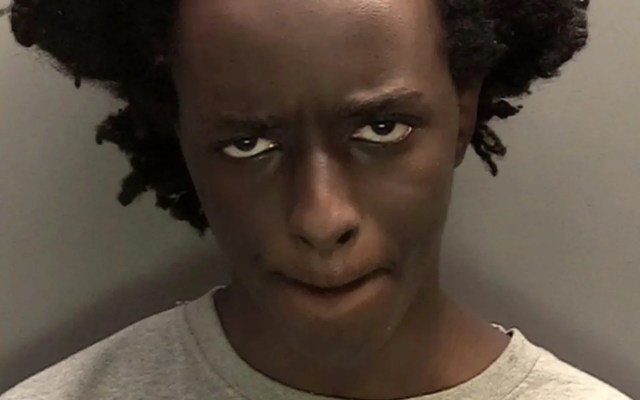
Rudakabana could have been stopped had his parents turned him in. (Merseyside Police)





Most of the inquests I have participated in took evidence from a bewildering constellation of acronymed hubs, teams, and services who support and liaise and refer in a blizzard of lengthy correspondence. And, often, the coroner will conclude that the death was partly caused by systemic shortcomings in the sharing of information and regrettable misunderstandings about the apportionment of responsibility. Further training is recommended.
To some extent, then, Shabana Mahmood was correct when in her statement to the House of Commons yesterday she described the findings of the Southport Inquiry’s Phase 1 report as “not surprising”, noting that “findings like these have been heard in inquests and inquiries before”. The report certainly makes plenty of recommendations of “training” for the various “agencies” concerned — police, NHS, Lancashire County Council and its many emanations. Quite sensibly, no doubt. But there can also be heard in Sir Adrian Fulford’s report some bolder, unexpected notes, the beginnings of a tune, perhaps, that many are starting to hum, though not yet in great numbers at the heart of today’s Establishment.
In the opening pages, Sir Adrian describes as “a fundamental failure” the fact that the relevant public-sector agencies were guilty of “an enduring focus… on the potential risk of harm to [Axel Rudakubana] as opposed to the risks that he posed to others”. More important than that, he argues that the “merry-go-round of referrals, assessments, case-closures and ‘hand-offs’” among these agencies “has to end”.
The report’s principal concern is the risk to the public, and how that risk was wrongly assessed, communicated, and responded to. But there is another risk at play here: the risk to the individual state employee who steps up to take responsibility for someone like Rudakubana. When something as terrible as the murder of innocent children occurs, no one wants to be in that position. And one way of avoiding that — of everyone avoiding it together — is precisely the referral merry-go-round the report decries: if you wanted to design a system for avoiding responsibility in these circumstances, or at least spreading it so thinly as to make no difference, you could hardly do better than the status quo.
But how to change this culture? “Training” isn’t going to do it. And before condemning these people too harshly, consider their powers. Faced with someone as obviously dangerous as Rudakubana — bringing knives to school and announcing his intention to kill, then returning after exclusion to attack a random pupil with a hockey stick — you too might not want to accept responsibility if all you are able to offer is the provision of “support” at a “hub”. That is especially when it is all contingent on Rudakubana actually turning up or answering your phone calls. On one view, you cannot expect someone to take responsibility for a dangerous problem unless they have the means to properly deal with it. Which is why the police are in a different, and perhaps more blameworthy, position.
When Rudakubana went missing from home and officers found him on a bus with a knife, he said he wanted to stab someone and admitted to thoughts of using poison. But the police pondered his “neurodiverse condition” — autism — and “didn’t think custody would be appropriate”. They, in Sir Adrian’s words, “in effect treated [his autism diagnosis] as a defence to the criminal offence of possession of an offensive weapon”. If he had been arrested, as the report concludes he should have been, “his home would have been searched, leading to police and other agencies gaining critical information about the ricin seeds he had bought, and the terrorist training manual he had downloaded.” Which, in turn, would — or at least should — have led to a substantial period of incarceration: and no murders.
The report elaborates on the point: “Far from recognising that [he] was responsible for his own actions, and that his ASD (Autism Spectrum Disorder) meant (in his individual case) that he posed an increased risk of harm to others, agencies regularly used his autism as an explanation or even excuse for his conduct, including his violence. This was both unacceptable and superficial.” As with the condemnation of the public sector “merry-go-round”, this unapologetic rejection of the maximally “#bekind” position strikes me as noteworthy. At least, it is more no-nonsense than we might expect from a 21st-century inquiry chair.
And then there’s the analysis of the parents’ shortcomings. While acknowledging the significant difficulties they faced with their younger son, Sir Adrian also variously describes them as obstructive, manipulative and harmful; they failed to “set boundaries and to enforce expectations”; if they “had done what they morally ought to have done”, the attack would not have occurred. The 2016 version of this, I suggest, would have read somewhat differently. It’s subtle, but the emphasis on parents’ moral obligations, separate from the legal framework, and on the need to “enforce” their expectations, again gives a slightly more prescriptive tone than we have become used to — even in a report of this gravity.
Most startling of all — albeit of lesser significance in the chain of causation, and not in the report’s five “fundamental problems” — is the discussion of how an implied and unfounded accusation of racism led to the watering down of Rudakubana’s EHCP (Education, Health and Care Plan). This is a legally binding document that sets out a Local Authority’s obligations, and specifies the special educational provision required to safely and effectively meet a pupil’s needs. In 2021, Rudakubana’s EHCP was reviewed. Deputy headteacher Joanne Hodson — who Sir Adrian emphatically calls a “highly impressive witness” — wanted to include a section detailing the risks Rudakubana posed to others. But Samantha Steed, from Child and Adolescent Mental Health Services, wished it removed.
In Hodson’s words “[she] even went so far as to accuse me of racially stereotyping [him] as ‘a black boy with a knife’”. There had been no mention of his skin colour until that point. But the implied accusation had its effect. As Hodson put it in evidence, “that effectively shut me up … that was the point at which I – that professionally just closes me down completely, doesn’t it?” As a result, the document was toned down.
Sir Adrian describes Steed’s decision to “raise issues of racial stereotyping” as “unwise”. If that is an understatement, he no doubt had in mind his finding that nobody had acted in bad faith — so there was no need to pitch the criticism too high. But it nevertheless feels like a notable shift in the direction of the wind. How many such remarks — implied and unjustified assertions of racial prejudice — are made in professional settings each day in Britain? Hundreds? Thousands? Perhaps now there will be fewer. Perhaps the move will no longer be seen as entirely risk-free.
The report also, unsurprisingly, contains recommendations around online harms. And while these all relate to children, Labour will no doubt try to use them to justify their programme of restriction and censorship more generally.
Yet if this report will not please everyone, there is a new strand in there, powerfully expressed, that says we cannot carry on like this. Comforting delusions of one sort or another, and an insistence that in a society as wealthy as ours there need be no trade-offs, have been central to the state’s governing philosophy for decades. This report, in its clear-eyed analysis of cause and effect, as well as in its diction, seems to take a step back, or rather forward.
No more public-sector evasion of responsibility; no more supine inaction around “neurodivergence” or mental health issues; no more baseless implications of racism; no more imbalance of attention and resources in favour of the potential wrongdoer over the potential innocent victim. Through it all, teenagers must be held responsible for their actions — and their parents too. This may have all come from a retired and highly respected senior judge, formerly of Michael Mansfield KC’s “radical” Tooks Chambers. But if you were to adorn it with a “sodding”, a “bloody”, and an “I don’t care” or two, it could quite easily serve as a tweet from Rupert Lowe. One way or the other, it feels like progress.
