




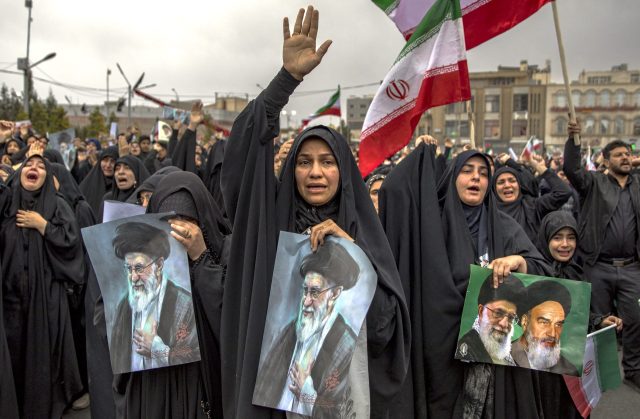
Mourners of Khamenei flood the streets of Kerman, Iran. (QASEM/ Getty)





For many secular Iranians, Supreme Leader Ayatollah Ali Khamenei was a brutal dictator who ruled with an iron fist, embodying repression and ideological rigidity. Many — especially in the diaspora — celebrated his death with Champagne and dancing on the street. For them, his demise symbolised long-awaited justice and hope for a better future.
Still, if Seyyed Ali Khamenei had choreographed his own death, he could scarcely have designed a more potent political end. After all, he was not merely Iran’s head of state: he was a religious symbol for Shi’ites worldwide. His assassination — by US-Israeli bombs during the Muslim holy month of Ramadan, while fasting and overseeing wartime resistance planning — instantly transcended geopolitics and entered the realm of sacred myth. For supporters of the Islamic Republic, the symbolism is nothing short of miraculous, and among the Shiite population worldwide, it instantly resonates within their collective memory.
Most fundamentally, Khamenei’s death during Ramadan evokes the assassination of Imam Ali, the first Imam of Shi’ism and a central figure in the sect’s political theology. Delivered by a poisoned sword during prayers in Ramadan, Ali’s death was the climax of the first Islamic Civil War — the First Fitna — and was viewed by the Shia as deep-seated political conspiracy that led to regime change and the rise of the Umayyad Caliphate. Over nearly four decades in power, Khamenei — a “Sayyid”, or direct descendant of Ali — had carefully cultivated his public persona on this symbolic (and literal) lineage, presenting himself as a custodian of revolutionary piety and personification of resistance. The manner of his death instantly apotheosised that cultivated mythology into something far more transcendent: martyrdom.
With the Ayatollah’s death as powerful as the killing of the Pope during Easter, Khamenei was elevated overnight to the status of Imam-e Shahid — the “martyred saint.” That symbolism matters far more than many Western strategists appear to understand. In Shiite political theology, martyrdom is not loss but transfiguration. It converts political defeat into moral victory and transforms fallen leaders into sources of enduring mobilisation. The assassination has therefore not merely removed a leader; it has mythologised him among his followers. And myth, in revolutionary regimes, is a fount of power and renewal.
Khamenei’s assassination has already proved a mobilising force for his millions of followers. Unmoored from the cultural and religious intricacies of the Middle East, the US and Israel wagered that killing the Supreme Leader would expose the fragility of the regime in Tehran and weaken political resolve across the Islamic Republic, causing defections and perhaps even a popular domestic uprising. Instead, his death has rallied the regime’s active supporters — perhaps a quarter of Iran’s 93 million people — while fomenting strong anti-American sentiment and open revolt among Shi’a from Bahrain and Iraq to Pakistan and Kashmir.
In life, Khamenei was an ardent ideologue whose leadership left Iran isolated and crisis-ridden. One of the last surviving leaders of the 1979 Revolution, he believed it was his divine mandate to preserve the Islamic Republic’s ideological purity: Islamic conservatism, anti-imperialism, self-reliance, and resistance. He systematically conflated Iranian national sovereignty with revolutionary ideology, often sacrificing pragmatic flexibility in service of doctrinal continuity, compromising only when the regime’s survival was at stake. A notable example occurred in 2013, when Khamenei, a stubborn critic of negotiations with the United States, greenlit the talks that led to the Obama nuclear deal, calling it “heroic flexibility”.
As Iran’s relative power declined, sanctions tightened, and domestic legitimacy sank, he leaned ever more heavily into narratives of resistance and victimhood, drawing heavily on Shi’ite mythology — especially Imam Hussain’s martyrdom in the Battle of Karbala in 680 AD, at the hands of the more powerful Umayyad Caliph Yazid. In this way, Khamenei framed Iran as the righteous victim of unjust global powers, especially the United States and Israel, whom he labeled the “hegemonic order”.
Crisis and conflict management became inevitable aspects of Khamenei’s governance style. He steered the country from one crisis to the next, ruling not in spite of emergencies but through them. But government-by-crisis had a paradoxical effect. Under Khamenei, the Islamic Republic evolved from a crude revolutionary state into a highly resilient political system. In close partnership with the Islamic Revolutionary Guard Corps (IRGC) — with which he forged deep bonds during the Iran-Iraq War — he oversaw the transformation of the regime into a decentralised, hyper-institutionalised, horizontally organised state with multiple redundancies, overlapping factions, and a pervasive security apparatus. The IRGC branches and offshoots expanded into the civilian space, while religious foundations and quasi-governmental trusts (or Bonyads), mushroomed to create a parallel economy to evade US and international sanctions. The system wasn’t designed for efficiency, but to guarantee survival under relentless domestic and foreign pressure.
Over time, this architecture produced a modern total state capable of absorbing shocks that would shatter other regimes. Power in Iran is disaggregated across clerical bodies, security institutions, economic conglomerates, and parallel chains of command. The Islamic Republic is neither a monolith nor personality-driven. The regime treats individuals — leaders included — as expendable in service of its long-term survival. Indeed, the system is expressly designed to absorb loss, from wartime commanders in the Eighties to nuclear scientists and generals killed by Mossad. Succession mechanisms are embedded in the structure itself.
This structural nature is what Trump and Netanyahu overlook, leading to severe miscalculation. The US-Israeli strike was conceived as a classic decapitation blow: remove the Supreme Leader, showcase the state’s weakness, and trigger either elite fracture or popular revolt. Yet this logic reflects a profound misreading of the Islamic Republic. Buoyed by his success in securing regime compliance in Venezuela by removing Nicolás Maduro, Trump may have become overconfident and overplayed his hand in Iran. Its tactical and intelligence achievements notwithstanding, the decapitation has failed to produce any strategic objectives. Quasi-totalitarian Iran is not Saddam’s Iraq in 2003, or Gaddafi’s Libya in 2011, or even Chavist Venezuela under Maduro.
Under its Islamist and revolutionary garb, Iran is a civilisational state with deep institutional continuity stretching back millennia and a sizable industrial base. It represents a cultural domain shaped by its geography and historical pedigree that goes beyond the Western nation-state model. What’s more, the current regime itself has been forged in decades of war, sanctions, and internal upheaval. Indeed, Iran belongs to an entirely different category of state: a middle power with regional heft and structural resilience.
As such, the systematic destruction of domestic opposition, compounded by hybrid wars and economic sanctions that hollowed out the middle class and tied economic survival to the state, made organic regime change increasingly unlikely absent elite fragmentation and the defection of the security forces. And absent a large-scale ground invasion, an external air campaign was always unlikely to produce systemic collapse — particularly given the dysfunction of the Iranian opposition and their lack of organisation inside Iran.
In this light, Khamenei’s martyrdom offers Tehran a rare strategic windfall, serving as a powerful engine of political solidarity by reenergising the familiar trope of the “righteous victim”: thus overshadowing the regime’s wider legitimacy crisis. In that sense, Khamenei’s death may ultimately strengthen the ideological core of the Islamic Republic more than his decades-long rule ever did. Despite being despised by millions of Iranians who hold him personally responsible for the death of thousands of protestors last month, millions of Khamenei’s own supporters are already occupying the streets in mourning across the country. What the embattled leader struggled to achieve in life — renewed revolutionary fervour — he may now accomplish in death. The regime now possesses a renewed reservoir of spiritual capital — a unifying narrative capable of sustaining elite cohesion through a fraught succession.
That succession is unlikely to produce moderation. If anything, the structural incentives point in the opposite direction. Leadership transitions during conflict, amid national trauma and the fog of war, tend to empower security-first factions with a more nationalist bent. In Iran’s case, the likely outcome is a successor more tightly aligned with the IRGC — the country’s real centre of power — and less constrained by Khamenei’s more cautious and restrained approach to geopolitics. More Western-aligned, reformist factions, already marginalised, will hardly resonate in an atmosphere suffused with martyrdom and a siege mentality against what the Iranians view as unprovoked Western aggression.
Ironically, Khamenei himself may have also been a moderating force in at least one crucial domain: nuclear weaponisation. Despite his revolutionary zeal and ardent support for Iran’s right to (peaceful) nuclear sovereignty, he maintained a religious prohibition — a fatwa — against the bomb. Guided by the IRGC and Iran’s more realist security establishment, his successor is unlikely to adhere to Khamenei’s theological or ideological qualms. Watching a Supreme Leader assassinated by foreign powers will inevitably encourage nuclear deterrence as the ultimate insurance policy. Indeed, the CIA had already concluded as much before the strike. If anything, then, the killing may accelerate the very nuclear option it sought to prevent.
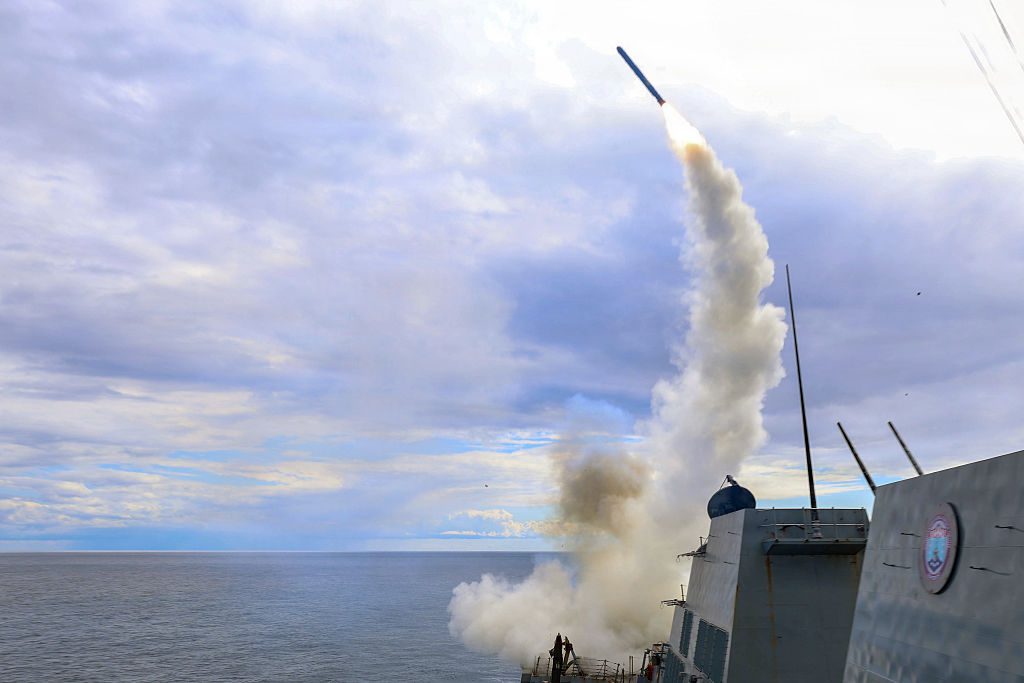
This very possibility reveals how Washington suffers from strategic myopia and a lack of endgame in Iran. Instead of coercing surrender, military pressure may radicalise Iranian elites while narrowing the space for diplomacy. Rather than empowering moderates who would engage the US, it validates the worldview of hardliners who have long argued that compromise invites aggression. The upshot is a hardened security state, narrowing the already limited space for internal pluralism. Instead of instigating regime collapse in Iran, the conflict risks producing the opposite dynamic: an escalation trap with no easy off-ramps.
There are other risks too. The opening days of the conflict have already seen the conflict expand, drawing in Iranian proxies and exposing vulnerabilities among American partners in the Persian Gulf. A mission conceived as a decisive blow could metastasise into another open-ended Middle Eastern conflict — precisely the kind of protracted entanglement successive American administrations have pledged to avoid. While a full-on invasion is unlikely and would be a political suicide for the GOP, the war could still escalate and fester as a quagmire Washington can’t soon escape: risking US blood and treasure and a broken global economy for Israel‘s regional ambitions, without any upside for the United States.
Such a scenario carries wider strategic implications. In an increasingly multi-nodal world, prolonged regional wars impose real opportunity costs. They drain resources, strain stockpiles, and divert attention from higher-order geopolitical interests. For a United States confronted with the end of the unipolar moment, another forever war in the Middle East — even absent US troops on the ground — risks accelerating America’s relative decline instead of strengthening its great power status. Given the already transregional and escalatory nature of the war, Iran could easily become the conflict that completes the “rupture” in the rules-based order.
None of this means the Islamic Republic is invulnerable. It faces deep structural challenges: economic stagnation, demographic pressures, and periodic explosions of domestic unrest. Its population is deeply polarised, and Islamism itself appears an exhausted ideology even within the regime’s own rank and file. But external decapitation strikes are poorly suited to exploiting those vulnerabilities. On the contrary, they consolidate regimes by supplying precisely what they lack in times of internal strain: a unifying external enemy and a mobilising myth.
Ironically, Khamenei’s assassination has handed the Islamic Republic both. It has replenished the regime’s symbolic and spiritual reserves, reinforced elite cohesion, and justified a more hardline security trajectory. In trying to eliminate the man, Washington may have strengthened the system in Tehran.
For a Trump administration that claims to practice hard-nosed realism, this represents a striking miscalculation. It reflects a failure to grasp both the civilisational depth of Iran and the adaptive endurance of the Islamic Republic. Iran is neither a brittle petro-state nor a hollowed-out personal dictatorship waiting to fall. It is a historical power with institutional durability and real material strength. Here, the US-Israeli tactical brilliance — precision strikes, intelligence coups, targeted assassinations — could turn out to be a pyrrhic victory that does not automatically translate into strategic success.
Amid war, destruction, and political discontent, the Islamic Republic will likely endure — less flexible, more defiant, and newly consecrated by the blood of its fallen leader.
Arta Moeini is the Director of Research at the Institute for Peace and Diplomacy and founding editor of AGON.
 artamoeini