









February 18 2026 - 10:00pm
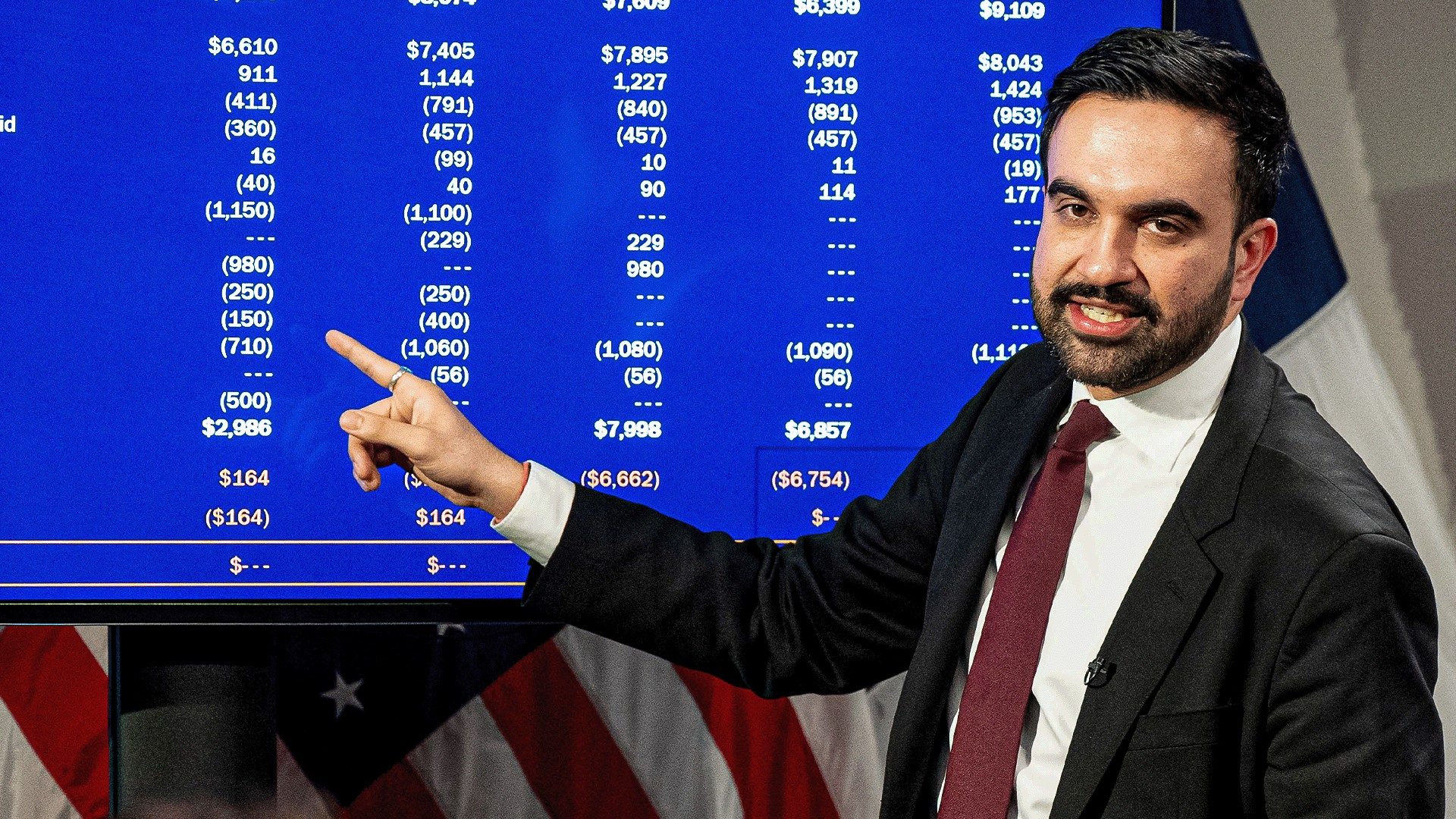
New York City doesn’t enjoy Washington’s latitude when the bills come due: it cannot run an “official deficit”. By law and long-standing practice, the city is required to pass a balanced budget. That realization dawned on Zohran Mamdani this week, as the Mayor warned that the city was facing a projected $5.4 billion revenue shortfall over the coming two fiscal years.
Mayor Mamdani cannot be blamed for this budget gap, but he can certainly make it worse.
While it may be tempting to pin the revenue collapse on vanishing tourists or fleeing millionaires, the city’s real problem is more prosaic: chronic underbudgeting of large, predictable expenses. Year after year, City Hall lowballs line items such as rental assistance, overtime, homeless shelters, public assistance, MTA support, and so-called “Carter” cases at the Department of Education — court-mandated special-education placements whose costs are unavoidable and reliably exceed the initial budget.
New York City’s unbudgeted needs now total roughly $3.8 billion, driven largely by this chronic underbudgeting. But this is not a mere bookkeeping quibble. Underbudgeting is, after all, a political strategy: it allows the current budget to appear balanced while deferring the real cost of government to future budgets. It is fiscal dishonesty, time-stamped for later.
The reason this problem is approaching a crisis is that the city’s safety cushion is rapidly eroding. New York City has spent more than it has taken in for three consecutive years, while prepayments have fallen by $2.3 billion. By the end of 2025, spending still exceeded revenues by roughly $610 million. That is what a “balanced” budget looks like when the balance is achieved by running down reserves.
Meanwhile, the job market is flashing an uncomfortable warning: growth has become dangerously narrow. In December 2025, New York City’s private employment was up 33,400 year over year. But private education and health services alone added 71,100 jobs over the same period, implying a net loss of roughly 37,700 private-sector jobs outside that single category.
A city can absorb sectoral churn. It cannot remain comfortable with an economy increasingly reliant on a single band of job growth, especially when the cost of government is already borne by a similarly narrow slice of taxpayers.
That pressure is now colliding with an extreme housing shortage. In 2023, the rental vacancy rate fell to about 1.4%, the lowest since 1968. The practical effect is that working- and middle-class New Yorkers are being asked to pay more for less space, endure longer commutes, and live with ever thinner financial margins. That is not a stable foundation for a big-city tax base.
Hybrid work is the other major reset, and it goes to the heart of the city’s finances. Offices account for roughly one-third of private employment and close to two-thirds of economic output. The Mayor can’t risk raising the property tax rate too high, as offices account for 20.6% of the city’s revenue from property taxes.
That exposure matters because the property tax is the city’s single largest source of revenue, making up around 44% of total tax collections in 2023. When the office market weakens, the impact is felt well beyond commercial real estate and across the city’s balance sheet as a whole.
Migration trends underline the point. New York City lost a net 313,358 residents during the pandemic, and it has only recovered about one-third of the losses, with most moving to New Jersey and Florida.
So what does this have to do with Mamdani? The central risk isn’t that he’s responsible for the city’s underlying problems. It’s that Mamdani’s policy agenda could raise the cost of staying — right at the moment when affordability is already stretched and the city’s fiscal alarm bells are ringing.
Consider the politics of the next downturn. If the city leans on backstops like a 9.5% property tax increase, or if it draws down reserves to avoid confronting recurring costs, Mamdani risks creating a debt spiral: higher tax rates accelerate departures, the tax base narrows further, and the remaining residents are asked to shoulder still more of the burden.
Mamdani didn’t create New York’s structural gap. But his mayorship will decide whether it remains manageable — or becomes a self-inflicted crisis.