








8 March 2026 - 1:00pm
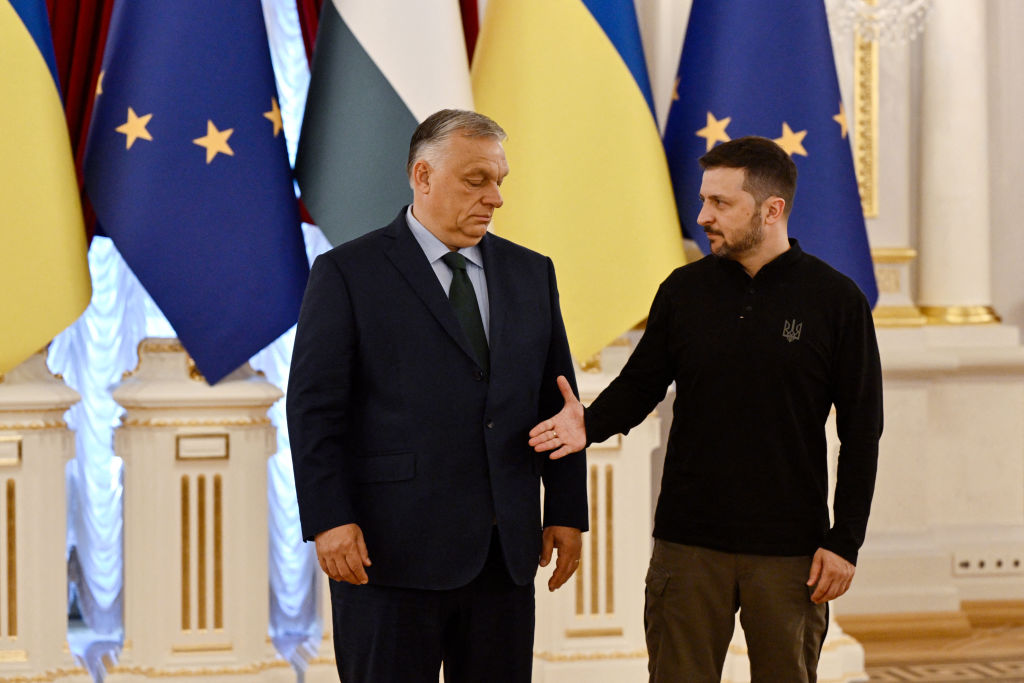
Relations between war-torn Ukraine and its neighbour Hungary have long been strained, but now they are in full-blown crisis. Comments made by Ukrainian President Volodymyr Zelensky on Thursday escalated a bitter dispute over Russian oil supplies into a state of open hostility.
Hungary has infuriated Kyiv — and Brussels — in recent weeks by blocking a €90 billion EU loan for Ukraine. This is retribution for the Ukrainian government’s apparent refusal to restore the damaged Druzhba (Friendship) pipeline transporting oil from Russia to Central Europe. Zelensky finally snapped in a press briefing on Thursday, saying: “We hope a certain person in the EU will not keep blocking the €90 billion… Otherwise, we’ll give the address of this person to our armed forces, to our guys. Let them call him and speak with him in their own language.”
The warning sparked a furore in Budapest. “This crosses all boundaries,” said Hungary’s Foreign Minister Péter Szijjártó. “This is a completely new situation in Europe: that the president of a European country threatens to kill, to murder the prime minister of a Nato and EU member state,” he added. “This is Ukraine, this is Ukrainian ‘culture’; this is the man whom Brussels admires. This is the country they want to bring into the European Union.”
Orbán’s campaign for re-election in April has relentlessly portrayed Zelensky as grasping and malicious, conniving with Brussels elites to make Hungarians pay for an unwinnable war. Ukrainian accession to the EU, meanwhile, is portrayed as a disaster waiting to happen. Orbán responded to Zelensky’s incendiary remarks on Friday by asserting that “we will not pay for someone else’s war, and we will not allow them to join the European Union. We will not comply with these demands even if they threaten us with death.”
The dispute is the most serious yet in the long-running saga of Hungarian objection to support for Ukraine. The Druzhba pipeline at the heart of the controversy has continued to transport Russian oil to Central Europe since the war began. But after it was damaged in a Russian airstrike in late January, Hungary and Slovakia both claimed that it has been left inoperative by Ukraine for political reasons.
After initially attempting to sidestep the issue, Brussels this week pushed for Ukraine to allow inspections of the damage. The bloc has been startled by the intransigence shown by Hungary in vetoing proposed new sanctions on Russia and declaring a volte-face on the vital loan to support Ukraine’s war effort. In a rare rebuke to Zelensky, on Friday a European Commission spokesperson described the Ukrainian President’s remarks as “not acceptable” and asserted that “there must not be threats against EU member states.”
Discussing the pipeline on Thursday, Zelensky said bluntly that “to be honest, I wouldn’t restore it.” He asked whether, while Ukraine faces deadly attacks from Russia, “we’re supposed to give poor little Orbán oil, because without it he won’t win elections?”
The increasingly violent nature of the rhetorical blows is alarming. In his Friday response, Orbán described Ukraine’s reluctance to restore the pipeline as “bandit behaviour” and accused Ukraine of blackmail. Earlier, he warned that Hungary would use “all political and financial means” to break the “oil blockade”, though “not military means, because we are on the side of peace”.
Even so, the Hungarian army has been preemptively deployed to protect key Hungarian energy infrastructure sites. Even Péter Magyar, Orbán’s opponent in the April elections, condemned Zelensky, telling supporters that “no foreign head of state can threaten anyone, not a single Hungarian.” Solidarity from such a staunch critic of Orbán only demonstrates the growing strength of Hungarian anti-Ukraine sentiment. Meanwhile, Robert Fico, the Prime Minister of Slovakia and Orbán’s ally in the oil dispute, suggested that he may now also consider blocking the EU loan for Ukraine in light of Zelensky’s “scandalous blackmailing statements”.
Initially characterised by onlookers as a cynical election ploy on Orbán’s part, the oil pipeline dispute is now escalating dangerously. On Friday morning, Ukraine’s Foreign Ministry claimed Hungary had “virtually taken hostage” seven Ukrainian bank employees in Budapest as they transported cash between Austria and Ukraine. The Hungarian authorities subsequently confirmed their arrest on suspicion of money laundering. Their case — like that of the damaged oil pipeline — remains hotly disputed.
Join the discussion
Join like minded readers that support our journalism by becoming a paid subscriber
To join the discussion in the comments, become a paid subscriber.
Join like minded readers that support our journalism, read unlimited articles and enjoy other subscriber-only benefits.
Subscribe