









November 24 2025 - 1:00pm
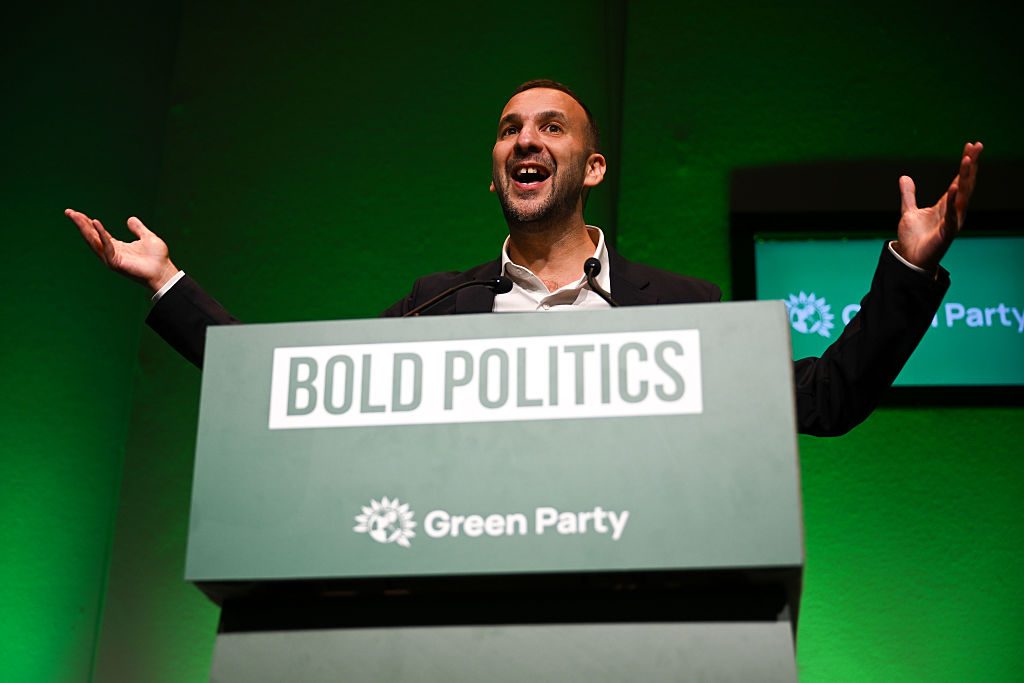
Zack Polanski, leader of the Green Party, is the new disruptor of British politics. So impressive are his party’s recent polling numbers that even Reform UK, which fishes in very different waters for its support, felt the need to put out an attack video last week. However, the party with the most to lose from the Green surge is surely Labour.
In a BBC interview on Sunday, Laura Kuenssberg dared Polanski to stand against the Prime Minister in the latter’s Holborn and St Pancras constituency. The Green leader was amused by the idea. It would be “tempting to take down Keir Starmer”, he admitted, but then said that his priorities in London lay elsewhere.
I bet they do. In last year’s general election, his party came second in 18 of the capital’s 75 constituencies, offering itself as the Left-wing alternative to a Labour Party which had moved closer to the political center. By that standard, this is the biggest concentration of Green targets anywhere in the country.
This has been overlooked by most commentators so far — perhaps because these were rather distant second places, with Labour way out in front. Indeed, London appears to be Labour’s safe space. Apart from Farage’s incursions into Essex and Kent, Reform is not a danger there. Nor is there a Tory revival on the cards. The Liberal Democrats, meanwhile, are confined to a few toeholds on the Surrey borders.
However, that leaves the threat from the Left, which has grown since July 2024. Back then, Labour won 33.7% of the national vote compared to just 6.7% for the Greens. That’s a ratio of over 5:1. But according to the latest polls, the Green vote share has risen to somewhere between 12% and 18% .
At the lower end of the polling range, the Greens make gains in places like Bristol, but London stays safe for Labour. At the upper end, London becomes a major battleground at the next general election. As well as a national majority for Reform, there’d be a stunning breakthrough for the Greens in London. They’d take around 20 Labour seats across a swath of the capital from Ealing to East Ham.
Would the spoils include the Prime Minister’s constituency? Possibly, but in Holborn and St Pancras, Starmer’s main challenger last time was Andrew Feinstein — a Left-wing independent who’s now associated with Jeremy Corbyn’s new party. To avoid splitting the anti-Labour vote, it would make sense for the Greens to stand aside for Feinstein at the next general election — or to recruit him. So for that reason, we’re unlikely to be treated to a Starmer-Polanski showdown.
While that’s disappointing, it does still leave the prospect of a sitting British Prime Minister losing his seat — something that’s never happened before. It’s worth noting that in 2024 the Labour vote share in Starmer’s constituency fell by 17 points. Despite the national result, that’s a bigger hit than the one Rishi Sunak suffered in Richmond and Northallerton.
Perhaps Starmer should have taken that as an early warning sign that Labour’s new voter base — a coalition of public-sector professionals, immigrants, renters and students — isn’t quite as stable as the old one. In London, an insurgent progressive party — planning to abolish private landlords and introduce higher taxes for the rich — is bound to attract disaffected voters on the Left. The problem for the Greens will be capitalizing on this momentum and proving to the middle-class voters of London that they’re not just activists but have the political heft to enact actual change. There’s no ignoring the bad omens for Labour, especially in the capital.
Peter Franklin is Associate Editor of UnHerd. He was previously a policy advisor and speechwriter on environmental and social issues.
 peterfranklin_