









December 17 2025 - 7:00pm
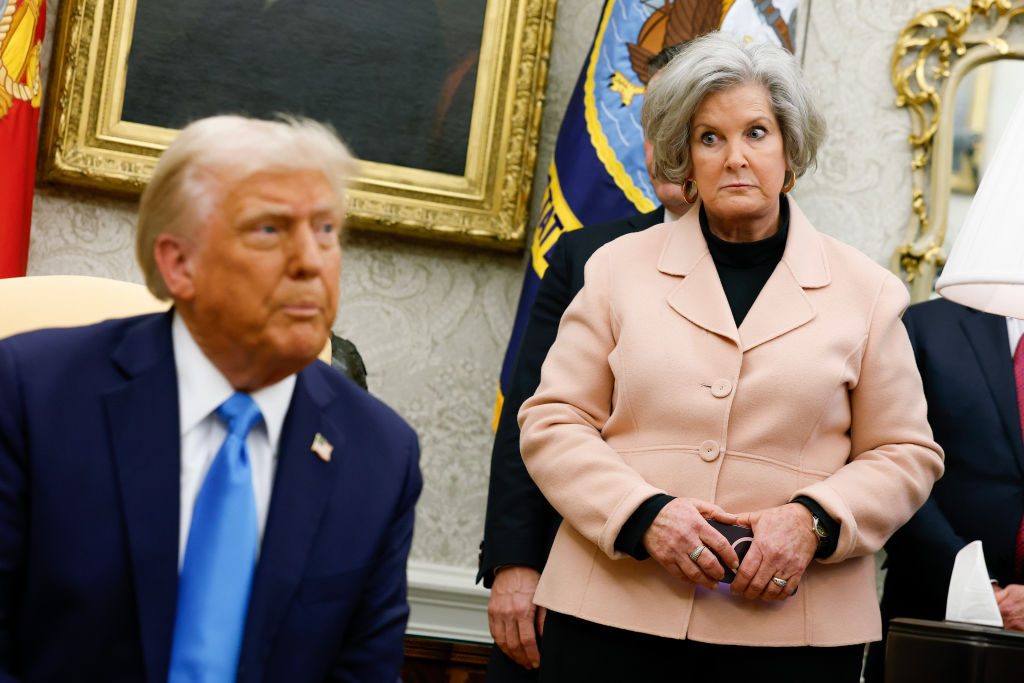
Nobody can explain why the White House cooperated with Vanity Fair on its two-part profile of the second Trump administration. The mind reels as to why Chief of Staff Susie Wiles gave 11 interviews to the journalist Chris Whipple — or why she chose to green-light an extensive photoshoot that Vanity Fair predictably used as an opportunity to embarrass Trump’s closest advisors. Whatever the reason, Wiles thrust an enduring question back into the discourse: if Donald Trump hates the liberal media so much, why do he and his allies constantly talk to liberal journalists?
There are, of course, plausible strategic reasons for this. Republican consultants debate the matter constantly. But cooperating on the record with multiple interviews and a photoshoot that includes the Vice President and Secretary of State is another question.
The affair recalls Michael Scherer’s November profile of Robert F. Kennedy Jr in the Atlantic. RFK Jr cooperated with Scherer despite, as the piece notes, his belief that the journalist had “screwed him before”. Kennedy told Scherer that only “bad articles” have been written on him for the last two decades. So why talk to a reporter at all, let alone one with built-in distrust? “If he screws us on this, it’s just another shitty article in a liberal paper, which doesn’t really hurt me,” Kennedy told his staff, according to Scherer.
That Atlantic’s profile also included a photoshoot and involved multiple interviews, including in Kennedy’s office and his home. What’s the upside of all that time spent talking to Scherer, and taking pictures?
RFK Jr has seen himself featured prominently in just about every major publication. Susie Wiles is known as Trump’s most effective gatekeeper. Both were certainly aware that these articles would not turn out favorably. As much as those of us in media appreciate the access, especially after the long Biden drought, nobody believes Trump officials are talking to the press merely for the sake of the First Amendment.
Vivek Ramaswamy raised a similar point in the 2024 primary election cycle. “Think about who is moderating this debate,” he said during an NBC News broadcast. “This should be Tucker Carlson, Joe Rogan and Elon Musk. We’d have 10 times the viewership, asking questions that GOP primary voters actually care about and bring more people into our party.” At the time, this sentiment touched a nerve on the Right, where the grassroots have long wondered why, exactly, networks that treat conservatives unfairly are given the privilege of moderating primary debates.
Trump himself is known for talking constantly to reporters, even journalists such as Maggie Haberman who rarely provide favorable treatment — or treatment the GOP would even consider fair. The White House doesn’t leak like it did during Trump’s first term, and most attribute this to Wiles, but stories are still clearly planted in liberal outlets.
To be clear, there are myriad justifications for this. Republican communicators will insist many of these outlets are still powerful, cooperating with them can set the narrative in DC, and they’re engaged in a constant push-and-pull with the press to achieve the best possible outcome. Plus, they’ll point out, conservative media still lacks the prestige and gravitas sometimes needed to convey a particular message. Whether or not one agrees with that, it’s still how the Right will explain their cooperation.
In a macro sense, though, it’s a remarkable pattern from Trump World. From a purely strategic standpoint, starving outlets of access could be used to incentivize better treatment from liberal outlets and prop up publications the administration believes to be fair. And in some sense, that’s already happening: Trump reportedly granted Politico an interview on the basis that the outlet named him “the most influential person shaping Europe” earlier this month.
Last January, on the eve of his inauguration, Trump’s incoming administration gave one of its first big scoops to Emily Yoffe at The Free Press. Yoffe is hardly a Trump backer, but her coverage of gender policy has long been some of the best in US media, and The Free Press was seeking to prove itself as a competitor to the old guard. The move made sense, and seemed to intentionally send a message about Trump 2.0.
That decision looked deliberate, coherent, and forward-looking: an attempt to reshape the media hierarchy rather than submit to it. It might be a message for the White House to revisit in the New Year.
