




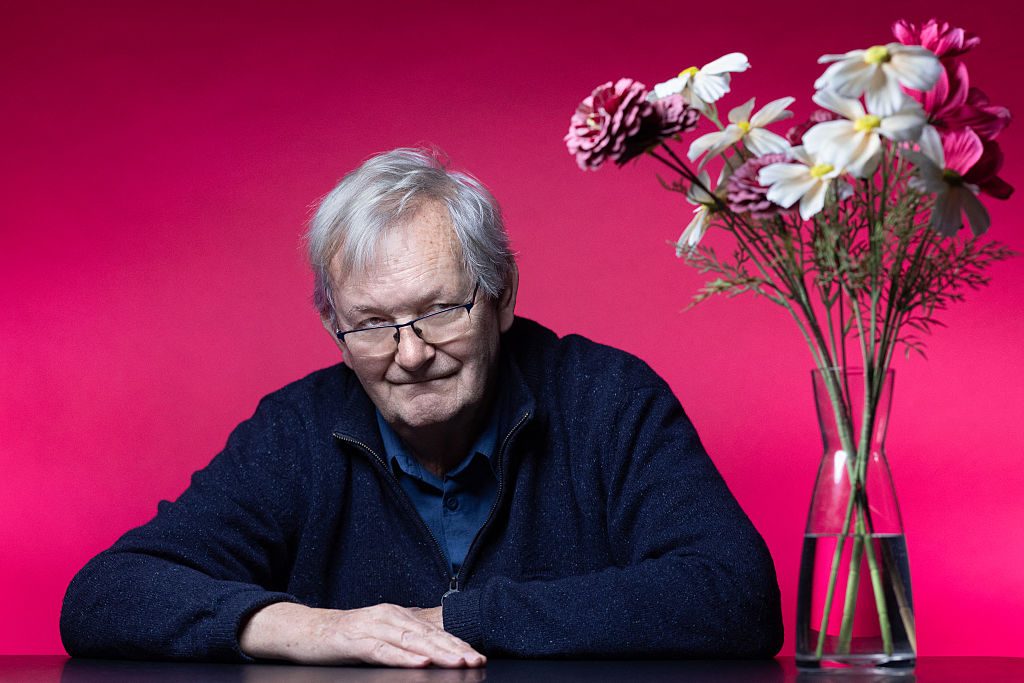




December 8, 2025 - 4:15pm
Photographer Martin Parr died this weekend at the age of 73. A chronicler of the twin English spirits of dourness and eccentricity, he offered a tender, knowing portrait of everyday, working-class Britain from the Eighties onward when contemporary art was becoming increasingly global and theoretical. Some of his photographs hang downstairs in the Old Queen Street Cafe below UnHerd‘s offices. He once photographed my friends and me when we were students; wearing a pair of hideous gardening clogs despite the black-tie dress code, he was as peculiarly English as his subjects.
The Martin Parr Foundation, an archive of photographs and incubator for new artists, promised in its tribute to “preserve and share Martin’s legacy”. But this legacy was almost lost, when the photographer was the victim of a witch hunt and ordered to step down from leading a festival that his organisation co-created.
In 2017, Parr had written the introduction for a reprint of London, a self-published 1969 photobook by the Italian photographer Gian Butturini. In it, a pair of images presented a black woman selling underground tickets opposite a caged gorilla at London Zoo.
But, just a few years later, the rules of social discourse had changed. It was 2020 and Black Lives Matter protesters were shouting “hands up, don’t shoot” at policemen armed only with Victorian batons. British cultural critics were mirroring their American counterparts, who had begun a process of exposing racism in the arts and expunging the guilty artists from public life.
Naturally, Parr was himself liable to be thrown to the progressive slaughter. Student Mercedes Baptiste Halliday, whose father had bought her London as a gift, was appalled by its content and racist connotations. Butturini had died in 2006, so she began a personal campaign against Parr. Halliday said that Parr represented “a generation of white, middle-aged men who do what they want without any consequences […] He is the institution, and we are only beginning to dismantle it.” She picketed Parr’s exhibition at the National Portrait Gallery and, as happened so frequently in 2020, the story spiralled.
UWE Bristol students, who were planning an exhibition at the Martin Parr Foundation, pulled the event. Academics at the institution didn’t object, with a spokesperson saying that “the university is fully committed to diversity, equality and inclusion and supports the students’ decision.” It’s no surprise that this was happening in Bristol where, around the same time, a statue of merchant and slave trader Edward Colston was toppled into Bristol Harbour and replaced by a sculpture of Black Lives Matter protester Jen Reid.
The backlash didn’t stop in Bristol, escalating into nationwide hysterics. Benjamin Chesterton, a producer who’d worked across the BBC and other high-profile organisations, accused Parr of harbouring “contempt for a black teenager”. He told the BBC the photographer “had no choice” but to step down from his role as Artistic Director of the Bristol Photo Festival. Jennie Ricketts, former picture editor for the Observer, piled on and told The Art Newspaper: “There needs to be accountability and reparations made. Anything less simply perpetuates this insensitivity towards black people.”
Parr was obviously shocked. He said he had not taken note of the potential insensitivity of the images and disavowed his support for London. He would give the profits from the book to charity; he asked for unsold copies to be destroyed; he stepped down from leading the inaugural Bristol Photo Festival. Voices in his defence were scarce. It was textbook 2020: minor figures making hay of offence on social media, the eager white/straight/heteronormative allies of the vulnerable group piling on the pressure, institutional silence or complicity from fear of activists, harakiri of the public figure under pressure of complete legacy destruction and the final chilling effect of the story told only in parts: “Didn’t Parr get cancelled for something?”
Following his death, the BPF offered a tribute: “Martin was instrumental in shaping the Bristol Photo Festival from its earliest days, bringing not only his unmistakable sense of humour but also a generosity of spirit.” Clearly, it’s easier to be kind now.
Join the discussion
Join like minded readers that support our journalism by becoming a paid subscriber
To join the discussion in the comments, become a paid subscriber.
Join like minded readers that support our journalism, read unlimited articles and enjoy other subscriber-only benefits.
Subscribe