









January 23 2026 - 10:00am
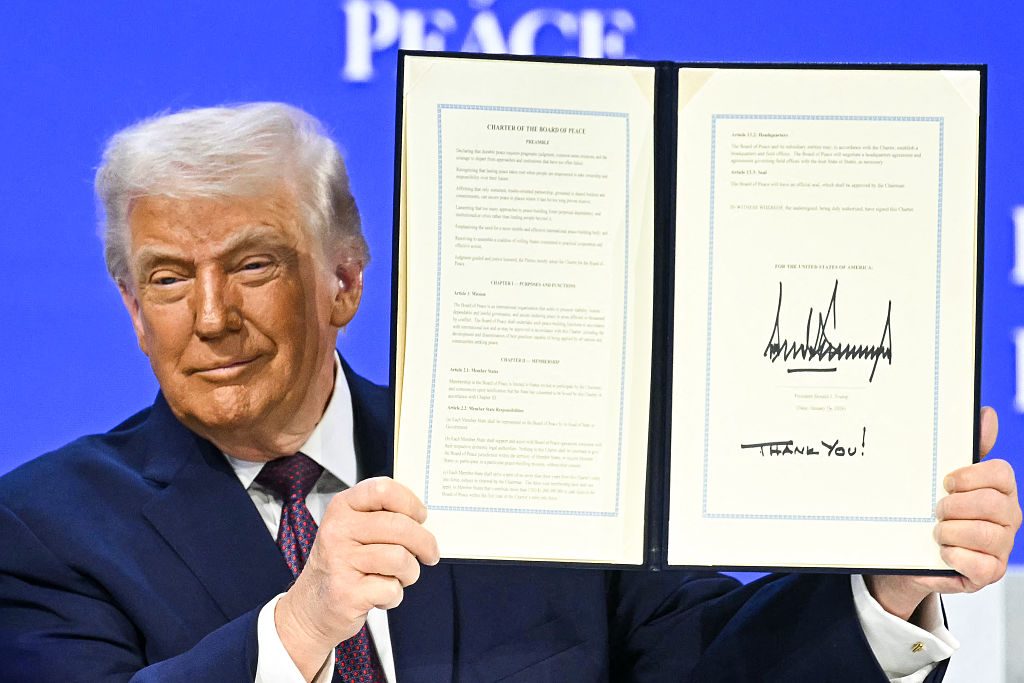
In between the lectures about Europe’s downfall and proclamations about an imminent agreement on the status of Greenland, President Donald Trump had another announcement to roll out in Davos this week. His “Board of Peace” is now officially inaugurated and ready to get to work on resolving the world’s long list of conflicts.
Surrounded by 19 of the leaders who agreed to partake in the new scheme, Trump described the new board as one of “the most consequential bodies” ever created in history. “Once this board is completely formed, we can do pretty much whatever we want to do, and we’ll do it in conjunction with the United Nations”, he said. That last part is a concession of sorts: Washington’s European allies were increasingly concerned that Trump sought to use the Board of Peace as an alternative to the UN, which remains the primary international organization for peacebuilding initiatives.
You can’t blame Trump for wanting to create a body that is leaner, less bureaucratic and more effective at striking agreements than the United Nations. is. Let’s face it: the UN system often creates as many problems as it solves, and its top decision-making unit, the Security Council, is frequently undercut by the great powers. Yet even if the motives are noble, the practicalities of getting Trump’s project up and running can’t be dismissed.
Firstly, membership remains an issue. The whole idea of establishing a Board of Peace in the first place is to cobble together the world’s most powerful players, bring them into the same room, and come to a consensus about how to make global politics more benevolent. Yet outside of Qatar, which has turned into one of the world’s leading mediators, the current membership largely consists of small and middle powers whose capacity to negotiate anything substantial is questionable at best. The process-oriented Europeans are largely sitting out; China has no interest in diluting its own power by joining a Trump-chaired panel; and Russian President Vladimir Putin, a significant source of global destabilization, is still debating whether to join.
Secondly, the Board of Peace will only be as successful as its budget — and right now, it doesn’t have one. Indeed, there are a number of questions as to what participants are expected to contribute. The leaked charter points out that countries seeking permanent membership will be required to give $1 billion to the organization in its first year. But who will control this money? Where will the funds go? And, assuming everybody ponies up, will the resources be adequate to deliver on such a weighty task? The answer is most certainly no, particularly when one considers that these very same countries are already contributing to the UN’s peacekeeping budget and may not wish to spread themselves too thin financially. The US may find itself forced to foot the bill.
Finally, there is the issue of priorities and the national interest. As much as Trump would like to solve every major war on the planet, other members of the Board will have different interpretations and opinions about which conflicts are worth addressing, what is actually possible and — just as importantly — what isn’t. African states will prioritize the war in Sudan, governments in the Middle East will attempt to elevate the issue of Palestinian statehood, and others like Indonesia will likely try to put Southeast Asian conflicts, such as Myanmar’s civil war and the ongoing border dispute between Thailand and Cambodia, on the docket. If Trump aims to tackle all of them, he risks turning his coveted peace project into a rat race.
There is still much to learn about the Board of Peace, and we should give it time to succeed. But the odds are against it.
Daniel R. DePetris is a fellow at Defense Priorities and a syndicated foreign affairs columnist for the Chicago Tribune.
 DanDePetris