









March 18 2026 - 9:00pm
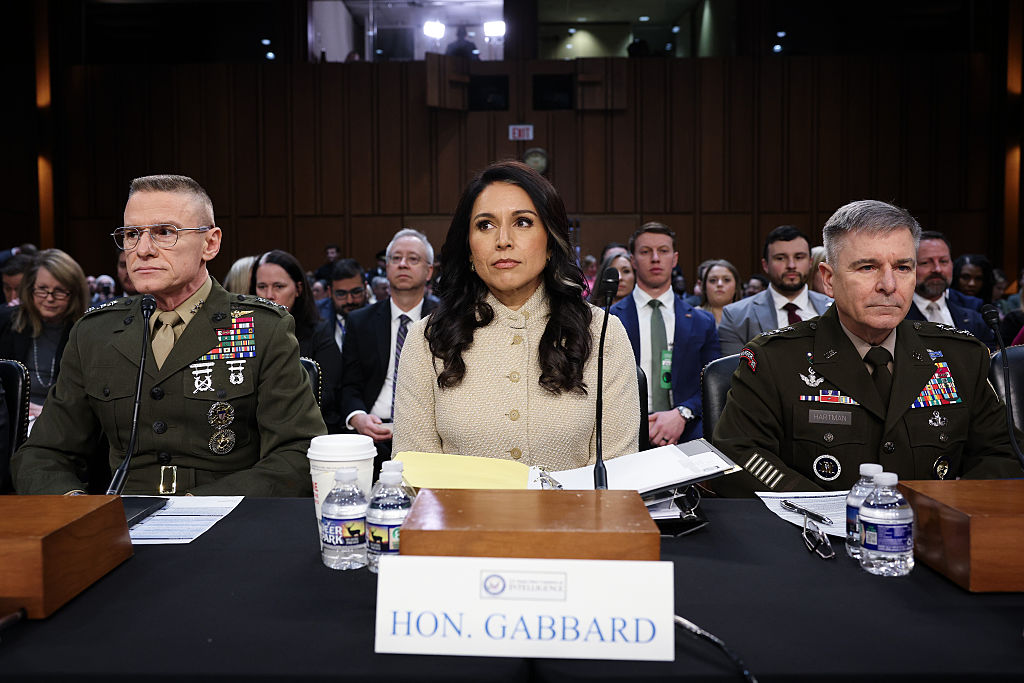
Tulsi Gabbard prioritized her loyalty to President Donald Trump in testimony before the Senate Intelligence Committee today. But the Director of National Intelligence remains under significant pressure within both the White House and the intelligence community she leads.
Gabbard was keen to avoid any comment that might earn Trump’s ire or distrust. She notably skipped prepared remarks stating that Iran’s nuclear program had been “obliterated” by US air strikes in June 2025 and that Tehran had made no effort to rebuild its enrichment capability since. The DNI chief argued unconvincingly that these omissions were intended to save time. But it’s clear she wanted to avoid undermining Trump’s claims that Iran posed an “imminent” threat before the war began. When asked whether the intelligence community assessed that Iran’s pre-war threat was “imminent”, Gabbard replied that only the President could make this determination.
It’s true that the Constitution and historic deference from the Judiciary vest the commander-in-chief with wide latitude to determine the nature of a threat and possible military responses to said threat. Nor is the intelligence community’s analysis infallible. But Gabbard’s evasion here reflects her understanding that the intelligence community did not, in fact, assess Iran’s nuclear threat as “imminent” prior to the war.
This puts her in a challenging position, professionally and personally. At the professional level, Gabbard was clearly avoiding a direct, accurate description of the intelligence community’s assessment. And before taking up her present position, the former Democratic congresswoman had been a prominent critic both of military action against Iran and of exaggerated Bush administration claims about weapons of mass destruction prior to the 2003 Iraq war.
Gabbard said nothing today that will further jeopardize her position within the administration. She’ll seek to do the same when she testifies before the House Intelligence Committee on Thursday. But her problem is that she is increasingly isolated. Intelligence community sources speak often of efforts by CIA Director John Ratcliffe to push out or otherwise minimize Gabbard’s role. And there is no question that Ratcliffe takes on a far more prominent and direct role in briefing the President — something that has been the purview of the Director of National Intelligence in recent years. In Gabbard’s defense, it should be noted that these challenges from critics are as much to do with her bold action on sensitive topics such as Havana Syndrome as anything else.
Her problem is that she is being increasingly outflanked. Administration officials appear to believe that while Gabbard is a loyalist, she is not ideologically so. The restrainer element of the Administration has lost its influence or has different priorities. Vice President JD Vance, for example, is keen to keep on Trump’s good side in pursuit of his Republican presidential primary endorsement come 2028. And the resignation of Gabbard-appointed Director of the National Counterterrorism Center Joe Kent has surely weakened her position further.
Gabbard may yet leave on her own terms if this war drags on. But her appearance before Congress will greatly reduce the credibility of her position if and when she does so.
Democrats want a scalp over the Iran War as their midterm election campaigns heat up. Will it be the Director of National Intelligence? Only Trump can decide.
