









December 18 2025 - 10:00am
Britain’s medicinal cannabis industry is predicted to be worth over half a billion pounds by 2029, and is expanding wherever marijuana consumption is decriminalized. That and most other drugs have been effectively decriminalized in Scotland, so it’s not surprising that a Sydney-based multinational, Breathe Life Sciences, is expanding into the country with a factory making medicinal cannabis products. It promises to employ up to 100 people in a new plant located in Melrose in the tranquil Scottish Borders.
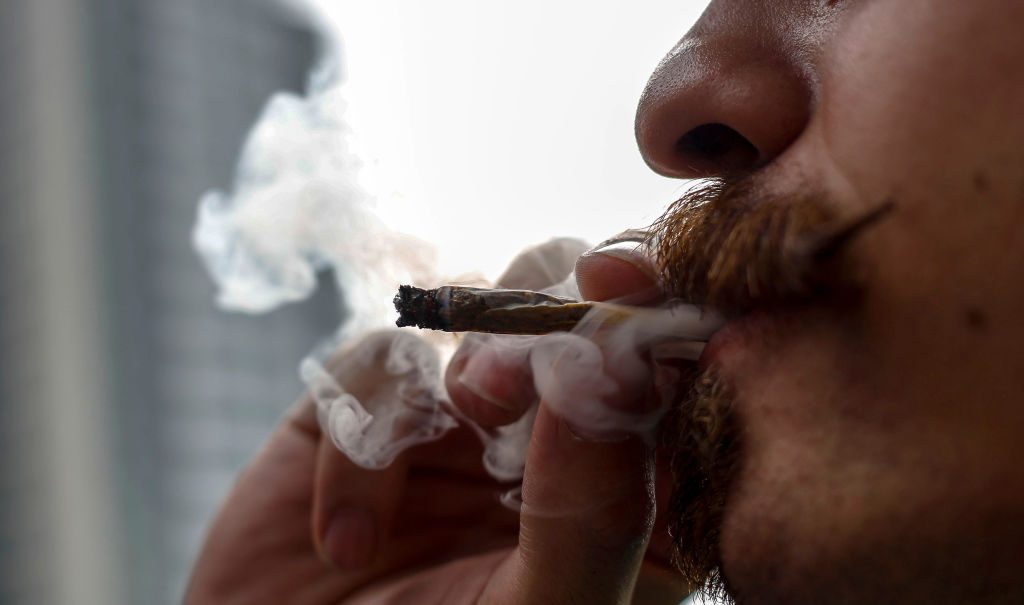
In recent years, cannabis has been widely puffed in the media as the latest wonder drug, a salve for all ills. Many take it for chronic pain, while others use it to ease discomfort arising from conditions such as epilepsy and multiple sclerosis. Others just take it for fun.
Concrete evidence for the drug’s medical effectiveness is hard to find, but there is a considerable cultural investment in cannabis being not just safe but positively beneficial. At least that seems to be the view of the Scottish government. Cannabis remains a controlled drug in Scotland, but police rarely prosecute those in personal possession and medical cannabis has been fully legal since 2018. In 2021, the Lord Advocate, Dorothy Bain, announced that police should not prosecute those in possession even of Class A drugs such as heroin, turning Scotland into a hard-drug tolerance zone.
It is often difficult to determine whether medical cannabis is being consumed purely for medical reasons, or for recreational purposes, or both, since it is taken essentially for relaxation and mood enhancement. But most clinicians seem to think it is low-risk.
However, Scotland is not a country which has had a positive experience of substance decriminalization. It notoriously has the worst drug death rate in Europe, mainly from the abuse of benzodiazepines (“street benzos”) and heroin. Three times as many Scots die of drug abuse as English people. In response to the problem, Glasgow earlier this year opened a “safe” consumption room. There are no accounts yet of substantially decreasing drug abuse, but locals have reported drug paraphernalia littered in the streets and an increase in addicts in the area.
It is not easy to isolate the effects of cannabis, because it is often taken as part of a cocktail of drugs by so-called “polydrug users”. But buried in the statistics there are signs of an increasing rate of psychotic disorders arising from cannabis use. Public Health Scotland says the rate of hospital stays from cannabinoid-related conditions has increased roughly eightfold over the past 25 years. The Scottish Mental Health Census 2024 detailed that cannabis is now the most common substance used by psychiatric inpatients who report using drugs. Figures collated from Public Health Scotland appeared to show that, in 2023, cannabis was a greater cause of psychiatric hospital admissions even than opioids.
These are generally young people buying street cannabis, of course. The owners of Breathe Life Sciences insist that its own cannabis products are rigorously tested, quality assured, “and of course fully legal”. These products can only be purchased with a prescription and do not appear in Edinburgh’s “head” shops along with the bongs and Rizla papers.
The evidence for the effectiveness of medical cannabis is mixed, to say the least, and is still based on small-scale studies and anecdotal evidence. The lack of randomized clinical trials, nearly a decade after medical cannabis was legalized in Scotland, has worried many clinicians and even advocates of legalization.
It is reasonable to worry that the wider use of medicinal cannabis, combined with decriminalization, is leading to a much broader acceptance of the drug generally by people who think it is entirely safe. Indeed, it is hard to avoid the reek of pot in areas such as Glasgow’s bohemian West End. The Scottish government, however, is always anxious to be at the leading edge of progressive policymaking and has been pressing Westminster to follow its lead and fully decriminalize cannabis and harder drugs. The main thrust of Scottish drug policy is to “de-stigmatize” the drug user, rather than criminalizing them.
Naturally, Breathe Life Sciences has received a government grant of £350,000 and a loan of half a million for its happiness factory. Taxpayers can only hope these funds are well spent, and not more public money vanishing in a puff of smoke.
Iain Macwhirter was political commentator for The Herald between 1999 and 2022, and is the author of Disunited Kingdom: How Westminster Won a Referendum But Lost Scotland. He was Rector of the University of Edinburgh from 2009-12.
 iainmacwhirter