








23 March 2026 - 4:00pm
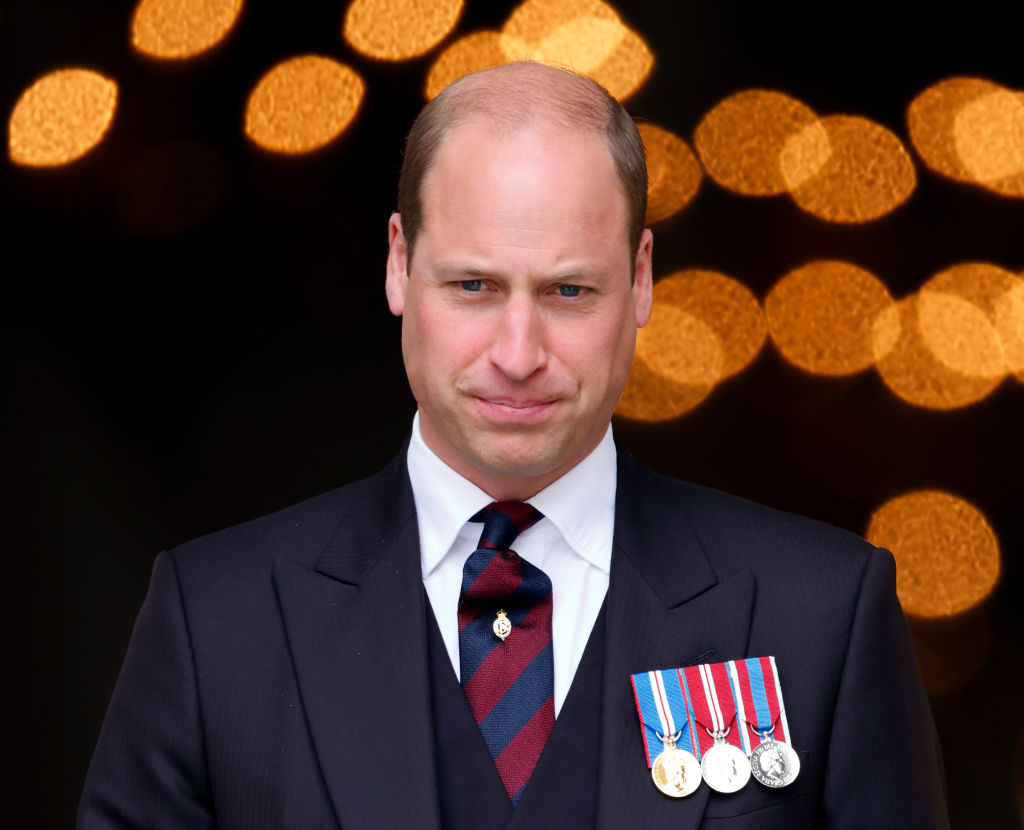
Over the weekend, the Prince of Wales offered a rare insight into his relationship with the Church of England. In describing what he called his “quiet faith”, an aide close to the Prince told sources that William was dedicated to Christianity and believed it to be a major part of his life. I was reminded of David Cameron’s remark that his adherence to Christianity was like “Magic FM in the Chilterns”, in that it was decidedly intermittent and often rather faint.
Prince William has sometimes appeared to present a difficult problem: how to integrate a monarch who basically rejects Christian belief entirely into an explicitly Christian constitution. Unlike his father and grandmother, William has displayed remarkably little interest in faith. He seems to rarely attend church outside of special occasions when it is expected of the royals. He has not patronised the Prayer Book Society or made explicitly Christian broadcasts or co-authored books calling for a return to perennial religious-aesthetic values. Instead, he has confined himself to safe causes favoured by secular-minded upper-class Millennials: mental health, veterans, youth work, and breaking down various forms of stigma.
This new emphasis might be the outcome of advice given to William that he needs to associate himself more strongly with the Church, as his own accession draws near. There have probably been monarchs before who were privately sceptical, but those individuals were operating in a completely different world. This was when press deference and social norms made it more feasible for royals to go through the motions without indicating their personal views.
The hard truth for William, and other royal doubters, is that without the Christian religion as a metaphysical scaffolding, the monarchy is significantly less defensible and intelligible. In this sense, that’s why he is making this overt pro-Church turn: to force through the idea that religion is paramount in the reason why he is monarch. There is a practical-utilitarian case to be made for a somewhat non-political figurehead — a check on the ambition of power-hungry demagogic politicians. But most pro-monarchy reasoning goes much further than this, either explicitly or implicitly.
Other defences are offered with intellectual ballast: tradition, national continuity, the wisdom of the ages, and perhaps even the maintenance of appropriate social hierarchy. But at the core of all of those, defenders of monarchy must, by definition, support the hereditary principle. Even the recent slimmed-down coronation asserted that Charles was in some sense chosen by God, with a special responsibility. He was anointed with holy oil by an archbishop and made solemn, sacred vows.
Not all of this is inherently Christian. But most of the above arguments presuppose some form of eternal order, some Platonic ideal of good government against which existing human societies must be tested. The swearing of oaths is a form of reaction against mere utility; it is premised on the existence of spiritual values. It is hard enough to maintain the ancient constitution when most of our intelligentsia no longer believe in such things. If a King himself barely accepts them, then we are in something approaching a crisis.

Join the discussion
Join like minded readers that support our journalism by becoming a paid subscriber
To join the discussion in the comments, become a paid subscriber.
Join like minded readers that support our journalism, read unlimited articles and enjoy other subscriber-only benefits.
Subscribe