








February 4 2026 - 4:00pm
Peter Mandelson liked being a Lord. In this he was not unusual. “One thing I didn’t understand & screwed up many times when I first got involved with politics,” Dominic Cummings once remarked, “was not understanding the power of PEERAGE as an incentive: it’s much much bigger than you think.”
Cash-for-honors scandals often grace the headlines, but really they are part of Britain’s constitutional furniture. There is no use getting worked up over “cronyism” in the House of Lords, because cronyism is what the House of Lords is for. Every country has its own system of patronage. The United States, having banned titled nobility, resorted for a time to “spoils” in the civil service, and now to ambassadorships and other sinecures. Plenty of countries run on clannishness and nepotism. Better, perhaps, for the cronies to prance about with their trinkets and baubles, even to wear out their voices in an impotent debating chamber, than for them to wield any real power.
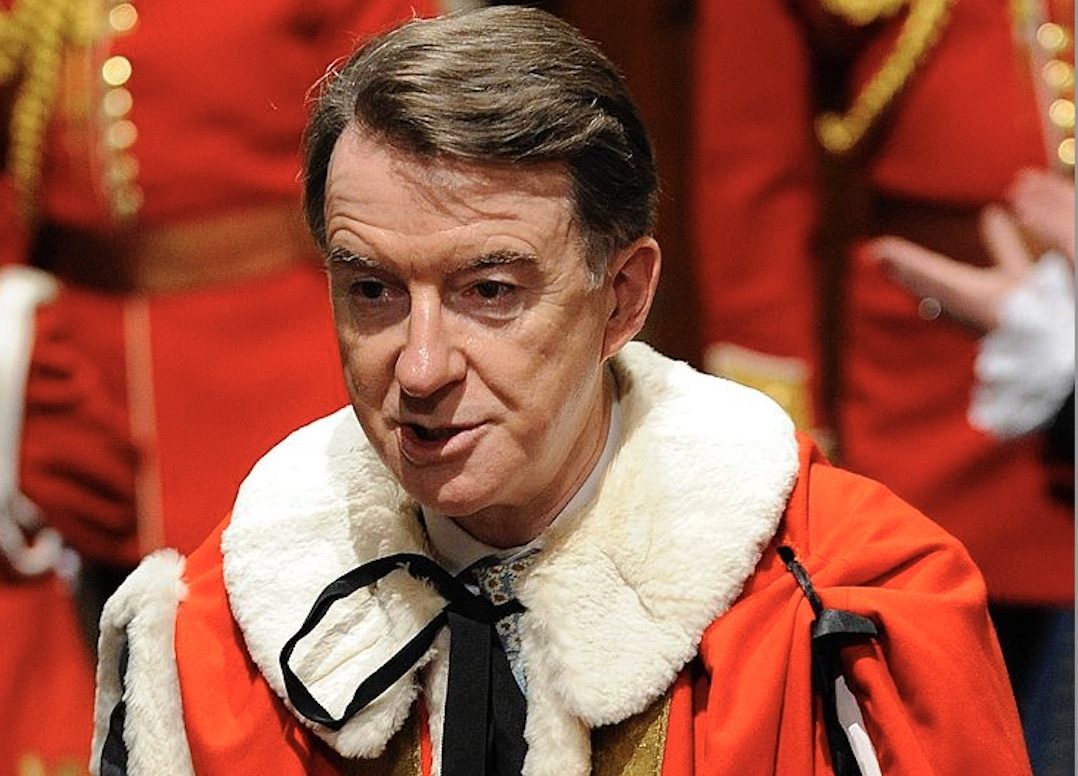
Peter Mandelson liked being a Lord, and one would wager that he liked it better than most. Partly, that’s because he wielded more power than most — as business secretary, ambassador, Prince of Darkness, and éminence grise. There was also the matter of personal vanity, and of family pride. Mandelson’s grandfather, Herbert Morrison, was a life peer of early vintage: almost all his colleagues on the red benches sat there by hereditary right. As Lord Mandelson brushed shoulders with a few of their grandsons — having helped to shrink their number in 1999 — he must have felt a certain satisfaction.
Sitting in the House of Lords was only one half of the fun; calling himself “Lord” was the other. It was catnip for those whom he most wanted to impress. “Need a Lord on the board?” he asked Jeffrey Epstein in November 2011. In 2010, Epstein told his associate Boris Nikolić that Mandelson would never himself ascend to be prime minister because “no lord is allowed to”; the peer “can’t resign the title” except, he joked, by marrying a royal, perhaps Princess Beatrice.
There is much incorrect, here, of course, but it is true that to be deprived of a peerage is no easy feat. Hereditary peers may relinquish their title, as Tony Benn famously did; a life peer may not. To strip Mandelson of his title will require an Act of Parliament, with which the Government may now press ahead. Keir Starmer this afternoon said the former US ambassador had “betrayed our country”, and has reportedly asked officials to draft legislation to hasten the process.
John Sewel, who retired from the House of Lords in 2015 after a drug and prostitution scandal, remains Lord Sewel; Nazir Ahmed, imprisoned for child sex offenses, remains Lord Ahmed. In fact, in the absence of any legislation on the matter, Andrew Mountbatten-Windsor remains the Duke of York: on this the royal warrant has no effect. The power of Parliament to revoke peerages, rather than simply remove people from the upper house, was invoked for the first and the last time during the First World War, on grounds of treason. That word, vis-à-vis the Mandelson affair, has not been far from people’s lips.
When Nikolić asked why Mandelson had accepted the peerage in the first place, Epstein replied: “He was removed twice from the govt in disgrace. when they offered him redemption, he grabbed it.” The peerage thus proved to be, in Mandelson’s case, as powerful an incentive as Cummings has claimed. Ambassadorships and sinecures can be taken away in an instant — as Mandelson knows well — but the trouble is that our present system of patronage, based on life peerages, is all carrot, no stick.
Once he had grabbed his redemption, once he had become Lord Mandelson, there were few real means to keep him in check. Starmer, after his usual fashion, wants to “modernize disciplinary procedures” within the Lords, but all that really has to be done is to blow the dust off a parliamentary prerogative which has lain dormant for 109 years. It might be of value in the future. If the promise of a peerage can incentivize certain kinds of behavior among the great and the good, the present and credible threat of their removal can do the same.

Join the discussion
Join like minded readers that support our journalism by becoming a paid subscriber
To join the discussion in the comments, become a paid subscriber.
Join like minded readers that support our journalism, read unlimited articles and enjoy other subscriber-only benefits.
Subscribe