




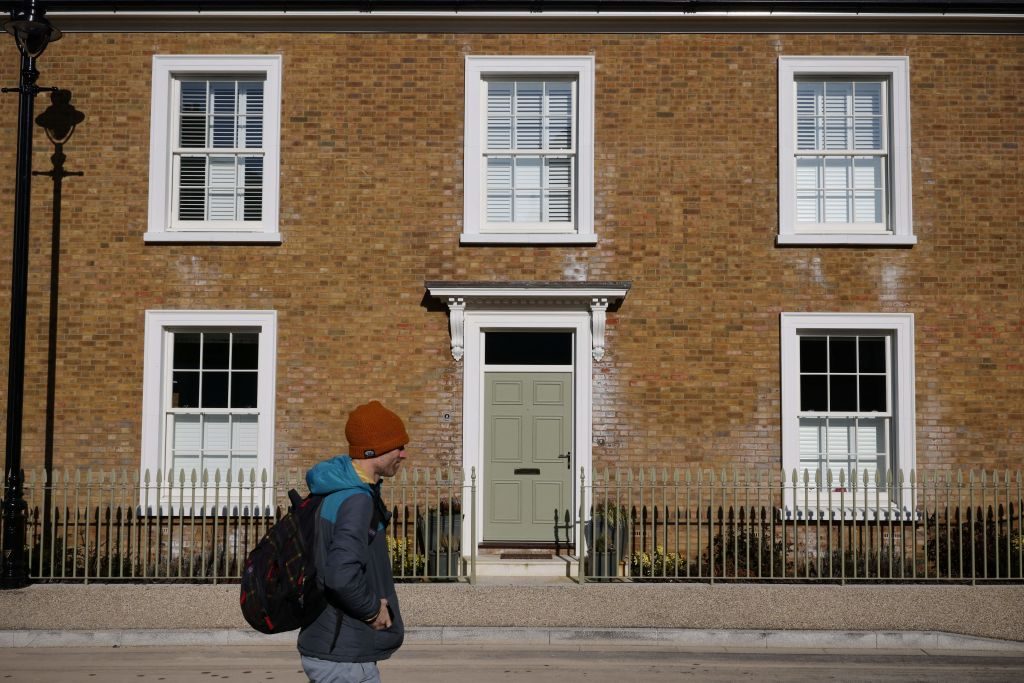




24 January 2026 - 1:20pm
One could be forgiven for missing it, but the Government has just profoundly rewritten English design policy, stripping out all the “hooks” that support locally popular new places.
First, came the new “National Planning Policy Framework” before Christmas. This week, the so-called “Design and Placemaking Planning Practice Guidance” (officials love prolixity) emerged from the Housing Ministry.
Why does it matter? Five years ago, working with Sir Roger Scruton as co-chair of the Building Better Building Beautiful Commission, I drafted changes to national policy to elevate the importance of creating new places that people love, which can endure and nestle happily in the landscape.
Part of this included support for councils to create clear visual design policy strongly reflecting local preferences, or “design codes”. This is the best way to have your cake and eat it, as it can be used to provide local developers with certainty about what is acceptable, thus supporting development but also referencing what local people like so that places evolve in ways that remain recognisable to the neighbourhood.
That promise was never fully realised. Too many design codes were too long or loosely written. Too few councils had the skills to enforce them. But the intent was unambiguous, and it was starting to work. Council officials reported better applications and a speedier process. In Lichfield, widespread support for a popularly beautiful site-specific code has “unlocked” a sensitive site after 25 years. Many homes will follow.
Codes were to sit at the heart of decision-making. Critically, under the system we were starting to create, they were clearly hooked into local preferences. Those policy “hooks” are now being swept away. All references to popular design have been excised. Eight references to beautiful places drop to one. Where the previous guidance encouraged codes to care about what buildings’ facades look like, new policy discourages this.
There are many sensible elements to the Government’s new guidance. The framework has been helpfully simplified with needless guff removed, some excellent diagrams, and welcome references to and illustrations of trams. However, this is ultimately an elitist document. It will make life harder for small builders by reducing planning clarity. We’re back to bumf, not fast-tracks for permissions which follow clear rules.
The new policy is also jargon-heavy: a “landscape and natural feature zone” is presumably a verge. It attempts to set policy on room heights and size, creating complicating clashes with building regulations. One former reference to “private amenity” increases to 17.
Architecture is a public art: it shapes our common home. Unfortunately, architects tend to develop different tastes to the general public, in what is known as a ”design disconnect”. The old policy adjusted for this. The new one encourages it. The blob is back.
Design panjandrums are delighted, but they cannot see that they are the main victims of the Government’s new design policy. One consequence of more waffly policy will be that developers can easily ignore it. I recall one developer telling me: “we don’t do really ‘do design’. We find that people don’t like it.” A housebuilder added: “we only use architects when the public sector forces us to.” Expect more cookie-cutter boxes.
The case for making new homes as lovely as old ones is, for now, lost. This matters. Only 2% of British people trust new development to improve old places. Opaque complexity, however expert, is never the public’s friend. As Adam Smith wrote, “people of the same trade seldom meet together […] but the conversation ends in a conspiracy against the public.”
Join the discussion
Join like minded readers that support our journalism by becoming a paid subscriber
To join the discussion in the comments, become a paid subscriber.
Join like minded readers that support our journalism, read unlimited articles and enjoy other subscriber-only benefits.
Subscribe