









January 30 2026 - 3:40pm
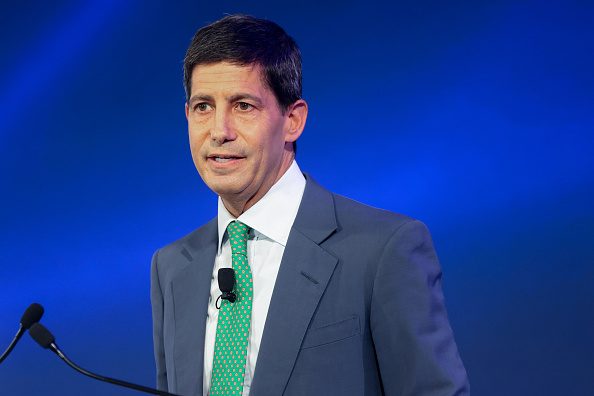
Two salient facts that accompanied Donald Trump’s selection of Kevin Warsh to be the next Federal Reserve chairman are that the choice was delayed for so long, and that the dollar rallied on the news. Which is to say, the markets liked this decision more than the President did.
Warsh was never going to be Trump’s first choice as chairman — or probably even the second or third. Other reported contenders for the role, including Fed governor Christopher Waller and BlackRock executive Rick Rieder, were hardly ideal either. Try as he might, the President couldn’t find someone who would implement his wishes to cut interest rates steeply while commanding sufficient authority over both the Board of Governors and Wall Street to make it happen. Eventually, instead of an uber-dove, he got a fairly conventional central banker.
But to call Warsh’s appointment a return to monetary orthodoxy doesn’t quite capture the complexity of the man. Jerome Powell will probably approve the appointment, but Warsh is unlikely to continue the outgoing chairman’s legacy. Instead, he offers a return to an earlier time — that of central bankers like Alan Greenspan, before the ultra-loose money era and its experimentation with quantitative easing.
While Warsh was sitting on the Fed at the time of the 2008 global financial crisis and played a part in the implementation of quantitative easing, he has since criticized the central bank for going too far and now says he wants more aggressively to pare back its balance sheet. Were that to happen, it would probably knock down share prices and cause bond yields to rise — which is not at all what Trump would want.
But while this gives Warsh the reputation of a hawk, he also believes that technology will raise productivity so much that the economy can speed up without risk of overheating. In other words, while allowing Treasury yields to rise, he could equally lead a charge to cut short-term interest rates, and no doubt assured the President of that.
Importantly, Warsh, unlike some of the other names Trump was pondering for the post, is well-respected within both Wall Street and the offices of the central bank. As such, he will be more likely to corral majorities than one of Trump’s preferred options would have done. It’s just possible, therefore, that the administration opted for a “Nixon in China” bet with this appointment — the possibility that it would take a recognized hawk to lead the shift to an easing stance.
Either way, this selection could turn out to be historic, in the way Paul Volcker’s chairmanship in the late Seventies and Eighties was. The administration is still pursuing its legal cases against Powell and Lisa Cook, and while there’s little expectation now that it will get its way, a bombshell development could reignite the war over Fed independence. Meanwhile, if inflation does rise this year the Fed will have to choose: does it support growth or preserve the value of money, even at the risk of a recession?
Today’s much hotter-than-expected Producer Price Index report provided a hint of what might lie ahead. If next month’s Consumer Price Index also shows an increase, all while the job market remains anemic, the dilemma will grow acute. Back in 1979, Volcker chose to lance the boil of inflation at the risk of a deep recession, and his achievement has become the gold standard of central banking ever since.
Trump would like central banks to shed this inflation fixation and buy into his renewal project. Sooner or later, Warsh will be forced to pick a side. His decision may, as Volcker’s did, set the identity of the Fed for decades to come.
John Rapley is an author and academic who divides his time between London, Johannesburg and Ottawa. His books include Why Empires Fall: Rome, America and the Future of the West (with Peter Heather, Penguin, 2023) and Twilight of the Money Gods: Economics as a Religion (Simon & Schuster, 2017).
 jarapley