








6 February 2026 - 12:15pm
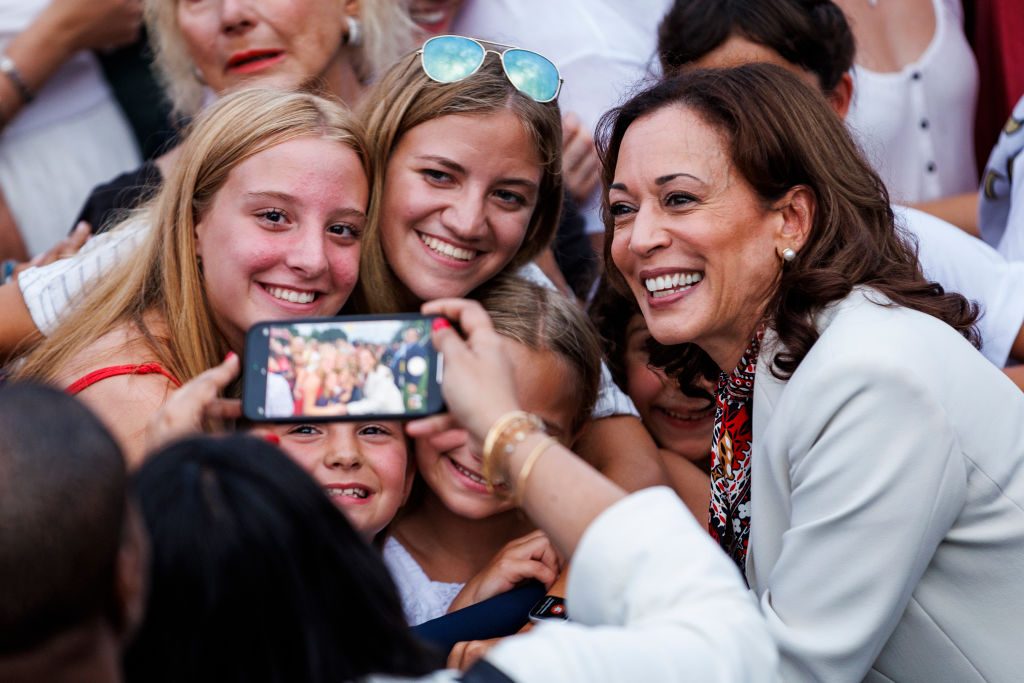
Kamala Harris relaunched her dormant KamalaHQ social media accounts yesterday as “Headquarters”, a self-described “Gen Z-led progressive content hub” — good grief — run through People For the American Way. The stated goal: to build permanent digital infrastructure that outlasts election cycles.
Within hours, two former top Joe Biden aides were sniping at each other publicly over it. Stefanie Feldman, Biden’s former White House Staff Secretary, asked the obvious question: how will it be measured as to whether this content actually persuades or mobilises anyone? She noted that few political digital teams measure success beyond views and likes, and has watched them celebrate posts as “effective” that were in fact getting ratioed with hostile replies. Rob Flaherty, the former Biden and Harris deputy campaign manager who will advise the new project, publicly dismissed Feldman as lacking a “serious or sophisticated understanding of what digital is or does”.
But Feldman is right, and Flaherty’s response reveals the problem. KamalaHQ’s TikTok generated billions of views and millions of followers, but youth turnout dropped from 50% to 42% and Harris’s lead with voters aged 18-29 collapsed from Biden’s 25 points to roughly four. Young women still backed Harris by 18 points, but young men swung to Trump by 14, with the Republican candidate winning 18-29 men by 49 to 48. As one research group put it after the election, social media gave Harris’s campaign a “hall of funhouse mirrors” where viral coconut memes and celebrity endorsements created the illusion of inevitability while converting few new voters.
Trump’s approach worked for the opposite reason. He spent a fraction of what Harris did on social media ads ($611,000 to Harris’s $12.2 million in the week after their debate) and instead showed up on nine podcasts hosted by men with massive, predominantly male audiences. Among these were Joe Rogan (17.3 million subscribers, 80% male), Theo Von, Andrew Schulz, Logan Paul, and the Nelk Boys. The Wall Street Journal found that nearly 50% of persuadable voters in 2024 did not have cable television and consumed content primarily through streaming and podcasts. Trump’s campaign surveyed 20,000 people to identify 6.3 million persuadable voters in seven swing states, and targeted them with a high degree of cost-effective precision.
This strategy was reportedly inspired by Trump’s 18-year-old son Barron, who worked his network of influencer contacts to arrange bookings. Harris’s campaign, meanwhile, treated influencers as a transactional media channel and prioritised short-form clips over the long-form conversations where parasocial trust actually forms. This is what stage-managed, institutional digital strategy always looks like, such as when Hillary Clinton’s team famously had dozens of staffers workshop the tweet “Delete your account” at Trump in 2016. It briefly went viral, won plaudits in millennial-filled press rooms, and then achieved nothing measurable.
The good news for Democrats is that many of the podcasters who delivered young men to Trump have since turned on him. Rogan called ICE raids on construction workers “insane”. Schulz said the President was “doing the exact opposite of everything I voted for”. Adin Ross told his viewers he wished he’d never got into politics. By December 2025, the Harvard Youth Poll found that just 32% of men aged 18-29 approved of Trump’s job performance, and 62% disapproved. But this does not mean that they’ll automatically turn towards the Democrats.
After all, that same Harvard Youth Poll asked young Americans for one word to describe each party: for Democrats it was “weak”; for Republicans, “corrupt”. Individual Democrats such as Pete Buttigieg and Ro Khanna have grasped this and started booking themselves onto Schulz’s Flagrant show as personalities rather than party surrogates, which is the right instinct.
The true lesson of 2024 was that authentic individual voices build parasocial trust with audiences who distrust institutions — and if that trainwreck of a 60 Minutes interview was any indication, Harris is and will remain as inauthentic and frankly incompetent on the mic as it gets. Unfortunately, Headquarters is working with a bad product — and no amount of likes, shares and retweets will undo that.
Oliver Bateman is a historian and journalist based in Pittsburgh. He blogs, vlogs, and podcasts at his Substack, Oliver Bateman Does the Work
 MoustacheClubUS
Join the discussion
Join like minded readers that support our journalism by becoming a paid subscriber
To join the discussion in the comments, become a paid subscriber.
Join like minded readers that support our journalism, read unlimited articles and enjoy other subscriber-only benefits.
Subscribe