








5 February 2026 - 10:00am
The Left-wing Sunrise Movement’s national boycott of Hilton over two fatal shootings in Minneapolis involving federal immigration agents is gathering steam. In Minneapolis and St Paul, activists targeted several hotel properties they believed were housing Immigration and Customs Enforcement personnel, and local organisers reported that some properties agreed to stop accommodating ICE as a result of sustained pressure.
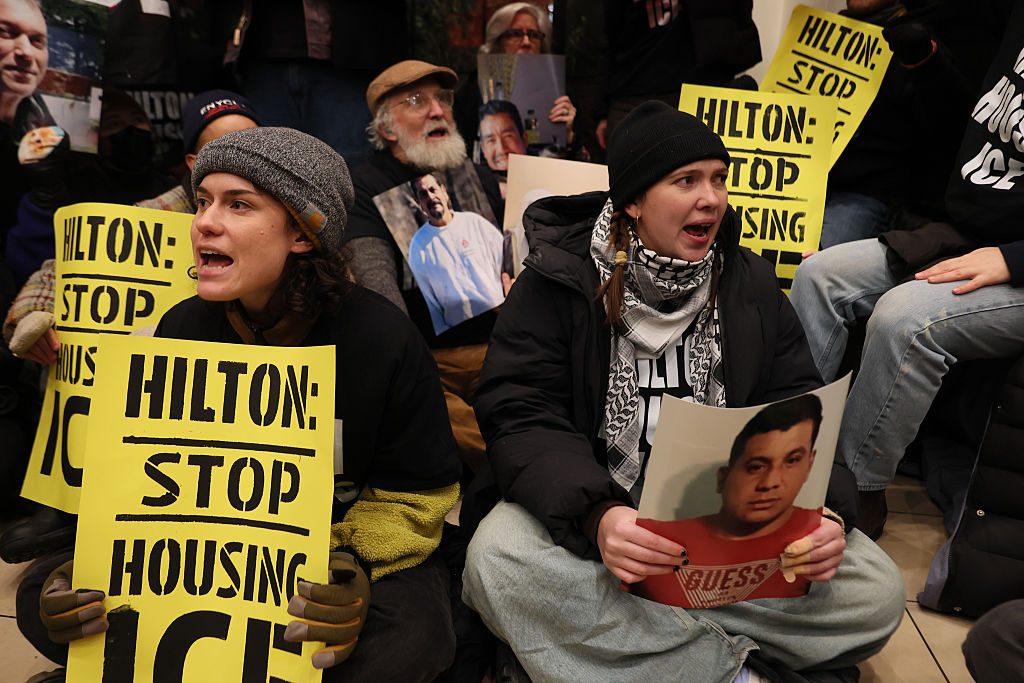
Last week, the boycotts spread to other parts of the country, including New York City. There, dozens of demonstrators occupied the lobby of a Hilton property in Manhattan, demanding that the chain cease providing lodging to immigration enforcement agents. The protest ended with multiple arrests by police.
The Sunrise Movement’s campaign presents a contradiction for progressives. For an organisation which professes to support “good, union jobs for all”, targeting a heavily unionised employer and undermining the livelihoods of hospitality workers, many of whom rely on tips, undermines that claim. Indeed, this poorly targeted action will have a tangible, negative impact on the very people progressives claim to care about.
Founded in 2017, the Sunrise Movement aims to marry climate policy with economic and employment priorities. But, much like Greta Thunberg, it has pivoted away from climate change and towards new social causes. In response to the second Trump administration, Sunrise has acknowledged a need to transcend its original mission to meet what it views as a crisis moment. Strangely, that evolution now finds the organisation targeting the very hotels whose workers it once claimed to champion.
This shift was crystallised in the movement’s statement about Hilton: “It’s time. BOYCOTT HILTON. Don’t stay at Hiltons. Tell everyone you know to stop staying at Hiltons. If you have reservations at a Hilton, cancel them,” read one post. Sunshine also called out Hilton as collaborators: “This company needs to learn a lesson: if you sell out our community to fascists, we’re coming after your bottom line.”
Any successful boycott, not to mention occupations and riots, will have consequences for Hilton and its employees. Given that there are over 150 unionised Hilton hotels in the United States, and a significant proportion of the hospitality industry’s workforce are immigrants, any boycott will hurt them. A reduction in customers and cancelled events means fewer tips — a mainstay in hospitality — and adverse business conditions affect bargaining power.
In contrast to Sunrise, organised labour approaches boycotts with extreme caution, treating them as a targeted economic weapon rather than an ideological call to arms. That is why, for example, the AFL-CIO has well-developed boycott policies.
Sunrise is planning more direct action. It hopes to harness a mass movement to disrupt existing power structures and establish its own influence. According to Executive Director Aru Shiney-Ajay, “the way that you get power comes through organised money, organised people, or organised ideas. If you can get masses of people to be able to do the same thing together and direct it in a smart, strategic way, I think if we do that at scale, then, yeah, we start winning.”
Join the discussion
Join like minded readers that support our journalism by becoming a paid subscriber
To join the discussion in the comments, become a paid subscriber.
Join like minded readers that support our journalism, read unlimited articles and enjoy other subscriber-only benefits.
Subscribe