









January 15 2026 - 10:00am
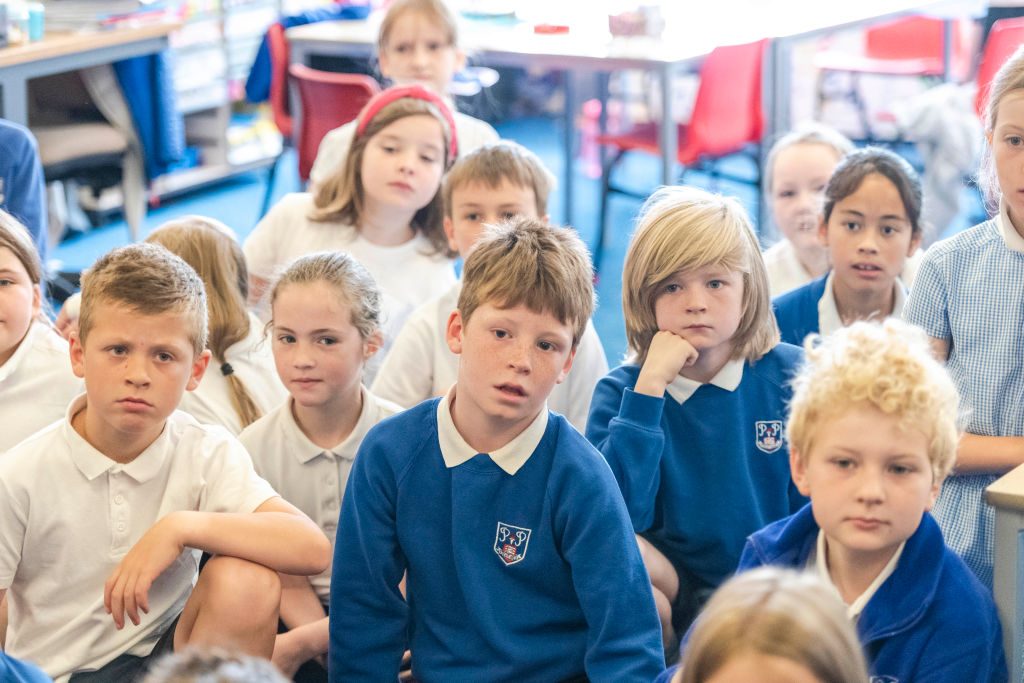
At the weekend, the Financial Times reported that growing numbers of children are starting school unable to grip a pencil, hold a knife and fork, go to the toilet, or even recognize their own name. When he came into office, Prime Minister Keir Starmer promised that the Government would ensure at least 75% of English five-year-olds would be ready for school. Yet only around 68% of kids are deemed to be school-ready, with that figure falling to 62% in poorer local councils such as Rochdale. So, what’s going on?
Excessive screen use is often blamed for stunting children’s physical and emotional growth, and with good reason. But focusing on technology alone misses a deeper cultural shift that is characterized by a growing reluctance among adults to set and enforce limits.
Parents today are under extraordinary pressure. We are expected to be entertainers, teachers, sports coaches, and therapists at any given time. Parents are increasingly viewed as an all-powerful force, capable of shaping every child toward a bright or a bleak future. The message is clear: if we get it wrong, we may permanently damage our children. If we get it right, our children could be successful beyond our wildest dreams. No pressure, then.
This could be why parents are so frequently criticized, while broader social failures are ignored. The shortage of safe, interesting spaces where children can play freely, without supervision, is rarely addressed. Community support for new parents continues to be neglected. The economic reality that requires both parents to work full-time is treated as inevitable, despite the strain it places on families. When a child struggles or acts out, it is easier to mock the parents than to confront these wider failures; we have moved a long way from the idea that it takes a village.
Into this anxious gap stepped gentle parenting, which in its idealized form promises emotionally secure children raised without fear or coercion. In practice, it typically creates anxious adults who are terrified about getting things wrong. Parents learn to let a great deal slide, looking the other way when a child grabs a toy from another. The child’s immediate contentment becomes the priority because distress is to be avoided at all costs.
Within this pressure cooker sits the ever-present lure of technology. Screens are an insidious temptation for over-extended parents. If we are supposed to be “gentle parents”, prioritizing children’s contentment over discipline and socialization while also keeping them occupied, screens become the easiest way to try to meet these impossible standards.
Parents today are expected to validate every feeling and somehow gently negotiate boundaries whenever a child reacts with frustration. But most of us learn the hard way that negotiating with a toddler feels like trying to strike a deal with a tyrant — the kiddie-king rarely accepts correction with good grace.
Children still need to be taught how to behave properly. Fine and gross motor skills develop through practice and correction; learning to hold a pencil necessarily involves failure and frustration. Yet frustration is increasingly treated not as part of learning, but as something to be avoided. In a climate which frames discipline as authoritarian and distress as harmful, parents and teachers are left in an impossible bind, expected to keep children happy while somehow also socializing them.
Schools are left to manage the consequences of this avoidance. Teachers are expected to educate children who have not been socialized into basic classroom norms. Many arrive without having learned to listen, take turns, respect authority, or accept correction. These skills begin at home and are reinforced in school, but only when there is a shared assumption that the adult in the room is in charge, and allowed to be.
That shared belief is rapidly disappearing. A culture of extreme tolerance is creating a range of unforeseen problems. Children are taught to interpret discomfort as a sign to start complaining, rather than as a moment for learning.
Children should gradually learn early in their lives that they are not the center of the world, and that while rules are often tedious, they are also necessary. Being affirmed may feel good in the moment, but it does not teach the crucial lesson that effort and frustration precede competence, and competence builds confidence. Without this understanding, children may feel important, but it does not equip them for life beyond the family home.
Stella O’Malley is a psychotherapist and bestselling author. She is Founder-Director of Genspect, an international organisation that advocates for a healthy approach to sex and gender.
 stellaomalley3