







 Prefer us on Google

December 18 2025 - 3:45pm
Something is amiss in Britain’s heritage institutions. History, whose events were once set in stone, is consistently being altered retrospectively by those whose role it is to ensure that the truth is documented and passed on.
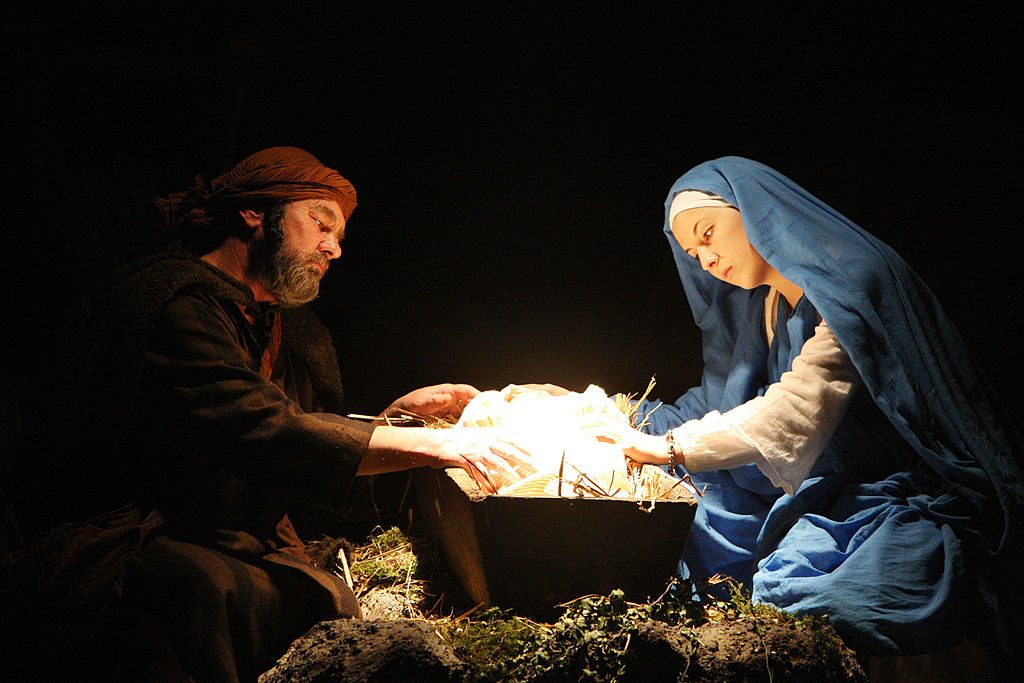
Yesterday, English Heritage posted and promptly deleted a social media post which argued that the reason Christmas is celebrated on 25 December is that, historically, the date was used to host a celebration of the late Roman sun god Sol Invictus, and that this festival was “changed into a Christian holy day” after the Empire “converted to Christianity”.
Of course, this is factually untrue. The date of 25 December originates from within Christian chronology, rather than a pagan festive amalgamation. The earliest surviving record of this date being referred to as the date of Christ’s birth comes from St Hippolytus of Rome’s Commentary on Daniel, the oldest extant Christian scriptural commentary, dating from the first decade of the third century. Notably, this is over half a century before the Emperor Aurelian revitalized an interest in the sun god, whose cult had vanished by the end of the first century.
It could be forgivable if such a comment from English Heritage were a one-off. Yet the organization published similarly ahistorical information earlier this year, stating that Easter has its roots in yet another pagan festival. Clearly, this is a deliberate dissemination of knowingly untrue information — but to what end?
English Heritage is not alone in attempting to alter the perception of history. Earlier this year, at a debate organized by the Times at the British Museum, panelists came together to denounce the appropriation of historical artifacts for the purpose of virtue-signaling narratives. Historian Simon Sebag Montefiore said that historical issues such as slavery and colonialism had been commandeered for political purposes, and that “prudishness, self-righteousness and, above all, jargon” were a “big danger”. Writer Tom Holland argued that the process currently moving through British cultural institutions is similar to that of the Reformation, “overturning shibboleths, toppling icons, whitewashing where there had been paintings”.
The crisis of misrepresenting history to these ends is real. This year, the Shakespeare Birthplace Trust outlined its focus on decolonizing its extensive collections after a study from the University of Birmingham criticized the Trust for promoting the playwright’s work, which reinforces “white Anglo-centric, Eurocentric, and increasingly ‘West-centric’ worldviews that continue to do harm in the world today”.
The case this week with English Heritage is just one more example in the growing anthology of ahistorical nonsense that Britain’s once-proud institutions espouse to the open-minded masses. If we cannot trust the institutions with which our historical and cultural narratives and artifacts have been entrusted, then how will we be able to ensure that truth survives? As Juvenal asked, quis custodiet ipsos custodes? Our institutions must be held to account when sharing information that is anything but the unadulterated truth, lest we find ourselves in a situation where history is written by those staffing our museums.