









December 23 2025 - 5:00pm
Yesterday marked the release of the official trailer for Christopher Nolan’s The Odyssey, which comes out next summer. Nolan’s film is the latest chapter in the afterlife of a hero whose very name — built on a verb that means “to cause pain to oneself and others” — is Trouble.
Homer’s epic about “the man of twists and turns” inspired dramas by Aeschylus, Sophocles, and Euripides in which Odysseus appears alternately noble and base, shifting and shifty. Dante put Odysseus in the eighth circle of Hell for his fraudulent counsel, whereas Tennyson’s poem “Ulysses” celebrated his unquenchable desire “to follow knowledge like a sinking star, / Beyond the utmost bound of human thought”. And the story of Odysseus’s homecoming has generated works in a range of narrative media, from James Joyce’s novel Ulysses to the Coens’ film O Brother, Where Art Thou? and Shay Charka’s Judessey, a graphic novel of the Holocaust.
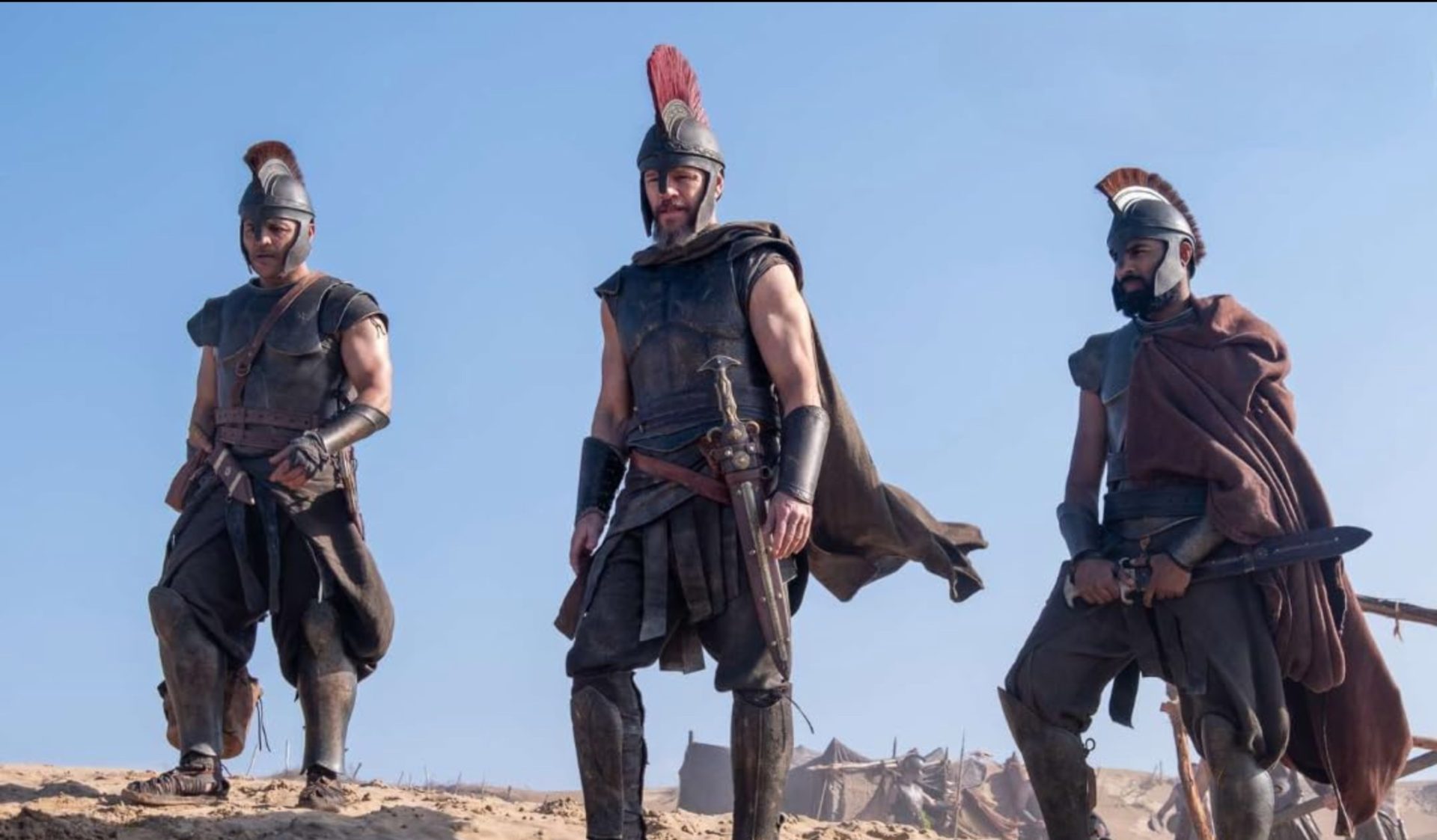
Nolan has already been criticized for inaccurately portraying the Mycenaean helmets, armor, and ships in use at the time of the historical siege of Troy. But given that no feature-length adaptation of the Odyssey can hope to provide more than scraps from the banquet of Homer, what should one look for in the film?
More important, surely, is fidelity to Homer’s plot, characterization, and leading themes. The trailer’s voiceover, which begins “After years of combat, no one could stand between my men and home — not even me”, nicely captures the lethal tension between Odysseus’s lust for adventure and his soldiers’ war-weariness. Indeed, Homer’s hero arrives home alone, having lost perhaps 500 men due to his recklessness and incompetence as a leader.
Nor would viewers forgive erasing the immortals from the story, as Wolfgang Petersen did almost entirely in the 2004 film Troy. It’s not just that Odysseus couldn’t have prevailed over Penelope’s 108 suitors without Athena’s help. During his voyage, he is repeatedly threatened by divine witches and nymphs who wish to keep him in oblivion as a pet or a lover — or, in the case of various female monsters, to kill or eat him. Toxic femininity plays as big a role in the post-war world of the Odyssey as its masculine counterpart does in the Iliad.
Then, not entirely at odds with the inclusion of non-human figures, there is the question of realism. Audiences won’t quibble about small anachronisms in battle gear so long as the film has the feel of real life. This goes for the immortals as well, where the key is to go light on special effects while capturing their all-too-human failings of lust, rivalry and wrath. The 2006 film 300, about the Battle of Thermopylae, was marred by its video-game aesthetic, including the absurdities of an enormous, rhinoceros-like beast of war and a seven-foot-tall emperor.
Here, too, the Odyssey’s trailer is promising, with what appears to be plenty of grimy authenticity. Homer spends some time describing Odysseus’s rocky island and simple farmstead. Nolan has an opportunity to show the natural beauty of Ithaca’s coves and hills, as well as the dirt floor of his palace and the stump of an olive tree that anchors his bed.
Homer’s Odyssey reveals the deepest longings and tensions of the human soul and the fundamental structure of the journey of life: nostalgia for a home that our younger selves took for granted, and bittersweet return to people and places that have changed forever. It is this human meaning, absent from so much of what Hollywood produces these days, that moviegoers crave. If Nolan delivers that in a fresh and vital form, questions of historical accuracy will be irrelevant.