








3 March 2026 - 7:00am
The beginnings of a new war are conjuring up feelings of déjà vu. After US and Israeli strikes on Iran in the past few days, much of the Western Right has adopted a gung-ho position. Prominent figures have been shrouded in a naive, short-sighted and credulous idealism that echoes the reaction to the opening salvoes in Iraq in 2003.
Ayatollah Ali Khamenei is dead; a murderous regime is weakened; theocrats have been brought to justice by British allies. President Donald Trump’s breach of “America First” orthodoxy and abandonment of his aversion to the Republican old guard’s “forever wars” has been forgiven in favour of a Western triumphalism.
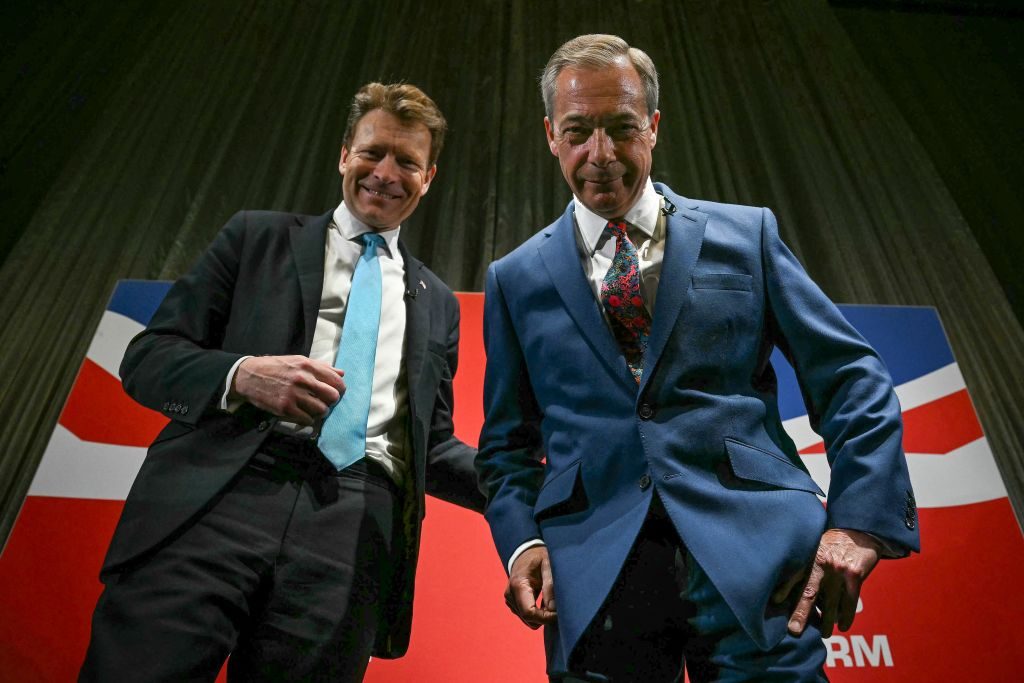
That same enthusiasm has been audible across much of the British Right. Senior figures in Reform UK, such as Deputy Leader Richard Tice, have framed the accelerating moves to all-out regional war in civilisational terms. Meanwhile, Nigel Farage has been goading the Labour government for its reluctance to directly involve itself. Commentators on the Right have cast the killing of Iran’s head of state as a long-overdue reckoning without addressing key questions. What are the objectives? What comes next? What is the long-term strategy?
Instead, support for the US and Israeli efforts has been cast as an ethical imperative. Conservative MPs such as Tom Tugendhat have implied that opposition to the strikes constitutes an indulgence of the Islamic Republic itself. The old binary has returned: “Either you’re with us, or you’re with the terrorists.” It is a striking posture for a political camp in which many recently defined themselves against the liberal interventionism and Blairite messianism of the Iraq era. But, seemingly, few lessons have been learnt.
Therefore, in the mainstream discourse it will be the Left that points out the historical amnesia and strategic myopia at work. Few will mourn the death of Khamenei. An isolated fringe will harbour sympathies for Iran as the head of an anti-Israeli “Axis of Resistance”.
But this is an extreme minority. Most on the Left are capable of nuance. Questioning the wisdom of Trump’s interventionist turn does not equal support for Khamenei. That reading implies that foreign policy is a Manichaean moral purification ritual: remove the dictator, and a liberal-democratic state will emerge by default. This is pure fantasy. Opposition to the US-Israeli strikes is largely grounded in a realist view once shared by MAGA. It is not in the interests of the US or Britain to provoke another destabilising war in a volatile region.
Foreign policy is a theatre for the pragmatic projection of national interests. The potential for civil war, regional conflict, energy shocks, a Europe-wide refugee crisis and stagflation is real. There is no serious plan for what follows, nor any contingency should a harder-line strongman emerge. What happens if a country of over 90 million people descends into a failed state redolent of post-Gaddafi Libya or post-Saddam Iraq?
The Left is often caricatured as utopian, yet many on the Right, too, are now animated by a historically illiterate idealism when it comes to international relations. There’s a reason the UK maintains military intelligence, trading and security relations with authoritarian theocrats in Riyadh, military dictators in Egypt, and Islamist election-riggers in Turkey. Our complex world is not a morality play. Realpolitik is an exercise in interests, trade-offs, balance and restraint. Post-Iraq, post-Libya, and after the rise of anti-establishment populists, scepticism toward foreign intervention felt like a rare new Left-Right consensus. We should return to that formula before it’s too late.
Jonny Ball is a Contributing Editor at UnHerd. He formerly wrote under the name Despotic Inroad.
 DespoticInroad
Join the discussion
Join like minded readers that support our journalism by becoming a paid subscriber
To join the discussion in the comments, become a paid subscriber.
Join like minded readers that support our journalism, read unlimited articles and enjoy other subscriber-only benefits.
Subscribe