








10 December 2025 - 10:00am
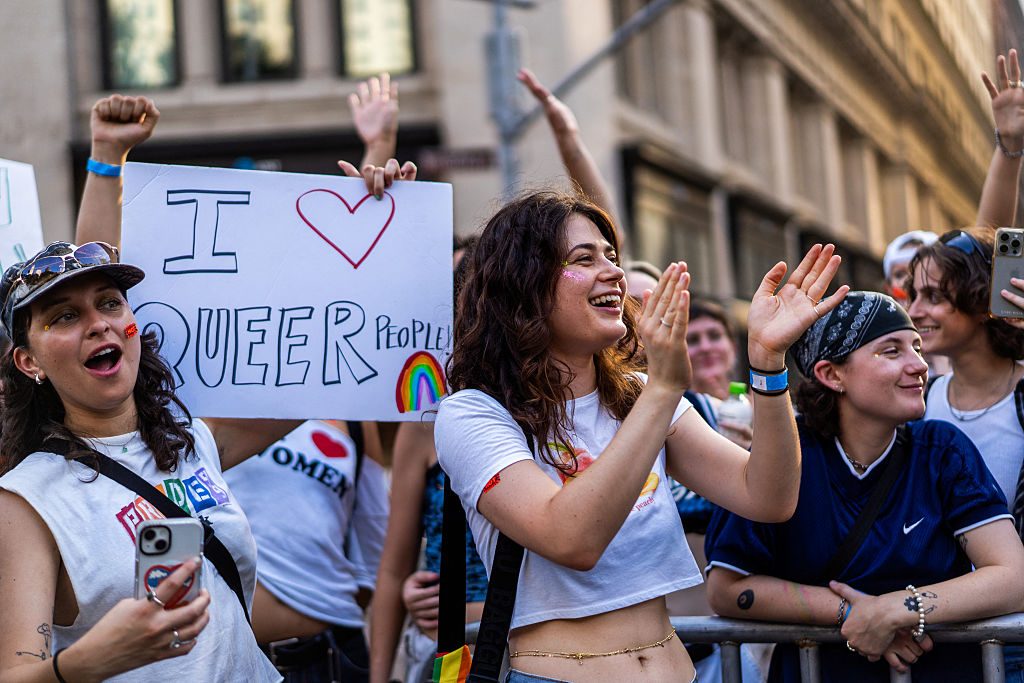
Bisexuality has declined substantially among young Britons over the past year, according to figures published yesterday by the Office for National Statistics (ONS).
The Independent and the Daily Mail have drawn attention to the rise in bisexuality among young people, especially women, over the past decade. Yet the decline in bisexual identification among the youngest 16-24 age group — from 7.5% in 2023 to 5.1% in 2024 — is arguably the big story from yesterday’s numbers.
The chart below shows that the share of young people identifying as bisexual dramatically expanded in Britain, from 1.3% in 2014 to 7.5% in 2023, before declining to 5.1% in the 2024 data. Among young women, the bisexual share soared from 0.8% in 2014 to a peak of 9.2% in 2023 before falling to 6.7% in 2024.
While there has been a modest rise in gay and lesbian identification, as well as “Other” sexual identity (this is possibly subject to interpretation error), the big growth had previously been in the bisexual share. This trend now looks to be over: we have reached the other side of a sexual revolution.
| The rise and fall of Generation-Z bisexuality |
| Sexual identity (%) of Britons aged 16-24, 2014-24 |
 |
These figures parallel trends in the United States, which I outlined in a report earlier this year. If data from the US is any indication, this British decline is likely the start of a new youth pattern in which unconventional sexual and gender identities recede from their 2023 peaks.
American youth data from several independent sources, which I presented in a piece for UnHerd earlier this year, showed trans identification peaking in 2023 and declining by nearly 50% in the ensuing two years. An even larger range of sources showed unconventional sexual identities — bisexual, queer, etc — following exactly the same trajectory.
While we do not yet have next year’s data, an analogous American Census Bureau survey for trans identity showed a similar pattern of a rise to early 2024 followed by a substantial decline later in the year for data on trans identification.
What lies behind the decline in unconventional sexual and gender identity? I did not find a link to less “woke” attitudes, more religiosity or conservative politics among young people. The declines in trans, bisexual and queer identities took place at about the same rate in red states and blue states, on conservative and progressive university campuses.
Improved mental health did appear to explain some of the change, but not most of it. Instead, it is likely that trans, bi and queer identities have grown increasingly less fashionable among young people. Social influence or even contagion played an important part in the waxing of these categories, and continue to play a big part in explaining their wane.
Growing toleration could be playing a role among the oldest in society, however. Britain’s ONS release shows that the largest percentage rise in gay and lesbian identification in recent years has taken place among older age groups. Gay and lesbian identity has, by contrast, been flat among the young for four years.
Finally, it is worth observing that 87% of those aged 16-24 in Britain identify as heterosexual in official data. Even among the 13% who say they are not, a further 3% say they “don’t know” or refused to answer. This LGB share is consistently running at about half the level reported in surveys from leading firms. Similar discrepancies appear in North American data, raising the question of why surveys and polls, which have much lower response rates than ONS figures, systematically oversample LGBT young people. This is something the polling industry needs to think about before drawing inferences from its data.
Eric Kaufmann is Professor of Politics at the University of Buckingham and author of Taboo: How Making Race Sacred Led to a Cultural Revolution (Forum Press, 4 July).
 epkaufm
Join the discussion
Join like minded readers that support our journalism by becoming a paid subscriber
To join the discussion in the comments, become a paid subscriber.
Join like minded readers that support our journalism, read unlimited articles and enjoy other subscriber-only benefits.
Subscribe