









February 20 2026 - 1:00pm
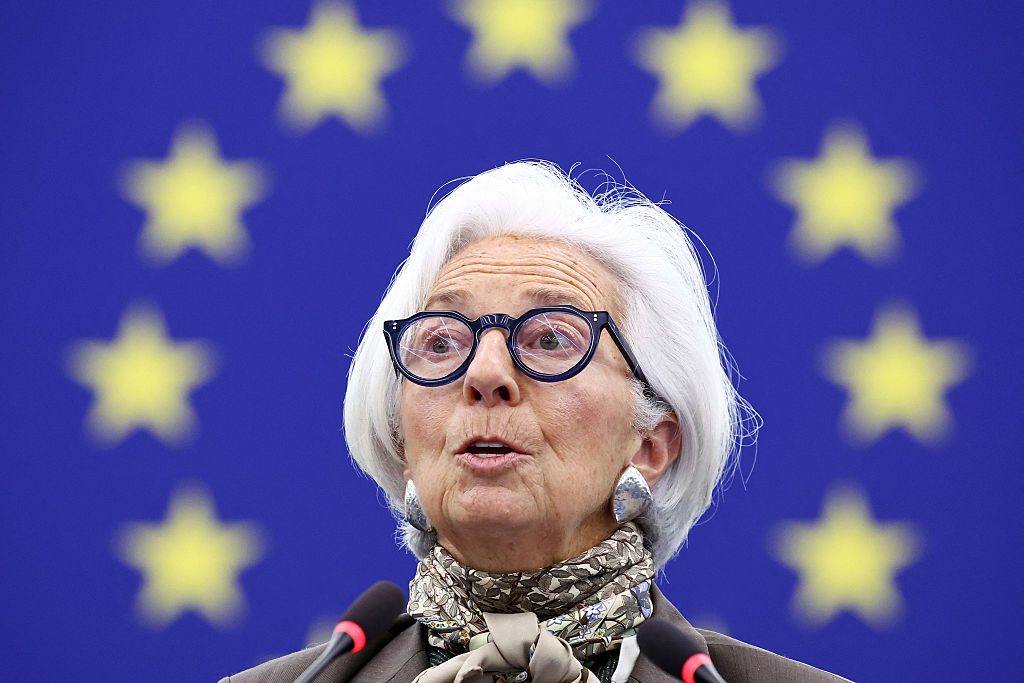
Earlier this week, it was all but confirmed that Christine Lagarde would step down as President of the European Central Bank (ECB). The Financial Times reported that she would leave her role before the full eight-year term is up next year, a claim the ECB didn’t deny.
Whoever replaces Lagarde will have the task of navigating the new power structures that shape global finance. The political world has changed and regulation has increased, but the ECB and other central banks are still creatures of the exuberant pre-2008 era of financial globalization. In that time, central banks redefined themselves away from the traditional price stability targets towards broader social goals. This has included everything from supporting governments during financial crises to the adoption of green policies.
The ECB, of course, isn’t the only central bank replacing its chief. Last month, Kevin Warsh was announced as Donald Trump’s pick to replace outgoing Federal Reserve boss Jerome Powell. The change of leadership about to happen at the world’s two most important central banks offers the chance of a reset. At the Fed, such a reset is now very likely, but at the ECB that’s not so clear.
At the European bank in particular, the first and most important task should be to drop its preoccupation with activism, in particular when it comes to green policies. These are fundamentally political tasks that should have no influence from central banks. Institutional independence is critically premised on central banking that has a narrow mandate, rather than seeing itself as a savior to the world’s problems.
The second task is that central banks should stop reinterpreting the price stability target to suit dysfunctional economic models. There is a reason why both the US and the EU are defining their overall objective in terms of the notion of price stability, rather than rigid inflation numbers. Central banks committed their biggest policy errors in the last decade when they unleashed torrents of new policies to tame inflation. Nobody complained about a lack of price stability then. But the 2020s have felt like an era in which price stability has been lost. Central bankers and monetary economists have not even begun to reflect on the downsides of rigid inflation targets.
Third, it is, and will remain, the central bank’s job to intervene in systemic financial crises but not to bail out governments. Concretely, the ECB should reduce the scope of the Transmission Protection Instrument, a tool used to prevent market fragmentation in the eurozone. This would send a message to governments that there will be no monetary bailout for countries which put themselves on a fiscally unsustainable path.
Lurking in the background is another goal. The ECB will have to deal with the shift in American policy under Trump. The Fed may soon no longer be the team player it once was. US stablecoins could flood European markets and reduce the role of the euro in commercial domestic transactions. Potential trade wars are also on the horizon, and could bring to an end the long period of price deflation in markets for traded goods. This is a factor that helped central banks meet their inflation targets.
The current generation of economic models has failed to capture the macroeconomic trends of the last 20 years. Now it is time for central bankers to realign their goals with what their narrow job should be: price stability. They are not the employers of last resort for macroeconomists. If the ECB looks to a new chief who understands this, rather than a wannabe activist, there may finally be some positive news for the European economy.
This is an edited version of an article that first appeared in the Eurointelligence newsletter.
