









January 30 2026 - 6:00pm
With Trump’s 2024 coalition under threat, the decisive political struggle in America has shifted inward, to the Democratic Party. The clash between pro-business moderates and an ascendant far-Left will play out nationwide, but its defining test is now taking shape in California.
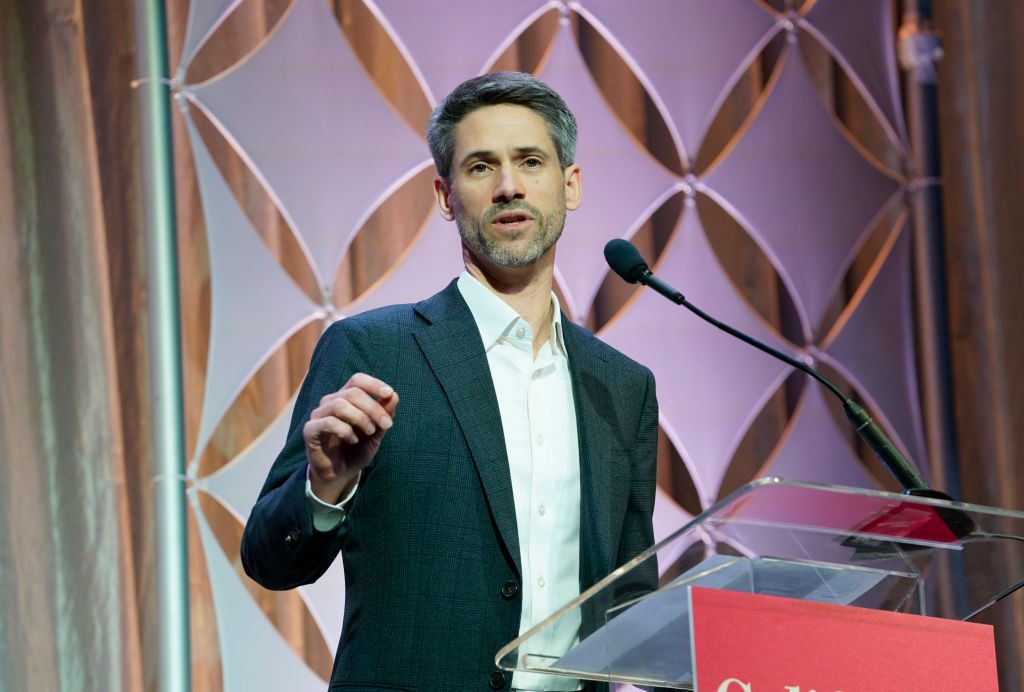
Until this week, the Democratic race in California was dominated by progressives chasing the anti-Trump vote while offering little to arrest the state’s steady decline. The entry of Matt Mahan, the Mayor of San Jose, changes that calculus — and gives moderate Democrats a credible chance to reclaim the Governor’s Mansion.
California badly needs a rational problem-solver. The state is grappling with a long-term budget crisis, massive outmigration, the nation’s highest poverty rate, and persistently high unemployment. Mahan, 43, stands out as a rare Democrat who has confronted these problems directly. As mayor, he has taken a notably hard line on homelessness in a city which styles itself as the “capital of Silicon Valley”. He has also criticized Gavin Newsom and other Democratic leaders for mistaking MAGA-baiting for governance, arguing that trolling the Right is not a viable strategy for power. Instead, Mahan has urged the state to focus on concrete failures, including rampant fraud that has grown to monstrous proportions.
The San Jose Mayor also benefits from a crowded field of weak rivals, most of whom remain wedded to progressive orthodoxies on issues ranging from ICE and climate policy to transgender politics and law enforcement. Critically, he was among the very few Democrats who backed 2024’s Proposition 36, which rescinded lenient criminal policies. Democrats may have hated it, but voters overwhelmingly back it.
Mahan offers a far more plausible option for non-ideological voters than the current frontrunners. Katie Porter, an Elizabeth Warren acolyte, brings progressive zeal and well-documented temperament issues. Eric Swalwell embodies the performative anti-Trump politics of the Democratic Left and remains best known for spectacle rather than governance. Meanwhile, billionaire Tom Steyer must be taken seriously only because of his wallet: he’s a climate hardliner whose regulatory zeal is closely associated, in voters’ minds, with soaring housing costs and job losses.
To be sure, Mahan will face headwinds from an increasingly radicalized Democratic base, including opposition from the powerful green lobby and militant teachers’ and public-sector unions. His focus on “delivering on results” certainly has little appeal for the ideologues in the party, who revel in Trump-bashing above all else. As Mahan has put it: “The best resistance is delivering results and showing that states and cities with progressive values can deliver safety, a high quality of life and economic opportunity.”
Backed by allies in Silicon Valley, Mahan has the resources to appeal to California’s large bloc of independent voters, who make up roughly a quarter of the electorate. If he wins the primary, he could offer a model for moderate Democratic victories elsewhere, including San Francisco’s Dan Lurie, Houston’s John Whitmire, Pennsylvania’s Josh Shapiro, and Kentucky’s Andy Beshear. If California, long an incubator of far-Left excess, opts for a serious, business-minded governor, it would mark real progress for the state and point toward a more pragmatic Democratic Party.
Joel Kotkin is a Presidential Fellow in Urban Futures at Chapman University and a Senior Research Fellow at the Civitas Institute, the University of Texas at Austin.
 joelkotkin