









December 17 2025 - 3:00pm
“A homeland may be taken from a people,” said Misley Mandarin, the first minister of the Chagos Islanders’ newly constituted “government-in-exile”. But, he added, “a people cannot be taken from their homeland.”
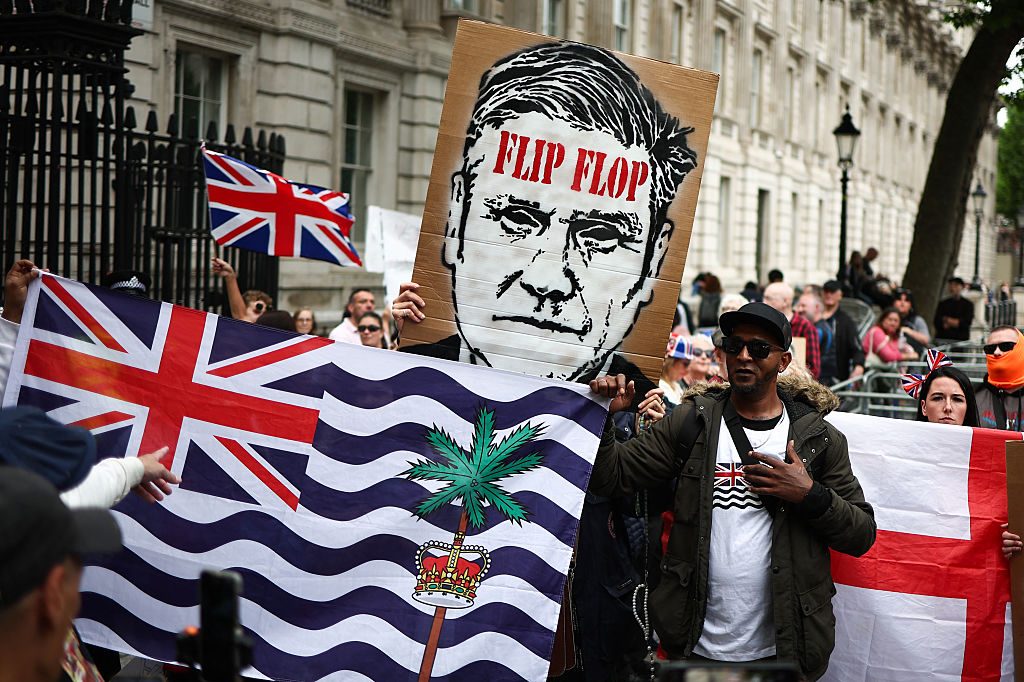
Mandarin, anointed by an electorate numbering around 1,300 UK-based Chagossians, is hoping that his declaration will convince the House of Lords to block Keir Starmer’s plans to surrender the archipelago. But Parliament is likely to ratify the treaty all the same, notwithstanding the idiocy of surrendering a crucial strategic asset to an ally of China, or the flimsiness of a claim that Mauritius — which has never ruled Chagos — gave up for £3 million in 1965.
The British and Mauritian diplomats who co-wrote this year’s treaty refer to “decolonization” and “righting the wrongs of the past”, yet this apparent correction entails handing Mauritius a total of £30 billion in exchange for the partial use of an archipelago that has never been inhabited by Mauritians.
Given Mauritian elites’ imperfect record of probity, we can safely predict that their extraordinary spoils might not be shared in a manner the British taxpayer would entirely approve of. Those who are most voluble in claiming handouts are not always those who most deserve them.
In all, the Chagos episode demonstrates an uncomfortable truth of modern international relations: there are no perfect victims, just those with sharp elbows (the Mauritian elite) and those who get pushed aside (the Chagossians). In that vein, it is no coincidence that, since the floating of the Chagos deal, Commonwealth calls for slavery reparations have become more audacious — irrespective of their dubious merits.
Western guilt, then, is empowering an economy of grievance. And, as with any form of economy, those who thrive are those who best adapt. Progressively-minded barristers, such as the Mauritius champion Philippe Sands, might consider themselves protectors of human rights, but the truth is more complex. Mauritius has benefited from the mingling tides of British progressivism, African solidarity, and Chinese anti-Westernism; the Chagossians have not. Mandarin and his countrymen have human rights, of course, but not the right human rights.
The shifting global sentiments from which the Mauritians will so richly benefit might turn out to be mere fashions. At some point, Britain will have to accept that guilt trips must be resisted. But with the Chagos arrangement set to last for at least 99 years, the British taxpayer will have many decades in which to reflect on the values of today’s governing class. Was there some way that Britain could have brought back the Chagossians, thus shoring up the moral authority of the British Indian Ocean Territory, while retaining the function of the military base?
On 5 January, the treaty bill is due to reach its House of Lords report stage. Parliamentarians can still bring the deal to a halt before then, but the numbers are on the Government’s side. Billions will flow south, the Chagossians will remain homeless, and the guilt-industrial complex will roll on.