









October 11 2025 - 3:30pm
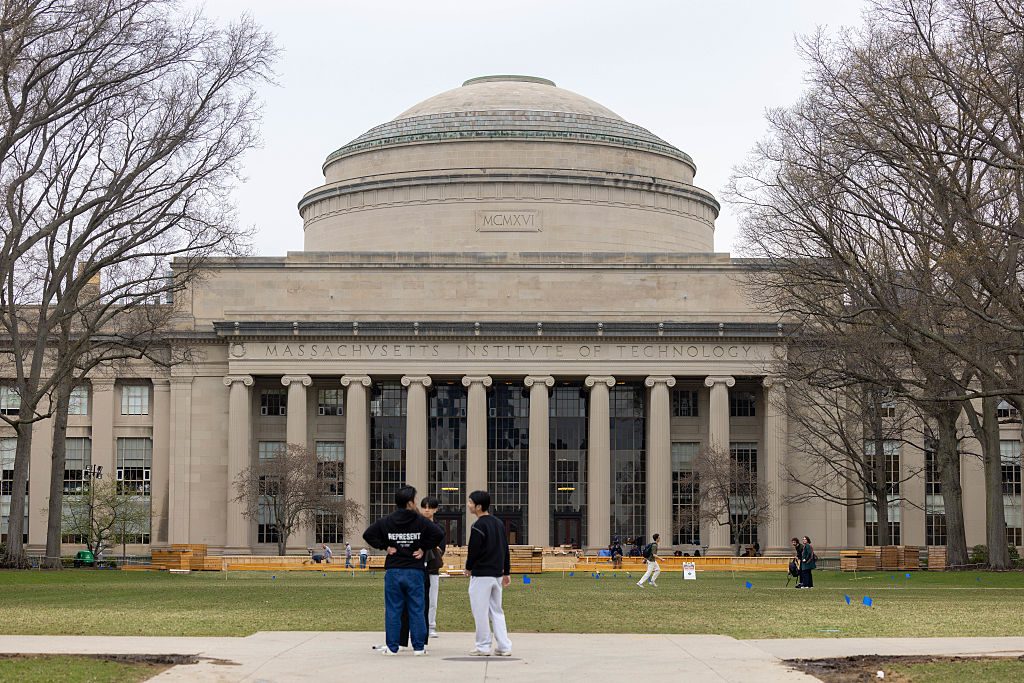
Yesterday the Massachusetts Institute of Technology (MIT) became the first university to reject the White House’s proposed “Compact for Academic Excellence in Higher Education” — an agreement that would give signatories preferential treatment for government funding.
MIT President Sally Kornbluth explained that certain provisions “would restrict freedom of expression and our independence as an institution.” The other eight universities that received the same compact should follow her lead — or risk betraying their own commitments to free speech.
The compact calls on institutions to eliminate academic departments deemed to “purposefully punish, belittle, and even spark violence against conservative ideas.” But this language poses constitutional problems on two fronts.
First, it conflates mockery with speech that “sparks violence” — a vague, non-legal phrase that could easily encompass protected expression. Speech that offends or challenges political views is not violence. Blurring that line undermines both free expression and genuine efforts to address real threats. Restrictions on speech should be limited to the Supreme Court’s narrowly defined exceptions to the First Amendment, such as incitement to violence.
The compact’s language is also viewpoint discriminatory. It creates a special class of protected ideas — “conservative” ones — and tells institutions to censor anyone who mocks them. But the Supreme Court has declared this type of viewpoint discrimination unconstitutional for a reason. The executive branch is not the arbiter of truth, and no administration may wield its power to declare certain ideas beyond criticism. Moreover, if this administration can leverage research funding to shut down speech critical of conservative ideas, the next administration can do the same to shut down speech critical of liberal ones.
In this tit-for-tat exchange, nobody wins. The better path forward is to ensure that all protected expression is allowed on campus, regardless of what particular viewpoint it espouses or criticises.
Second, the compact requires all university employees acting as university representatives, not just members of the leadership who speak for the university, but all university employees, to “abstain from actions or speech relating to societal and political events”. For public institutions, this is an unconstitutional gag order. Public university faculty have the First Amendment right to speak about pedagogically relevant politics in their teaching and scholarship.
It’s also a problem for private universities. The Supreme Court ruled unanimously just last year that the government cannot wield its power to pressure private institutions to censor third parties, and that’s exactly what this proposal does. And private universities have their own speech rights: freedom includes the right not to be neutral.
MIT’s rejection of this compact is a brave stand against the administration’s effort to entrench a government-funded orthodoxy on campus. And while it carries risk, the risk of compliance may be even greater. What will universities become if the federal government can compel ideological conformity? They certainly won’t be the bastions of wide-open research and discourse we need them to be.
All institutions should join MIT and tell the government that they won’t be bullied into betraying their missions.