









February 16 2026 - 10:00am
The police are supposed to solve crimes, not commit them. Yet on Sunday it was reported that allegations of sexual misconduct against officers have risen by more than a third in a year. The figures are shocking: 1,100 officers were under investigation in England and Wales in the 12 months to March 2025, compared with 819 the previous year — an increase of 34%.
This is not about a sudden upsurge in officers committing offenses, disturbing as that would be. It’s the result of a belated reckoning with indefensible practices that went unchallenged for years. Even now, few members of the public realize that men with cautions or convictions for sexual offenses were allowed to put on a uniform.
All of this has finally emerged because of a series of egregious scandals. Institutions like the police and armed forces — which ought to be vigilant about excluding men who enjoy exercising power — have had their poor vetting processes exposed. It’s inexcusable that Wayne Couzens, who abducted, raped and murdered Sarah Everard, and David Carrick, now serving 37 life sentences for rape and sexual assault, were able to remain serving police officers for decades.
Couzens should have been sacked and charged after facing repeated accusations of indecent exposure. Carrick had been an officer for only a year when he was accused of domestic abuse in 2002. Yet he was allowed to continue in the job for almost 20 years. Another former Met officer, Cliff Mitchell, was imprisoned for more than 13 years in 2024 after being convicted of 10 counts of rape. He was cleared to join the police even though he’d been the subject of a rape allegation in 2017.
These are not occasional lapses. When the Metropolitan Police began reviewing allegations in the wake of these scandals, it examined 1,636 completed sexual and domestic abuse cases to establish whether they had been dealt with correctly. The review led to 378 individuals — almost a quarter — being sacked or resigning from the force. The force didn’t even have a victim support unit until January 2023. It has since supported more than 320 women who allege they are victims of offenses committed by officers. Last week, a former inspector from the Met’s specialist firearms unit appeared in court charged with sex offenses over a 12-year period.
You might imagine that senior officers and the Home Office would be desperate to put all this behind them. Not so, however. The first report by Lady Elish Angiolini, commissioned in response to Everard’s murder, made the eminently sensible recommendation that any individual with a caution or conviction for a sexual offense should be rejected during vetting. Her second report, published in December, revealed that the recommendation had not yet been implemented. It wasn’t included in draft Home Office regulations issued in September last year, and even when a ban is finally put in place it won’t be retrospective. The figures just released by the Government demonstrate why it should be.
What kind of police force recruits men with convictions for sexual offenses? The answer is one that hasn’t, historically, taken violence against women and girls seriously. It’s one that didn’t listen to women, that allowed cops facing allegations to be “investigated” by their mates on the force even when their accusers were fellow officers.
The allegations extend beyond the Met, but it’s the source of the worst scandals. There’s an argument that it should be disbanded, which would mean that every applicant to a new force would be properly vetted, and face much strict monitoring and disciplinary procedures. At the very least, however, individuals with convictions should be automatically barred from joining any police force. Given the woeful conviction rate for rape, so should men who have been accused of sexual offenses.
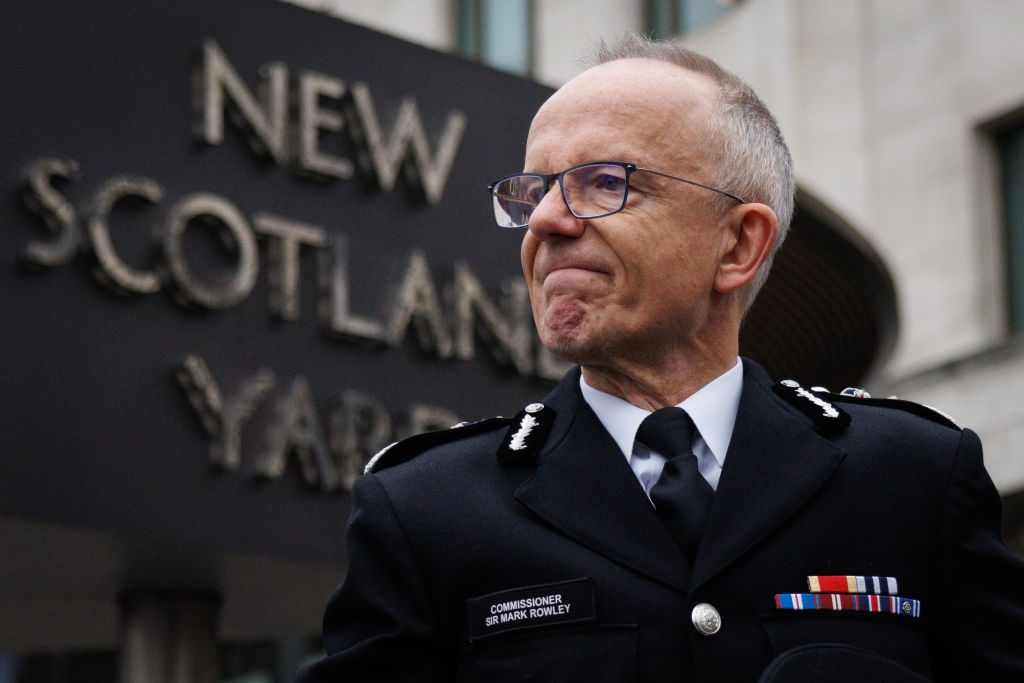
Met Commissioner Mark Rowley has recognized the misogyny that’s led to so many officers leaving the job, calling it “disgraceful and embarrassing”. But it’s worse than that. The plain truth is that British police have failed women for decades by allowing sexual predators into their ranks.
Joan Smith is a novelist and columnist. She was previously Chair of the Mayor of London’s Violence Against Women and Girls Board, and is on the advisory group for Sex Matters. Her book Unfortunately, She Was A Nymphomaniac: A New History of Rome’s Imperial Women was published in November 2024.
 polblonde