








January 22, 2026 - 1:45pm
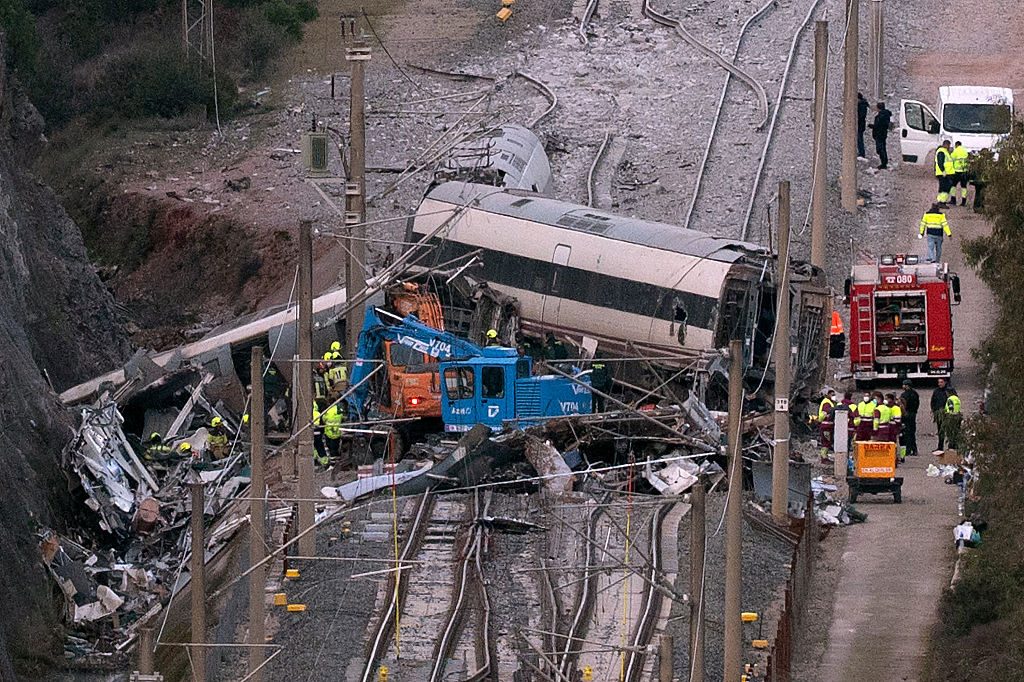
In the space of a few days, two major train accidents have shaken Spain. On 18 January, a high-speed train derailed near Córdoba on the Madrid–Seville line. At the time of writing, 43 people have been declared dead, with more than 150 injured. Two days later, a commuter train derailed near Barcelona, taking one life and injuring at least 37. The day after, 400,000 rail users were left stranded, as the government offered no alternative means of transport.
Grief quickly gave way to anger as Spaniards demanded answers. While it would be easy to place the blame entirely on the government, Pedro Sánchez and his administration aren’t the only ones responsible. For decades, Spain’s refusal to modernise while also protecting the needs of an increasingly powerful gerontocracy has left the state and its citizens more vulnerable.
In August of last year, Spanish Transport Minister Óscar Puente told the Senate that “Spain is experiencing the best moment in its railway history.” Yet only a month later, he warned Spaniards to brace for more incidents due to both the introduction of new trains and the ageing of old ones.
The liberalisation of the country’s railway operators was well-intentioned but poorly executed by the state. While it drove down ticket prices through competition among new transport companies, the predictable surge in passengers was never matched by corresponding state investment in infrastructure maintenance. Between 2019 and 2024, high-speed rail ridership jumped from 22.3 million to 39.6 million — a 77.2% increase. But Renfe, the state operator, reports that this increase in capacity, coupled with poor management, has led to increased delays and more breakdowns.
To make matters worse, Spanish railway infrastructure is overloaded and decaying. The average age of a Madrid Metro train is 20-23 years old. And when a train ages, every bolt matters. The life cycle of a train set is 35-40 years. Looking at the data for 2024, rail breaks — a fracture in a steel railway track, which is the type of incident many believe caused the Andalusian accident — were recorded 135 times. Eventually, something had to give.
Why wasn’t the skyrocketing growth in passengers matched by increased funding for modernisation and maintenance of trains and infrastructure? The answer is simple: public money in Spain is increasingly being spent on its ageing population. Since 1995, approximately half of the increase in public spending can be attributed to the ballooning pension system. The situation became far worse after the financial crisis; by 2024, infrastructure spending had fallen to just half its 2008 level. ADIF, the state-owned company responsible for maintaining railway infrastructure, is a case in point. Between 2021 and 2025, it was supposed to receive nearly €4.7 billion from the state budget, but ended up getting only €1.8 billion from the government.
In the Nineties, many prophesied that the future held a society constantly exposed to risks from technological progress and industrial development. However, the rise of gerontocracies has only added to this. The grey electorate, the most important demographic in any political party’s calculus, continues to grow, along with the army of state bureaucrats. Meanwhile, the modernisation needed to sustain the quality of life of Southern Europeans has no political constituency. Accidents like those which happened on Spain’s railways this month point to waning state capacity. This is the paradox of Mediterranean gerontocracies: the older the society becomes, the more dangerous it grows for ordinary citizens.

Join the discussion
Join like minded readers that support our journalism by becoming a paid subscriber
To join the discussion in the comments, become a paid subscriber.
Join like minded readers that support our journalism, read unlimited articles and enjoy other subscriber-only benefits.
Subscribe