




(Credit: Paul Ellis / AFP via Getty)




It is a familiar pub quiz reveal that the only constituency in mainland Britain to have ever elected an Irish nationalist MP was the now defunct Merseyside seat of “Liverpool Scotland”. The reason was simple: Irish immigration. A largely ethnic Irish electorate could be appealed to on ethnic Irish terms, and marshalled towards Irish political ends. It is, after all, a truism of political science that, as the renowned sociologist Donald L. Horowitz remarked, in a society divided along ethnic lines “the election is a census, and the census is an election”. Portraying the “Liverpool Scotland” phenomenon as the result of the “Catholic vote”, as worried contemporary observers did, was to mistake a secondary organisational marker, religion, for the issue at hand, ethnic identity — just as the ethnic conflict in Northern Ireland has frequently been misportrayed as a religious one by baffled British observers of what is, to them, an impenetrable intra-Irish dispute.
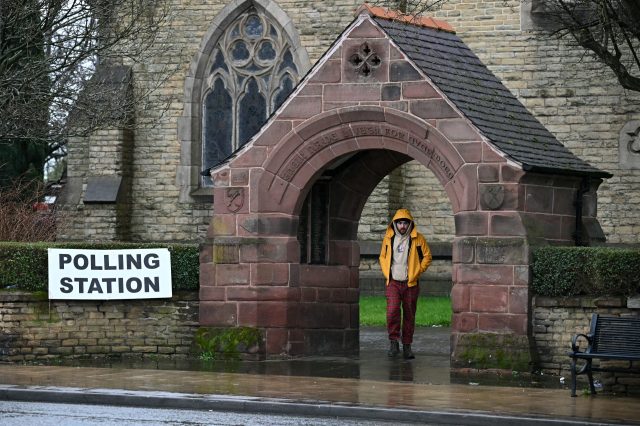
In the same way, the emerging narrative that the Green Party’s Gorton and Denton by-election victory marks the emergence of a new, “sectarian” Britain does not seem quite correct. The existence of South Asian Muslim voting blocs is not a new development. Rather, the novelty is their accelerating abandonment of the Labour Party which once took their votes for granted — corralled through the clan and family patronage systems co-opted by Labour’s Northern England machine politics. But the political contest in Gorton and Denton, a matter of simple demographic arithmetic, was fundamentally one tipped by ethnic rather than religious mobilisation: it was no more sectarian than, in Northern Ireland, Sinn Féin are devout Catholics, or the Shankill Protestant Boys Flute Band are devoted practitioners of quiet Bible study.
Indeed, there is little in the Gorton and Denton result to dissuade adherents of the Ulsterisation thesis of British political development from the theory. As the Manchester Evening News observes, the constituency is a highly segregated one, with 96% of residents in Denton East and Denton West self-describing in the 2021 Census as “White” — an awkward category, in this instance largely coterminous with ethnic British and Irish ethnic identity — declining to a low of 85% in Denton North. In the western half of the constituency, on the other hand, only 6% of residents in Victoria are white, and only 8% in Levenshulme North: a lower percentage, it may be noted, than of Catholics in Belfast’s proverbially Ulster Loyalist Shankill Road ward. At least in Northern Ireland the fact that elections are won in the census rather than the voting booth is open and taken for granted: in Britain, cultural taboos forbid such accurate depiction of reality. The Gorton and Denton by-election, given the polarised electoral map of its constituents, may just as accurately be termed the Gorton versus Denton by-election, in which Gorton proved the victor.
Zack Polanski’s pre-election claim that “the public have moved on” from immigration was therefore disingenuous: his Green victory was built on the foundation of historic South Asian immigration in a constituency highly segregated along ethnic lines, in an election novel only for the increasingly overt nature of the ethnic mobilisation and counter-mobilisation now becoming the stuff of modern British politics. As Abubakr Nanabawa, the organiser of the Muslim Vote pressure group — which in this election backed the Greens “to block Reform, and to end Labour’s assumption that our communities can be ignored, disrespected, and still counted as automatic” — observed, this was to be an election decided by demographic heft, in a “constituency, with 76,000 potential voters, approximately 26% of whom are Muslims… split demographically into the Gorton side, which is more ethnically diverse, and Denton, which is more white working class,” in the latter of which the “the Right-wing Reform party has made inroads”. As Nanabawa pointed out back in 2024, “political parties and candidates ignore the concerns and priorities of Muslim voters at their peril, for their sway will only continue to grow, shaping the trajectory of British democracy” — a prediction also made, openly or implicitly, by Reform, as a threat rather than a promise, and as a means to mobilise the dwindling ethnic majority.
Ascribing the process to Muslim sectarianism thus obscures the nature of the ethnic mobilisation now in play among Reform just as much as the Greens: as pre-election Opinium polling revealed, among white voters, Reform dominated the contest, with a vote share approximating that of the Greens and Labour combined. Indeed, at 57% of the population, the proportion of white voters in Gorton and Denton exactly matches that projected for the UK as whole by 2050. If the political maps of Britain are increasingly ethnic ones, then we can expect future elections to proceed accordingly, if in less binary form than Northern England. The rise of the Greens and Reform each now accelerate that of the other. The speed and extent of demographic change means that the collapse of the former mass parties of 20th-century Britain now appears baked in, even if neither the Greens nor Reform is likely to remain the ultimate protagonists of British political contest.
Against this argument, the writer John Merrick, one of the more astute Leftist critics of the Right’s increasingly ethnic framing of British politics, dismisses the observation that the Palestine flag has become a marker of South Asian Muslim ethnic mobilisation by remarking that objecting to Israel’s war on Gaza is not solely a Muslim concern. Indeed, he accuses those who have made this observation, particularly me, of attempting to “to lay the blame on specific ethnic groups” for what he terms the “widespread sense of alienation among often young British Muslims”. In that revulsion to the Gaza war is not solely a matter for South Asian Muslims, he is correct. Yet if Green strategy were merely a matter of principled internationalist politics, rather than of appealing to narrow ethnic loyalties, one struggles to imagine why the party should also wave the Pakistani flag in its campaigning, or release Urdu-language videos linking Starmer to India’s President Modi. Both are simply overt examples of ethnic Pakistani political mobilisation, which, partly through willed ideological blindness and partly through mercenary electoral calculations, the Left chooses not to examine too closely. It is permissible, indeed electorally necessary, for progressives to engage in such open ethnic organising: yet it remains taboo for them to remark upon it.
Free from such squeamishness, the Green Party’s Deputy Leader, Mothin Ali, is closer to the mark in noting that Matt Goodwin’s campaigning materials made repeated references to the defence of “Christian” identity, in what Ali termed “something that is quite sectarian that is harking back to those troubles [sic] in Ireland”. This is simply the Ulsterisation thesis correctly observed, and applied for political gain, by the Green Party. Gorton and Denton was historic in that it was one of the first mainland British elections to be fought along near-overtly ethnic lines. Like Labour, the Greens mobilised white progressives and South Asian Muslims together against what they portrayed as Reform’s dangerous identitarian politics. As a national spectacle rather than a local campaign, specific political goals took a backseat to “keeping out Reform”, a party whose perception as one focused on narrow ethnic British interests is the unspoken context of all the Labour and Green rhetoric of “hope against hate” and “unity against division”. This is simply ethnic politics for a political system unwilling to name what it has become. Having lost both British Muslims and the white working class, Labour is at least now free to condemn their respective political manifestations.
Certainly, ecological issues no longer seem matters of particular interest to the Green Party, a development that appears to have passed Labour by. The pivot of the election was better understood by Jeremy Corbyn, announcing the need to vote Green to “defeat Reform, defeat the fascists and the racists”, which, translated out of Leftspeak, means parties addressing ethnic British voters and their collective interests as openly as the Greens so effectively did for their own new voters. In this, given the legal restrictions and political taboos against overt ethnic mobilisation of the British electoral majority, progressives currently possess the upper hand, permitted to engage in open ethnic pandering while condemning the same approach for their Right-wing rivals. How long either of these political norms, a relic of Britain’s stable Nineties demographics, can last will determine the politics of the coming years. The radicalising effect of the “Boriswave” and of the dispersal of boat migrants among parts of Britain previously unaffected by mass migration, causing race riots in Middlesbrough and protest marches in deep Middle England, lay in disrupting the unspoken, indeed accelerating ethnic segregation of provincial British life. What was hitherto politely implicit is increasingly becoming the central matter of Westminster politics.
For now, in any case, the Green coalition has proved a winning one. Yet, as Your Party has found in its struggle balancing narrow ideological zealots on the one hand, and British Muslims on the other, the alliance of young white progressives and South Asian Muslims is an inherently unstable one on matters other than defeating the Right in elections. It is, simply, a marriage of polling convenience rather than a political philosophy. All the internal contradictions displayed by Labour’s marriage of soft-Left social progressives attempting to represent religious social conservatives is true of both Your Party and the Greens, with each now possessing a far narrower electoral base than Labour at its height, given the near-wholesale defection of the white working class to Reform. Cannibalising the Labour vote in urban districts containing a specific demographic cocktail of white progressives and South Asian Muslims is a strategy with a ceiling: one that can certainly topple Labour as the dominant party of the Left, but is unlikely to deliver the country.
Yet Reform, too, suffer from their own unstable electoral coalition, of white working-class Labour defectors, married to interventionist economic policies, and its largely Thatcherite lower-middle and middle-class voter base stretching inland from the party’s Eastern England Saxon Shore. If they are to sweep the country, in a political context increasingly shaped by ethnic mobilisation, then it is ethnic British voters as a whole, including Liberal Democrats in their tacitly homogenous enclaves, to whom they will have to appeal. Doing so may be a harder task than winning the Red Wall, though further Green success, now that the collapse of the two mass parties of a vanished Britain appears certain, may yet work in Reform’s favour: it is risky to assume that in a direct contest between the two, the wavering British centre will ultimately choose the Greens.
Certainly, the “sectarianism” discourse now apparent from political commentators who would shudder to be associated with Reform hints at a growing disquiet with the Greens’ open courting of ethnic bloc votes. Yet it is really no different, in its essential form, to the same process that once worked for Labour, to the absurd ethnic pandering of Tory politicians like Bob Blackman to the Hindu nationalist vote, or indeed to the claim by Zack Polanski, in his previous Liberal Democrat incarnation, that a vote for the Lib Dems is “a vote for Israel and a vote for Judaism”. The Greens have not advanced any particularly religious policies, and are unlikely to do so, given the fragile nature of their electoral coalition. If the issue is that British Muslim voters, of mostly South Asian origin, are an increasingly important electoral bloc, then the issue with which centrist commentators are increasingly perturbed is one of demographic change itself, rather than its second-order religious accretions. In just the same way, Reform’s recent pledge to forbid the conversion of disused churches into mosques is not a matter of bringing them back into Christian usage but of preventing their passing into the hands of the demographic “Other”: the issue is an ethnic rather than religious one, with religion functioning as a barely euphemistic marker. The charge of “sectarianism”, Greens are correct to observe, is here merely a dog-whistle for British politics increasingly centring around the questions posed by demographic changes which centrists are unwilling to otherwise notice, let alone navigate.
The reshaping of Westminster politics into a battleground between the party of limitless open borders on the one hand, and of mass deportations on the other, will make overt what British political taboos still barely manage to keep implicit. If Reform are the Conservative Party’s DUP, a populist party cannibalising the mainstream conservative vote on ethnic lines, then, even in the months since I first wrote about mainland Britain’s Ulsterisation, Reform have already found in Restore its TUV, an even more Rightward challenger which may, as demographic anxieties proceed, eventually come to cannibalise its vote. The Green victory in Gorton and Denton accelerates Labour’s demise, but Reform’s strong second showing — and the demographic patterns underlying it — should be of at least equal note to Westminster commentators, who would be better examining the country like anthropologists than psephologists.
Rather than civil war, as darkly hinted at by Danny Kruger should Reform fail to win office, the more likely outcome is simply the formalisation of voting along ethnic lines in highly segregated communities, and the consequent foregrounding of symbolic politics — of flags and monuments and the jealous rivalry over communal space — in areas where the two politically opposing voting blocs about each other. Gorton and Denton, a demographic bellwether for all Britain, acts as a crystal ball in which our near future can be divined. Both the Greens and Reform are able, for now, to ride the polarisation of their supporters into Westminster. But for both the risk, as these dynamics accelerate, is that each of their new voter bases may soon enough outgrow them. It may not be the form of politics the parties of the Westminster centre would wish for, but it is the one they have gifted us, before they finally shuffle off the stage.

Join the discussion
Join like minded readers that support our journalism by becoming a paid subscriber
To join the discussion in the comments, become a paid subscriber.
Join like minded readers that support our journalism, read unlimited articles and enjoy other subscriber-only benefits.
Subscribe