








December 19, 2025 - 6:30pm
Over the last year, there has been an extensive examination of how the Democratic Party lost the presidency to Donald Trump for a second time. These post-election analyses came from a litany of outlets, including Left-wing organisations, centre-left groups, data-driven outfits such as Pew Research and Catalist, and the news media. However, there was one report more important than any other: the party’s official autopsy from the Democratic National Committee (DNC). This document promised to offer unprecedented levels of insight into the 2024 campaign — over 300 interviews in all 50 states were conducted — but also to look at what the party itself believed went wrong.
That wait is now likely to continue indefinitely. Yesterday, the New York Times reported that the DNC is shelving the autopsy. Defending the decision, party chairman Ken Martin said, “Here’s our North Star: Does this help us win? If the answer is no, it’s a distraction from the core mission.” He added that while the party will not release the full report, it will “instead focus on implementing our findings”.
Though some party members defended Martin, the decision has provoked immense pushback as well. Podcaster and former Barack Obama speechwriter Dan Pfeiffer wrote: “This is the exact approach the party took after the better-than-expected results in 2022, with disastrous consequences. Winning in 2025 is great, but it doesn’t mean we have solved the problems that allowed Trump back in the White House despite being a convicted felon.” Party strategist Lis Smith agreed.
On the one hand, Martin may have a point. The DNC is already aware of the report’s findings, and it doesn’t necessarily need to make them public in order to learn from and implement them. Democrats have also been consistently overperforming in special and other off-year elections in 2025. Poring over the mistakes of 2024 could reopen old wounds at a time when the party is gaining momentum heading into a midterm year.
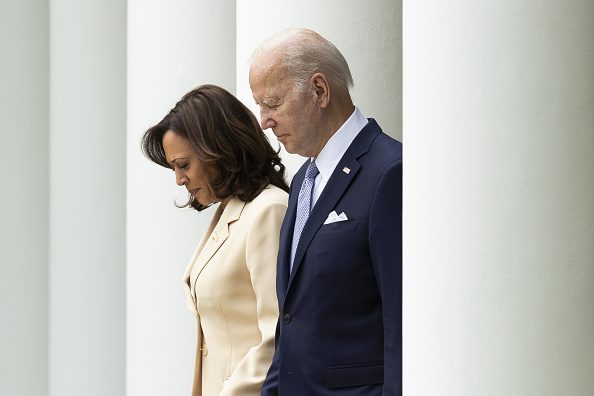
But this argument remains unconvincing. For starters, reporting from earlier this summer indicated that the autopsy was likely to avoid blaming several factors for the party’s defeat: Joe Biden’s decision to run again, his late exit, and the Kamala Harris campaign’s missteps. Though it’s probably unreasonable to expect the party to throw its most recent president and vice president under the bus completely, it also doesn’t do them any favours to ignore reality.
One thing an honest reckoning might help with is restoring trust among the party’s own voters. Throughout the early part of 2024, polls consistently showed that Democratic voters wanted Biden to step aside and make way for a new nominee. Yet he refused.
Another reason for publicising the report is because the party’s image is clearly suffering from a lack of trust. According to polling from YouGov, just 33.9% of Americans view the party favourably against 64% who view it unfavourably — a record high since the beginning of Trump’s first term. It’s unclear whether that dearth of trust stems in part from Biden’s decisions and the unwavering backing of the party, but this is something the DNC’s post-mortem could and should have gauged.
But perhaps the most compelling argument in favour of the DNC releasing its findings is that it has a penchant for learning the wrong lessons from its Trump-era performances, whether in victory or defeat. Its refusal to conduct an autopsy after the 2016 election led them to misunderstand why Biden was able to wrest the White House back from Trump in 2020. His victory and the Democrats’ surprisingly good midterms in 2022 also papered over some inconvenient truths which set up the party for failure in 2024.
Martin seems to believe that the DNC has learned everything it needs to from last year’s election, and that the Democrats’ strong performances this year are a sign that they can ride a wave of anti-Trump sentiment back to power. It may work out for them next year, as it did in the 2018 midterms. But a refusal to reckon with the full picture of its losses last year is likely to set the party up for failure before long — perhaps even as soon as 2028.

Join the discussion
Join like minded readers that support our journalism by becoming a paid subscriber
To join the discussion in the comments, become a paid subscriber.
Join like minded readers that support our journalism, read unlimited articles and enjoy other subscriber-only benefits.
Subscribe